
Top 20 Animals With Big Ears In The Natural World
Animals With Big Ears can be found across various regions of the planet. Some walk across hot deserts. Some of them travel through forests or the grassland. In this article, temperature regulation, we dive into how large-eared animals utilize hearing, and environmental awareness to thrive in the wilderness.
Table: 20 Animals With Big Ears
| No. | Animal Name |
| 1 | African Elephant |
| 2 | Fennec Fox |
| 3 | Black‑tailed Jackrabbit |
| 4 | Bat‑eared Fox |
| 5 | Kangaroo Rat |
| 6 | Red Kangaroo |
| 7 | Serval |
| 8 | Asian Elephant |
| 9 | Meerkat |
| 10 | Caracal |
| 11 | Desert Hedgehog |
| 12 | Pallid Bat |
| 13 | Hare (various species) |
| 14 | Oryx |
| 15 | African Wild Dog |
| 16 | Jerboa |
| 17 | Long‑eared Owl |
| 18 | Bobcat |
| 19 | Coyote |
| 20 | Greater Bilby |
Detailed Look At Animals With Big Ears
1. African Elephant

The African elephant of sub-Saharan Africa is an animals with long ears. Their habitat spans across wooded areas, forests and around water. They are recognized by their massive, fan-shaped ears. These ears have a lot of blood vessels in the skin.
Elephant also use their ears to communicate. these behavioral signals play a crucial role in an elephant’s daily life. Ears are loose when they are relaxed. And when frightened the ears spread widely. they might stare directly with flared ears to look more intimidating.
2. Fennec Fox

Fennec fox is a species of fox that resides in the Sahara Desert and various other dry regions of North Africa. The ears of this fox are remarkable large relative to its body size. These big ears make it hear insects and small animals in the sand.
The Fennec foxes are primarily active during the night. Evenings in the desert are less hot. They beetles, rodents and prey, ants, eggs on at night. they also consume various fruits whenever they find them. These holes are deep sandy tunnels.
3. Black‑tailed Jackrabbit

The black-tailed jackrabbit is found in the west of North America. it can be spotted across arid deserts, grass lands and open fields. Its long ears are long and thin. They assist the jackrabbit in detecting natural predators such as coyotes and hawks.
Unlike regular rabbits, jackrabbits do not dig deep underground burrow. They lie in bushes or in shallow depressions in the ground. These sport offer shaded cover and camouflage tp protect them from flying predators in the sky.
4. Bat‑eared Fox

Bat-eared foxes are found in eastern and southern regions of Africa. Its long ears and pointed. These oversized ears posses an incredible sensitivity, allowing them to hear bugs crawling deep underneath the earth.
These foxes typically choose to live in committed pairs or close family groups. They have common responsibilities such as the guarding and tending of pups. they spend the dark night hunting down tiny insects and other small creatures.
5. Kangaroo Rat

Kangaroo rats inhabit arid regions of the Americas, commonly found throughout the deserts of the southwestern united states of Mexico. With small bodies and big ears they bear. this acute sense of hearing is a vital survival tool, helping them detect nocturnal predators like foxes, snakes, owls in the dark.
To escape the harsh desert environment, kangaroo rats dig intricate underground burrows. When danger strikes they stand still and listen. Big ears pick up soft sounds. it uses its powerful legs to quickly leap toward a secondary burrow entrance to escape.
6. Red Kangaroo: Animals With Big Ears

Red kangaroos, scientifically named Osphranter rufus, are highly remarkable creatures renowned for their extraordinary leaping skills. They are the largest species of kangaroo and can weigh anywhere between 88 to 200 lbs and reach heights of 4.9 to 5.9 feet. This species is native to Australia.
Red kangaroos are included in Animals with big ears. While grazing on numerous green grass fields, This helps them detect danger or other moving creatures in the distance. So they can escape if needed, their big ears also help them stay alert and detect approaching predators.
7-Koala

The koala, also known by its scientific name Phascolarctos cinereus, is a mammal indigenous to Australia. while they do not possess ears massive as an elephant’s, their ears are certainly big in comparison to their face and torso.
These drousy animals sleep up to 22 hours a day. male koalas can grow up to 50% larger than their female counterparts, leading to a distinct difference in size between the sexes. The koala is masterful at acquiring food, especially the leaves of eucalyptus trees..
8-Serval
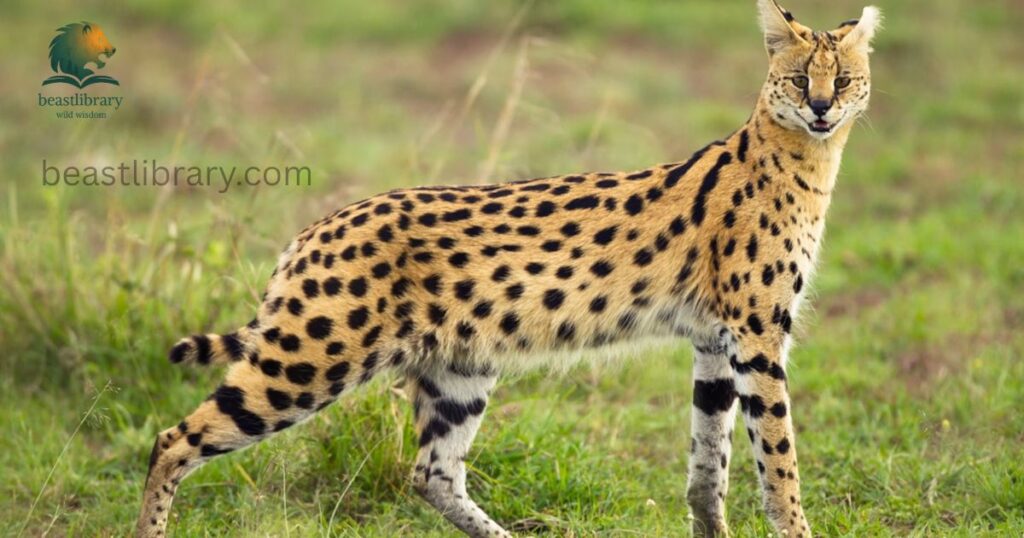
The serval is a medium-sized wildcat that inhabits the savannas of Africa. Equipped with exceptionally large ears, they possess a heightened sense of hearing that amplifies sound waves. This allows them to better detect smaller prey, such as rodents and frogs, even when they are hidden beneath rocks or burrowed deep underground.
9-Aardvark
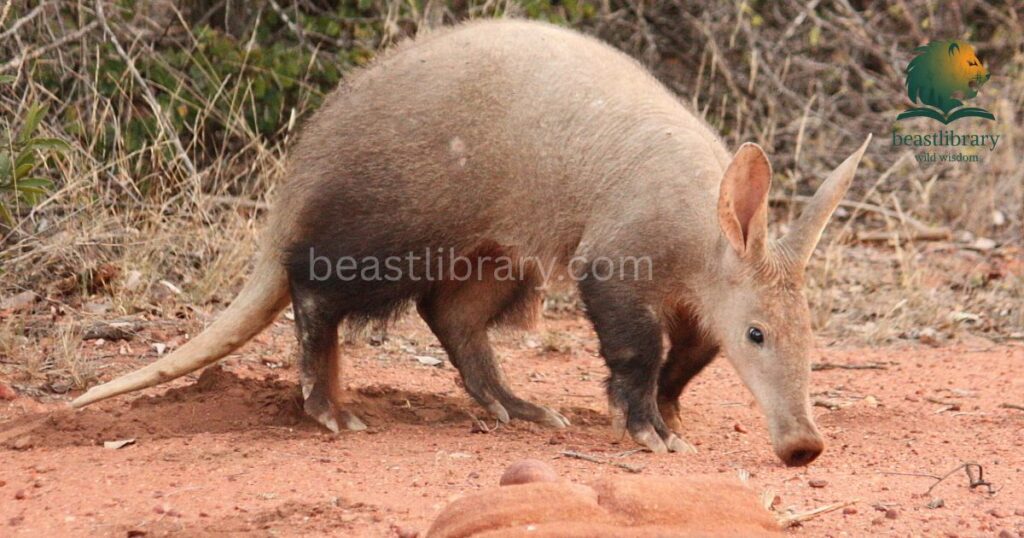
As Africa’s most massive insect-eating mammal, the Aardvarks article. mainly feed on insects such as ants and termites. They can consume up to 50,000 ants during a single night’s hunt.
This shy animal weighs an average of 88-140 lbs and stands between 3.3-4.3 feet in height. they are primarily located throughout the sub- Saharan regions of Africa. Aardvarks are considered close relatives to elephants, fittingly enough, given their scientific name.
10-Aye-Aye

Animals with big ears use them for many important purposes. Their large ears help them hear sounds from far away and stay alert to danger. They can also help animals communicate with each other in the wild.
Big ears can also help some animals stay cool in hot weather. Blood flowing through the ears releases heat and helps regulate body temperature. This makes large ears especially useful for animals living in warm environments.
11-Mule Deer

The mule deer, scientifically classified as Odocoileus hemionus, is a deer species native to the western regions of North America Prairies grasslands. These creatures are named after their characteristic large ears that resemble those of a mule.
Their excellent eyesight allows them to spot potential Threats from over 2,000 feet away. Even more impressive is their incredible capacity for long-distance travel, with their most extensive recorded migration stretching across 150 miles.
12-American Brahman

One of the most distinctive features of the Brahman is its large shoulder hump, as well as its curved horns. It has big ears. These ears enhance hearing and help the Brahman stay cool in hot weather by maximizing the surface area for cooling down.
Due to their longevity, some individuals can produce calves at age 15 or older. They live longer than any other cattle breed. It’s no wonder why the American Brahman is highly valued and the united states.
13-The Caracal

The caracal, known scientifically as Caracal caracal, get its identity from its remarkable fashionable ears. The caracal weighs between 25 and 45 pounds and reach height between 2 to 3.5 feet. This uniquely gorgeous feline is found in Asia and Africa’s, including deserts savannas, and deserts.
The caracal has over 20 individual muscles in each ear, and each ear can turn independently up to 180 degrees. Black tufts on the tips of its ears act like radar dishes, which help locate prey even at night. they are highly skilled predators that successfully hunt rodents, birds, and other small mammals.
14-Galago

Galago, scientifically known as Galagidae, is an Animal with big ears. Frequently called bush babies-or nagapies in Afrikaans, which translates to night monkeys. These creatures reside in the forests of the Sub-Saharan region in Africa.
In addition, they mark their territory through a process called “urine wiping.” throughout this unique routine, they apply tiny traces of urine onto tree branches to leave behind scent markers for other animals.
15-The European Hare

The European hare, also referred to as the brown here hare (Lepus Europaeus), is a prominent and widespread species in Asia and Europe. Including long legs and tall, black-tipped ears, It is one of the largest hare species due to its physical features.
Even though the European hare has its share of predators, it manages to escape them using its incredible sprinting capabilities They reach top speeds of 45 mph over short distances. Searching for for sustenance occupies roughly one- third of this hares lifespan.
16. Jerboa

Jerboas are found in the desert of North Africa and Asia. Their bodies are too small with huge ears. Large ears are used to sense any threat by predators such as snakes, owls, and foxes, as well as dissipate the heat in hot deserts.
Recognizable by its miniature kangaroo-like hind legs and incredibly long balancing tail, the jerboa can leap over 6 feet in a single bound to evade predators. It spends hot days in underground burrows, emerging at night to forage for seeds and insects.
17. Long-eared Owl
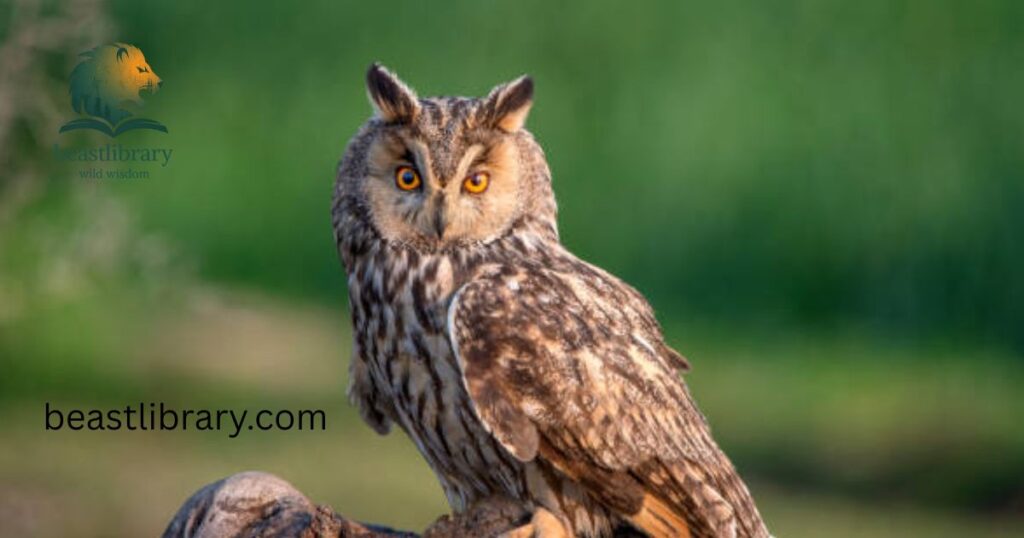
We have a long-eared owl that inhabits Europe, Asia and North America. rather than helping them hear, their prominent of camouflage. Real ears are located on the sides of the head and are highly sensitive. The owl has big ears that enable it to locate prey even when the light is low.
Throughout the day, these owls roost in trees, freguently gathering in colonies for mutual safety. Ears are used to identify predators and competitors and communicate with mates in the form of tiny sounds.
18. Bobcat

Bobcats are Animal with big ears. They have tufted ears that assist them in identifying their prey such as rabbits, Forests, brushlands, birds and rodents. These residents of forest, swamps possess and brushlanslands, and ears designed to amplify ambinent sounds.
Their ears rotate easily to follow target movements while stalking. Bobcats are solitary, territorial predators. They spend daylight hours resting inside dense bushes, keeping their ears constantly tuned for signs of trouble.
19- Oryx

Oryx inhabit African deserts and dry savannas. They feature elongated, pointed ears that serve to track stalking predators and regulate body temperature. The oryx has large ears which enable it to hear the lions, the cheetahs and the hyenas across open plains.
They walk long distances to seek food and water. When they are frightened, they put up heads, open ears, flare theirs ears. their sharp vision paired with keen hearing makes them exceptionally difficult to catch..
20. African Wild Dog

African wild dogs are native to the sub- Saharan regions of Africa. The ears are round and quite big and these are used to find the prey and also to communicate over a long distance. Their packs rely heavily on a combination of visual sign and sharp hearing to stay coordinated.
Each pack establishes specific home territories for raising their young. Ears play a key role in the social structure, by warning the members of danger and organizing hunts. African wild dogs are remarkablly intelligent and highly social creatures.
Final Words
Big eared animals demonstrate the way evolution can form and work. Ears do have a lot of uses and applications, be it elephants bathing, bats and foxes hunting with sound, or a range of similar applications. They sense predators, communicate, control heat & find food.
FAQ:
Why would animals with big ears?
Large ears serve to detect sound, temperature and communicate.
Aren’t big-eared animals more likely to hear?
As a rule, bigger ears are better at detecting sound, however, sensitivity is also ear specific.
What is the animal with the largest ears?
The elephant of Africa possesses the biggest ears in the zoo.