Amazing 15 Animals With Bushy Tails: Facts & Pictures
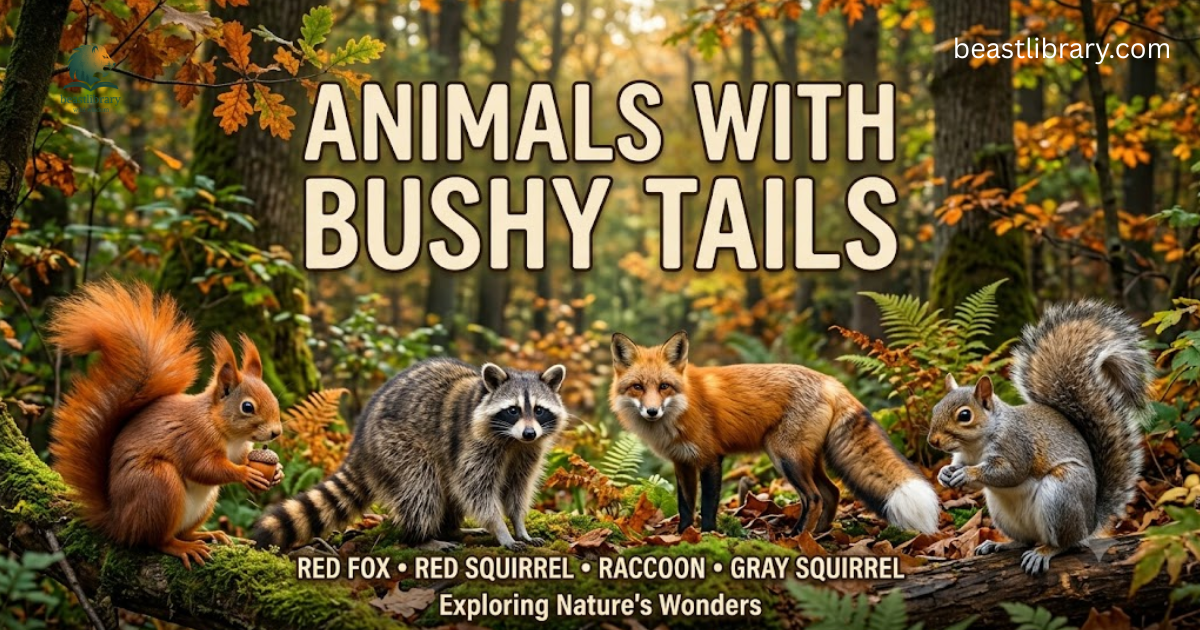
Animals With Bushy Tails are found in forests & mountains around the world. Their tails do have numerous functions. Bushy tails are used to balance, for communication and protection. Lets explore these fluffy tail animals lives and discover why they are so vital to our ecosystems.
Table Of Top 15 Animals With Bushy Tails
| Rank | Animal | Scientific Name | Class | Diet |
| 1 | Red Fox | Vulpes vulpes | Mammalia | Omnivore |
| 2 | Gray Squirrel | Sciurus carolinensis | Mammalia | Herbivore/Omnivore |
| 3 | Ring-Tailed Lemur | Lemur catta | Mammalia | Omnivore |
| 4 | Red Panda | Ailurus fulgens | Mammalia | Herbivore |
| 5 | Eastern Chipmunk | Tamias striatus | Mammalia | Omnivore |
| 6 | Arctic Fox | Vulpes lagopus | Mammalia | Omnivore |
| 7 | Sable | Martes zibellina | Mammalia | Carnivore |
| 8 | Beech Marten | Martes foina | Mammalia | Omnivore |
| 9 | Black-Tailed Deer | Odocoileus hemionus | Mammalia | Herbivore |
| 10 | Eastern Gray Kangaroo | Macropus giganteus | Mammalia | Herbivore |
| 11 | Snow Leopard | Panthera uncia | Mammalia | Carnivore |
| 12 | Bushy-Tailed Woodrat | Neotoma cinerea | Mammalia | Herbivore/Omnivore |
| 13 | Common Raccoon | Procyon lotor | Mammalia | Omnivore |
| 14 | Fox Squirrel | Sciurus niger | Mammalia | Omnivore |
| 15 | Ringtail Cat | Bassariscus astutus | Mammalia | Omnivore |
Detailed Look at Top 15 Animals With Bushy Tails
1. Red Fox
- Scientific Name: Vulpes vulpes
- Class: Mammalia
- Diet: Omnivore
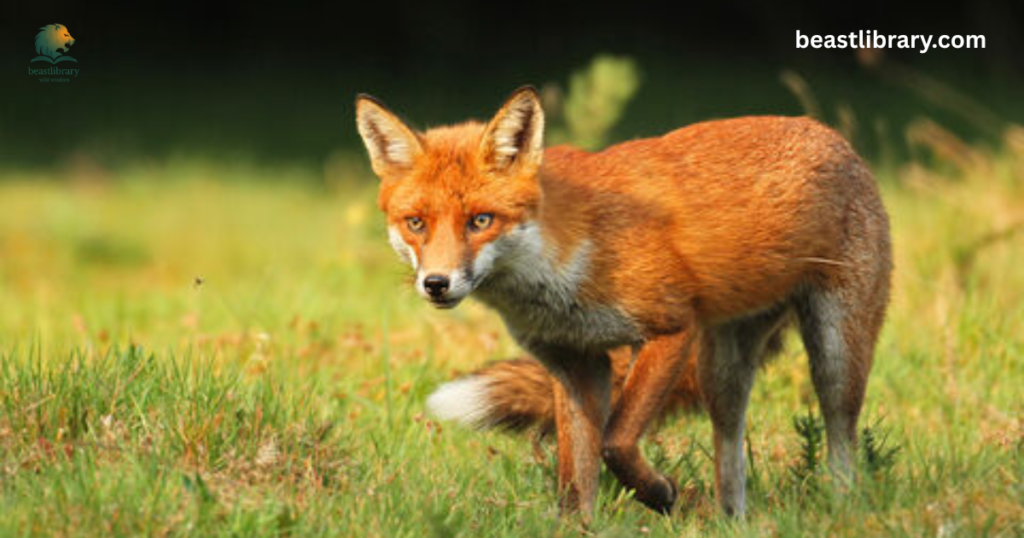
The red fox is a common mammal which lives in forests, grasslands, deserts and urban regions in the Northern Hemisphere. It is a handy tool, its bushy tail, also known as a brush. The tail is used to provide balance during running, jumping or running on rugged surfaces.
During cold weather at night, the fox encircles its tail with the body to save the heat. They are also famous for their cunning hunting techniques, including pouncing and getting prey. The thick tail is also employed as a visual signal during winter, to allow young foxes to track adults.
Foxes nest in shelters and use these shelters for many generations. Their flexibility will enable them to live around humans and in the wild. The breeding period is once in a year and the normal litter is four to six kits. It is thick fur animal.
Fun Fact: A red fox’s tail can reach up to 50 cm in length and is so thick it acts as a natural pillow during rest.
2. Gray Squirrel
- Scientific Name: Sciurus carolinensis
- Class: Mammalia
- Diet: Herbivore/Omnivore
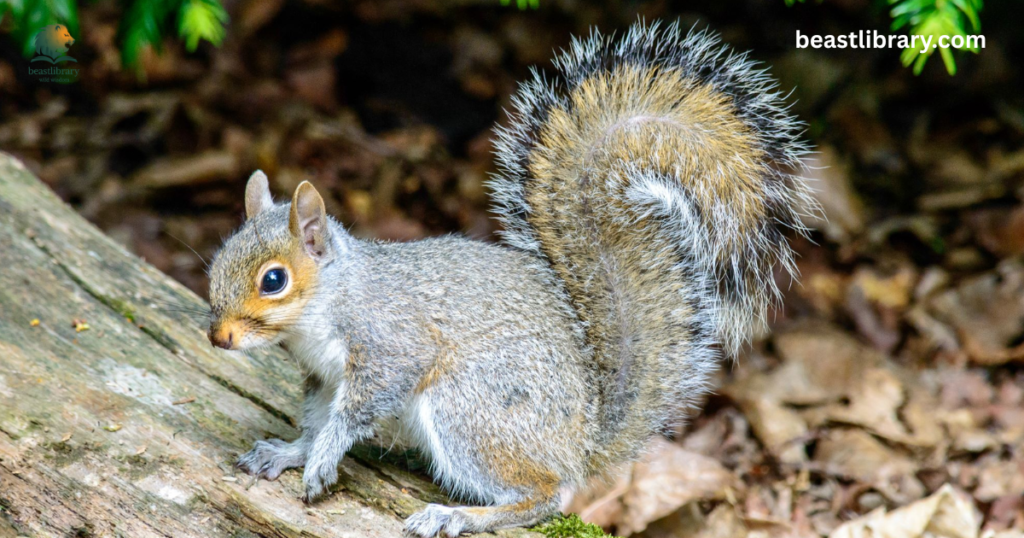
Gray squirrels are rodents who inhabit trees and have their native origin in North America. Their bush tails are not only helpful in the sense of balance or communication, but also in warmth. Tail works as a counterweight during tree climbing between tree branches making the body stable.
Bushy tails can also be used to communicate, flicking or twitching to warn other squirrels of an impending danger or remind other squirrels. When they are warm, the tail wraps over the body to offer warmth in winter. Their tails are bushy as Porcupines.
They use shallow burrows to cache food during winter which they claim by relying on their memory and scent. Ranges of habitats are, in the decision forests, the mixed forests and city parks. These are also agile climbers able to turn their hind legs 90 degrees to go down the trees.
Fun Fact: Gray squirrels can leap distances of up to 4.5 meters, with their bushy tail providing balance during long jumps.
3. Ring-Tailed Lemur
- Scientific Name: Lemur catta
- Class: Mammalia
- Diet: Omnivore
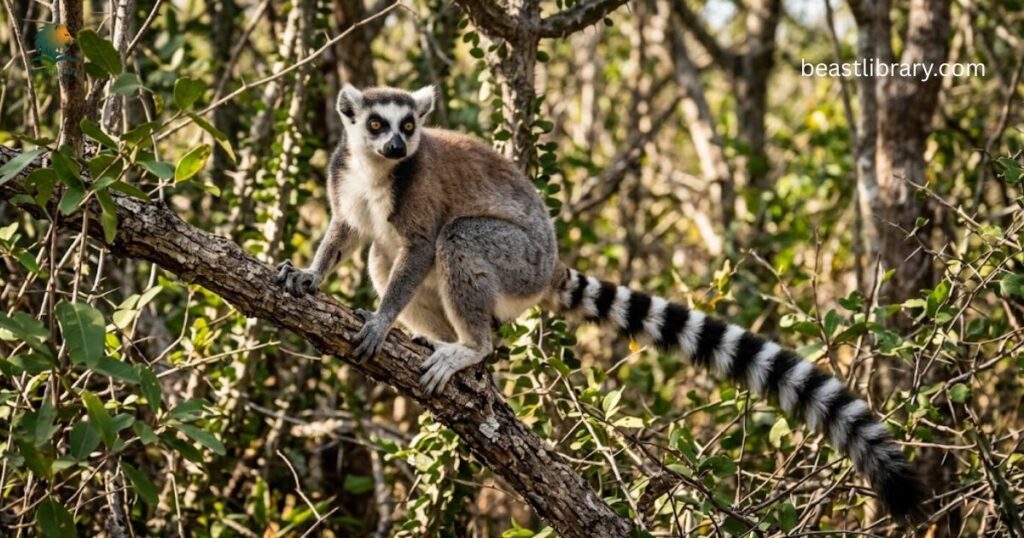
Ring tailed lemurs are primates that are found in forests and scrublands of Madagascar, southern and south western. They are known to have long and striped bushy tails that are even longer than their body length. The tail helps in the process of balance when jumping among trees.
The tail also serves to keep warm on cooler nights. Breeding is done once in a year and females give birth to one offspring. Some of the fossas, birds of prey and humans are predators. Hunting and loss of habitat have endangered such species and conservation is very important.
Fun Fact: Ring-tailed lemurs often hold their tails upright while walking on the ground, acting like a flag to keep the group together in dense vegetation.
4. Red Panda
- Scientific Name: Ailurus fulgens
- Class: Mammalia
- Diet: Herbivore
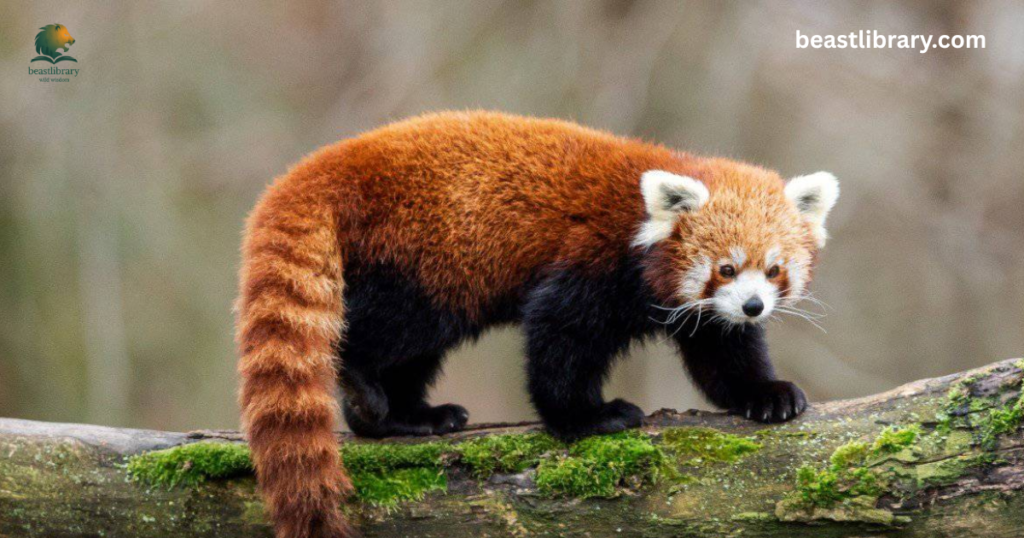
Red pandas are chubby animals live in the temperate forests of the Himalayas which include Nepal, Bhutan, India and China. Bushy tails are essential in climbing and warming up. Red pandas are largely solitary with the tails being used to signal or curl them around their body during rest.
They mainly live on bamboo though they complement it with fruits, berries, eggs and small insects. Red pandas sleep alot and active during the dawn and evening and are active and skilled tree climbers with much of their time spent in trees.
Red pandas also mark their territory with the help of scent glands and communicate with the help of calls and tail movement. Snow leopards and martens are some of the predators, and habitat loss and fragmentation have been the significant threats.
Fun Fact: Red pandas are raccoon like creatures often use their tails like a scarf, curling it around their face and body to stay warm during cold Himalayan nights.
5. Eastern Chipmunk
- Scientific Name: Tamias striatus
- Class: Mammalia
- Diet: Omnivore
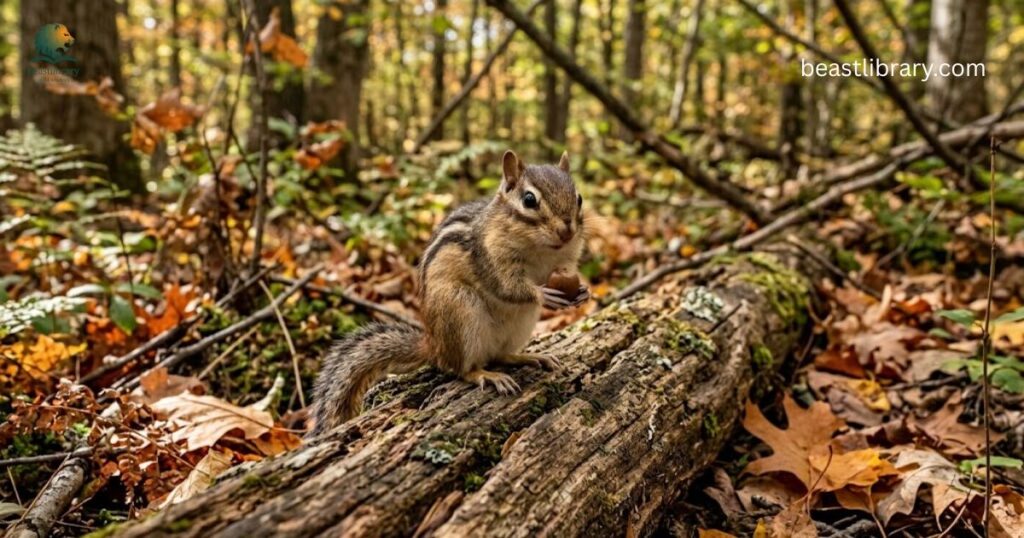
Eastern chipmunks are little rodents inhabiting forests, woodlands, gardens, and suburban locations of eastern North America. Their striped bushy tails bring balance in climbing, jumping and running and serve as a method of signal to tell about danger.
Chipmunks nest in burrows which are large and contain several rooms where the nest is placed, where food is stored and where the predator is kept away. They are active in the daytime and feed on nuts, seeds, fruits, fungi, and small insects.
Chipmunks bury large quantities of their food to be used during winter using their memory and scent to find their food. The interaction between the social beings is restricted, although the vocalizations and tail flicks present danger alerts to other chipmunks.
Fun Fact: Eastern chipmunks can carry up to 15 nuts in their cheek pouches, while their bushy tails maintain balance during rapid movements.
6. Arctic Fox
- Scientific Name: Vulpes lagopus
- Class: Mammalia
- Diet: Omnivore
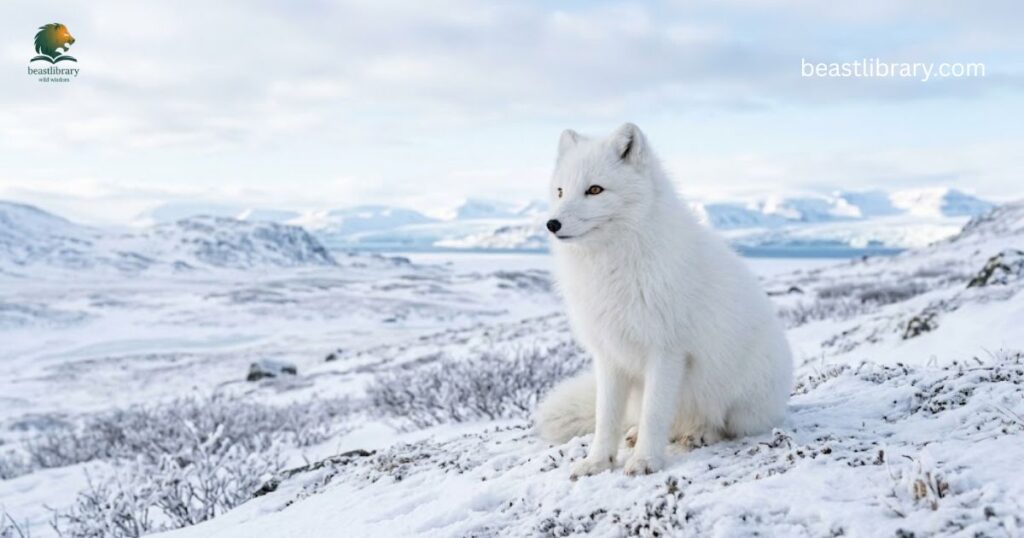
Arctic fox inhabits the Arctic parts of North America, Europe and Asia. Its bushy tail which is commonly referred to as a brush is an important survival strategy in extreme cold. The tail is also warm, balance and covers the body of the fox in extreme winters.
They live in dens and this is mostly found in the tundra and coastal environments. In the social environment, the tail sends signals to other foxes, particularly when they are mating or marking their territory.
Arctic foxes are mostly nocturnal however they may be active during the day in summer. Their heavy fur and bushy tail decreases the loss of heat which is necessary to survive in the sub-zero temperatures. Examples of predators are a polar bear, golden eagles and human beings.
Fun Fact: Arctic foxes have thick fur and can curl their bushy tail around their face to cover their nose and ears, reducing heat loss in sub-zero temperatures.
7. Sable
- Scientific Name: Martes zibellina
- Class: Mammalia
- Diet: Carnivore
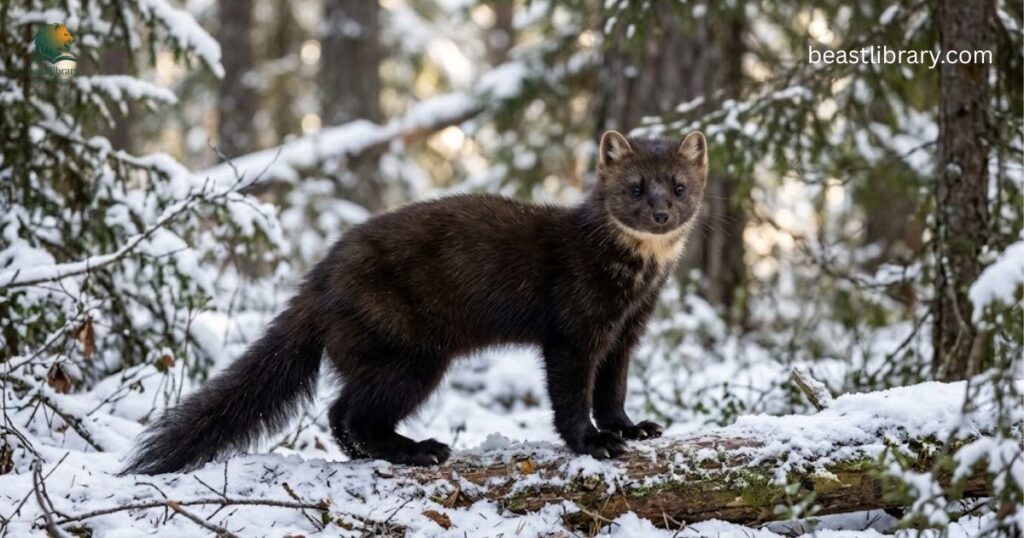
The sable is one such small mammal carnivore that is found in the Russian and Siberian forests. It uses its bushy tail to balance as it climbs trees and gets through thick forests. Another benefit of the tail is during cold winters, it keeps the body warm.
They live in the conifer forests, and they prefer to be covered with thick undergrowth. The bushy tails are a visual stimulus on social interaction, indicating aggression or submission. They have thick dense fur which has historically rendered them subject to the fur trade.
The conservation is mostly intact because of the forests that are protected, but poaching is also a problem. Sables are food storing and year-round active creatures whose thermoregulation and balance depends on the tail.
Fun Fact: Sables use their bushy tail as a blanket, curling it around themselves to conserve heat during cold Siberian nights.
8. Beech Marten
- Scientific Name: Martes foina
- Class: Mammalia
- Diet: Omnivore
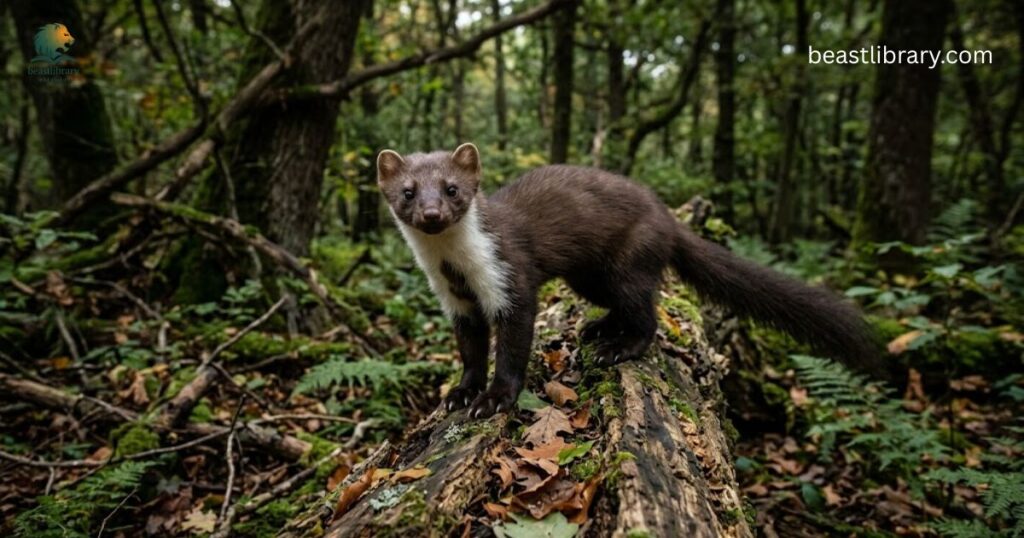
Beech marten live in forests, rocky terrain as well as in urban areas in Europe and western Asia. The bushy tail provides a sense of balance when climbing and leaping. It is also warm and good to rest and serves as a visual cue to communicate.
Beech martens are creatures of the night and are solitary animals which feed on little mammals, birds, insects, fruits and eggs. It has the tail that contributes to agility and accuracy when moving about thin branches and roof.
Beech martens leave scent glands to mark territories and the tail motions can either be an indication of submission or aggression. They like areas that are rich in cover such as forests, orchards and old buildings.
The fox, owl, and other large carnivores are predators. Beech martens have learnt to live in the cities despite the human sprawl and they have been incredibly resourceful. Their tails are also bushy thus they are camouflaged in trees that disrupt their image.
Fun Fact: Beech martens can twist their bushy tail to cover their body while resting, providing warmth and blending with tree branches.
9. Black-Tailed Deer
- Scientific Name: Odocoileus hemionus
- Class: Mammalia
- Diet: Herbivore
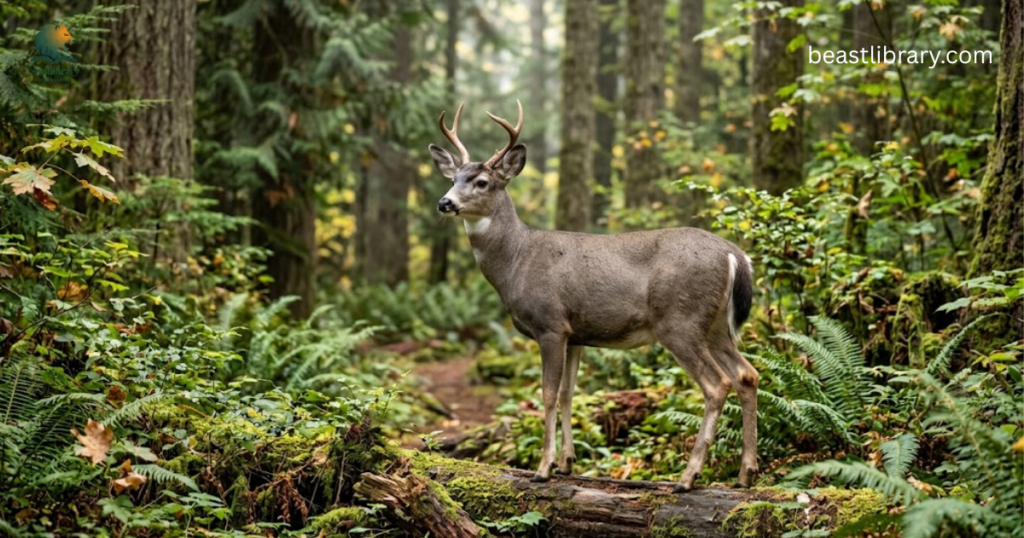
Black-tailed deer is a subspecies of male deer that is found in forests, shrublands and mountainous areas in western North America. Its bushy tail is majorly used to indicate and maintain balance. They are horned animals.
The deer raises the tail in case there is danger to display the white under-belly to alert the other deer of danger. Also the tail aids in balance at times of running or jumping fast. The bushy tail supports agility especially when one is going through rough terrain or a thick forest.
The habitat of the deer is various such as the coastal woodland as well as the highlands where food and shelter is needed. The tail too comes in handy when swimming and helps in keeping direction and balance.
Fun Fact: Black-tailed deer flick their bushy tail rapidly when alarmed, serving as a visual alarm system for nearby herd members.
10. Eastern Gray Kangaroo
- Scientific Name: Macropus giganteus
- Class: Mammalia
- Diet: Herbivore
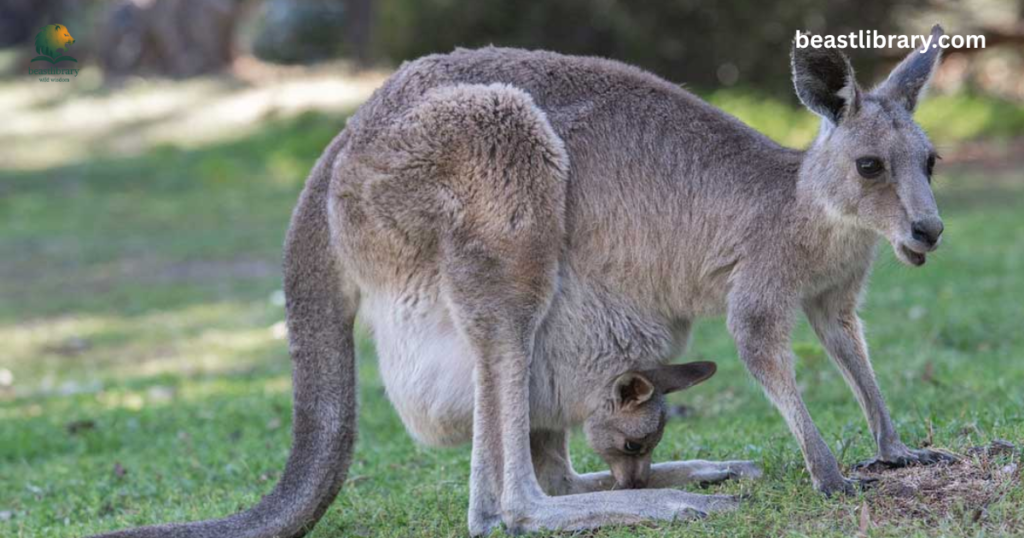
Its bushy tail is a great counter balance when it is hopping and in the third leg when sitting or standing. The tail is used in grazing or fighting to help the body weight. Eastern gray kangaroos tail are used in communication and balance during movement.
The bushy tip of the tail helps in maintaining stability when the tail is moving at high speed especially when it is covering rough surfaces. The eastern gray kangaroos are fast moving animals that cover very long distances with the help of the tail.
Fun Fact: Eastern gray kangaroos use their bushy tail as a tripod leg when grazing, providing stability while using their front paws to hold food.
11. Snow Leopard
- Scientific Name: Panthera uncia
- Class: Mammalia
- Diet: Carnivore
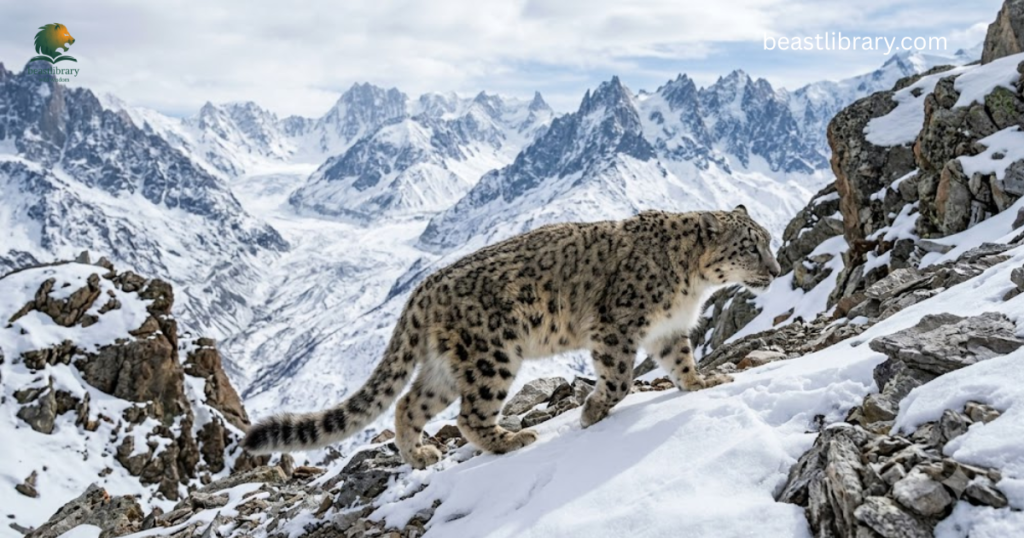
Their tail is quite bushy and it is nearly equal in length to their bodies and has several functions. It aids in balance as well as during jumping over cliffs and rocky terrains, and it covers the body in cold winters to keep the body warm.
The tail is used as a means of communication when communicating with the rest of the leopards, to show aggression or submissiveness. Their thick fur and tail are very thick and this gives them protection against extreme cold.
The snow leopard is spotted animal and is generally busy in the early morning hours and late in the evening hours and covers wide areas as its territory. They are remarkably agile and have the ability to go down a slope backwards balancing on the tail.
Fun Fact: Snow leopards use their bushy tail like a scarf, wrapping it around their face and body to stay warm during freezing nights.
12. Bushy-Tailed Woodrat
- Scientific Name: Neotoma cinerea
- Class: Mammalia
- Diet: Herbivore/Omnivore
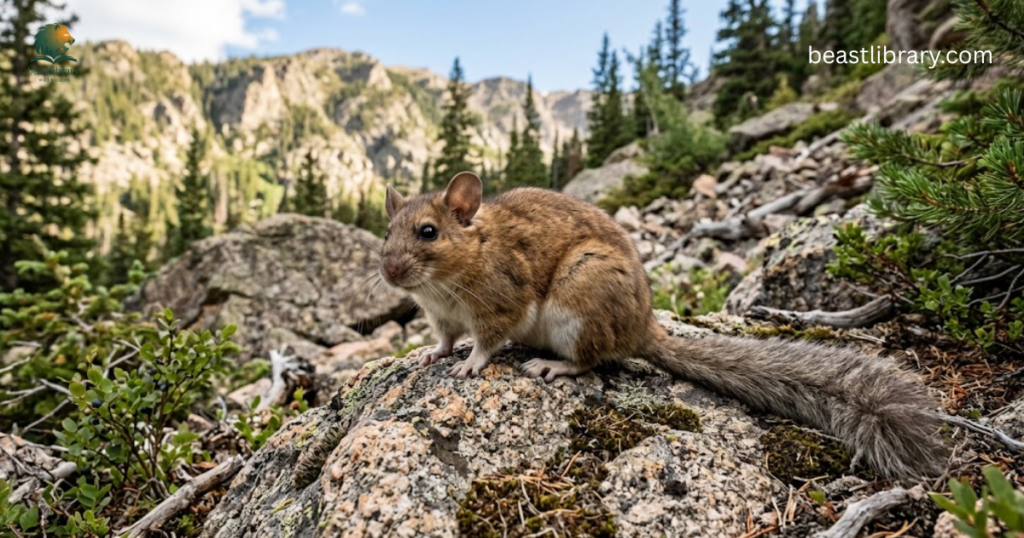
Their thick tails help them to balance them when they are climbing cliffs, rocky ledges, and shrubs. Woodrats are nocturnal and mostly solitary and gathering food and material to construct large complex dens known as middens.
The food is made of seeds, nuts, fruits, vegetation and in some cases insects. Tail is used to provide stability in fast movements when foraging as well as a visual signal to show alertness or danger.
Owls, snakes, foxes and bobcats are its predators. The bushy tails are also used to insulate at night time when the weather is cold and to keep warm. Woodrats play a vital role in seed sowing and regaining forests.
Fun Fact: Bushy-tailed woodrats build middens that can last centuries, preserving plant material and creating a microhabitat for other species.
13. Common Raccoon
- Scientific Name: Procyon lotor
- Class: Mammalia
- Diet: Omnivore
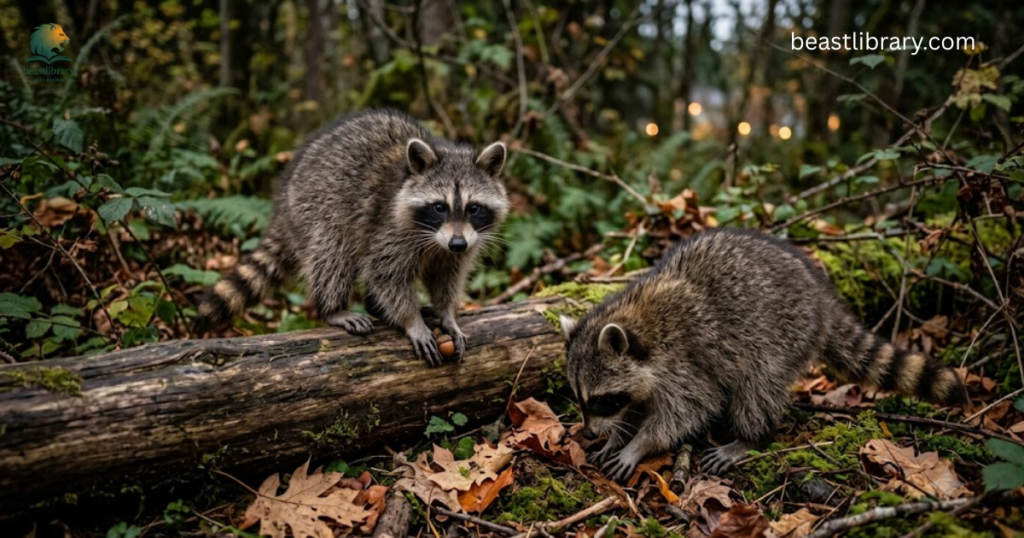
Their ringed bushy tail helps them in balance when jumping on trees, on narrow ledges or on rooftops. The tail also serves as a signal device to contact the other raccoons in case of social communication or a territorial conflict.
They live alone, but may be found in loose groups in the resourceful regions. The tail is used to keep one warm as they curl around the body as a way of resting. They breed towards the end of the winter with one or seven kits per litter.
Raccoons are mischievous animals and can solve problems and open containers to get food. Their bushy tail improves their agility and stability in climbing as well as foraging. Status is stable and both populations in rural and urban areas are flourishing.
Fun Fact: A raccoon’s tail has five to seven black rings, which provide camouflage and help communicate mood to other raccoons.
14. Fox Squirrel
- Scientific Name: Sciurus niger
- Class: Mammalia
- Diet: Omnivore
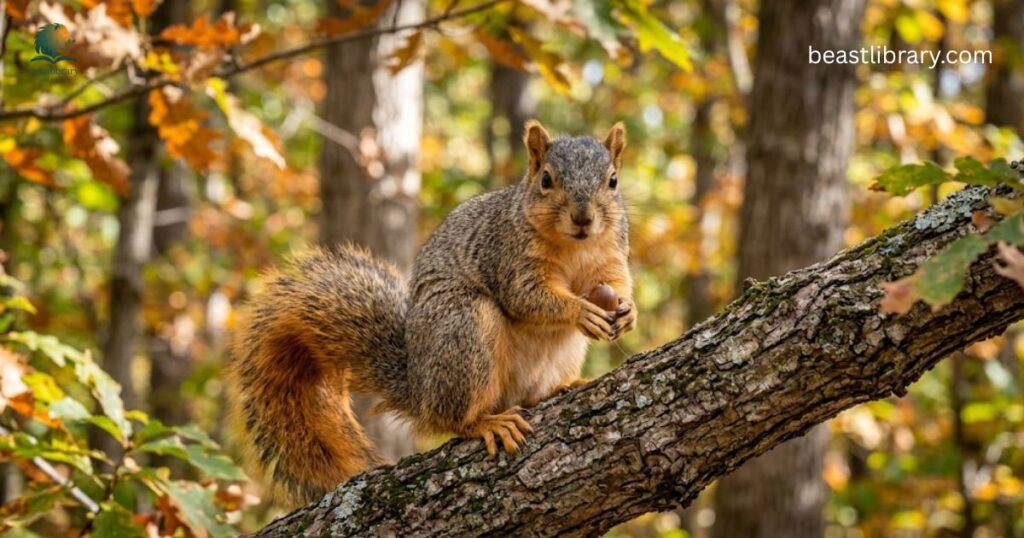
Their bushy tail acts as a counterbalance when jumping between branches and acting as insulation during winter. The tail is used as a warning mechanism to other squirrels of danger. It is mischievous animal of nature.
Its bushy tail also keeps them out of the rain, snow, and sun, which helps in maintaining the body temperature. Fox squirrels are also good leapers and they can jump up to four meters with the help of their tail.
Fun Fact: Fox squirrels can use their bushy tail as an umbrella during rain, shielding their body and maintaining warmth.
15. Ringtail Cat
- Scientific Name: Bassariscus astutus
- Class: Mammalia
- Diet: Omnivore
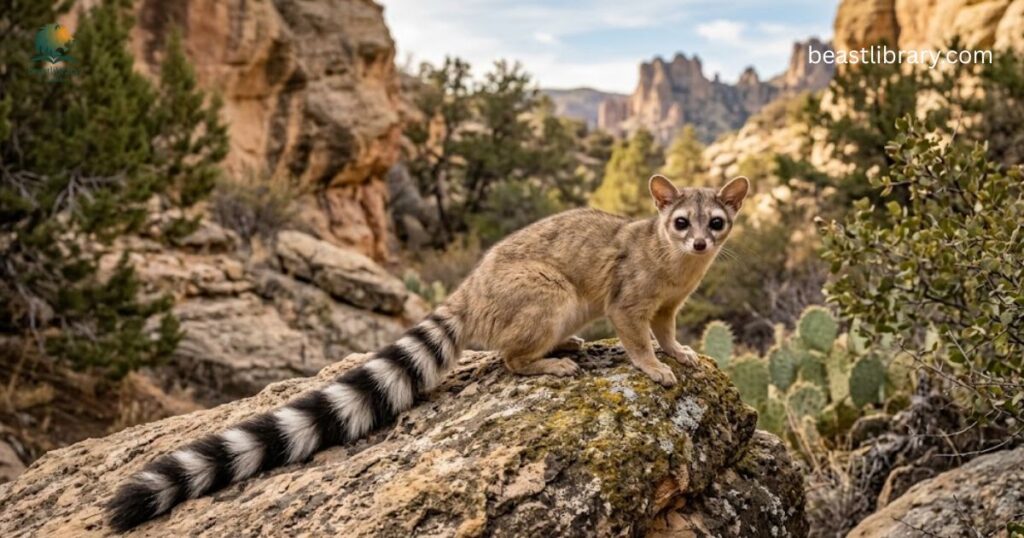
Ringtails are little mammals that are found in the southwestern United States and Mexico. Their tail is bushy with the black and white rings that give them balance when climbing on rocky cliffs, trees and canyon walls. The tail also conveys the mood or danger to other ringtails.
They are nocturnal and solitary and their food includes fruits, insects, small mammals and birds. Ringtails nest in crannies of the rocks, hollow trees and deserted nests. It has bushy tails that keep off coldness in deserts at night and stabilize during hunting.
Their tail helps them to stabilize when down on rough or steep ground. Ringtails are good jumpers, and frequently jump up to six meters on the tail as a counter measure. Status is stable and is found in arid and semi-arid areas.
Fun Fact: Ringtails can wrap their bushy tail around themselves like a scarf to keep warm while resting on rocky ledges.
Conclusion:
Animals with bushy tails use this unique physical feature as a crucial survival tool. Across the animal kingdom, animals with long fluffy tails such as foxes, lemurs and snow leopards rely heavily on them for balance, warmth, and protection.
Protecting the habitats of these fluffy tails species ensures that such traits continue to thrive, reminding us of nature’s ingenuity in even the smallest details.
FAQs:
Which animal has bushy tails?
Many mammals have bushy tails such as squirrels, red foxes, tree shrews, lemurs, and red pandas. These species rely on their long fluffy tails for critical survival needs like balancing while climbing, communicating, and staying warm in cold weather.
What is main purpose of animals with bushy tails?
Many animals like squirrels and monkeys use their bushy tails to maintain balance, especially when climbing trees or running along narrow branches. The tail acts like a counterweight, helping them move quickly and safely.
Do they have bushy tails communications?
Yes, many animals do use their bushy tails for communication, though not all species rely on them the same way.