Top 11 Animals With Quills: Class & Images
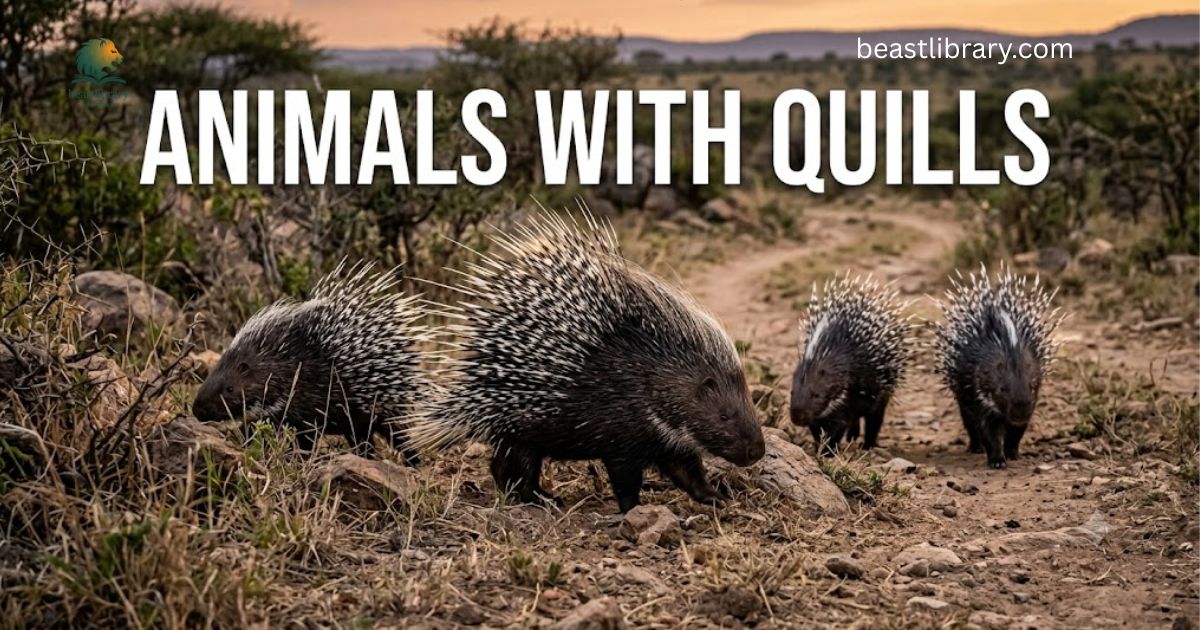
Animals with quills are nature’s most unique creatures. These are also called animals with spikes that have sharp, needle-like hairs on their bodies to protect themselves from enemies. When a predator tries to attack them, these sharp spikes act as a powerful shield.
List of Animals with quills:
Below is the list of animals with spikes:
- Indian Crested Porcupine
- Echnida
- Old World Porcupine
- Hedgehogs
- North American Porcupine
- Thorny Devil Lizard
- Sea Urchin
- Pufferfish
- African Brush‑tailed Porcupine
- Lowland Streaked Tenrec
- Spiny rats
1- Indian Crested Porcupine
Scientific name: Hystrix indica
Class: Mammalia
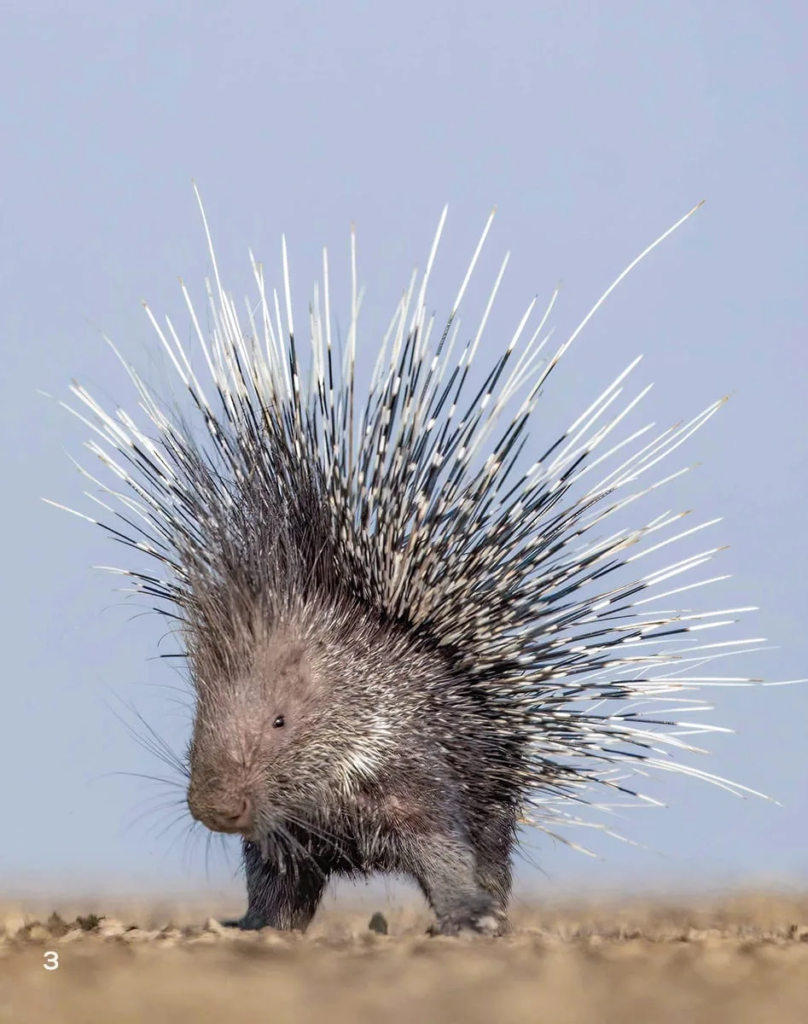
The Indian crested porcupine, a captivating creature endemic to the subcontinent, is well known for its remarkable coat of quills used for both defense and signaling. These quills are actually specialized hairs filled with keratin, providing a low density yet sturdy structure.
When confronted, this nocturnal herbivore can raise its quills, creating an formidable display that warns predators of its spiky defenses. interestingly, despite common fallacy. These animals do not fire their quills, instead, their true marvel lies in their capacity to regrow lost spines, serving as a testament to biological endurance.
They are typically solitary but can engage in playful interactions within small family groups. Their primarily consisting of fruits, diet, , tubers and roots, tubers, play a crucial role in seed distribution across their ecosystems.
2- Echnida: Animals With Quills
Scientific name: Tachyglossus aculeatus
Class: Mammalia
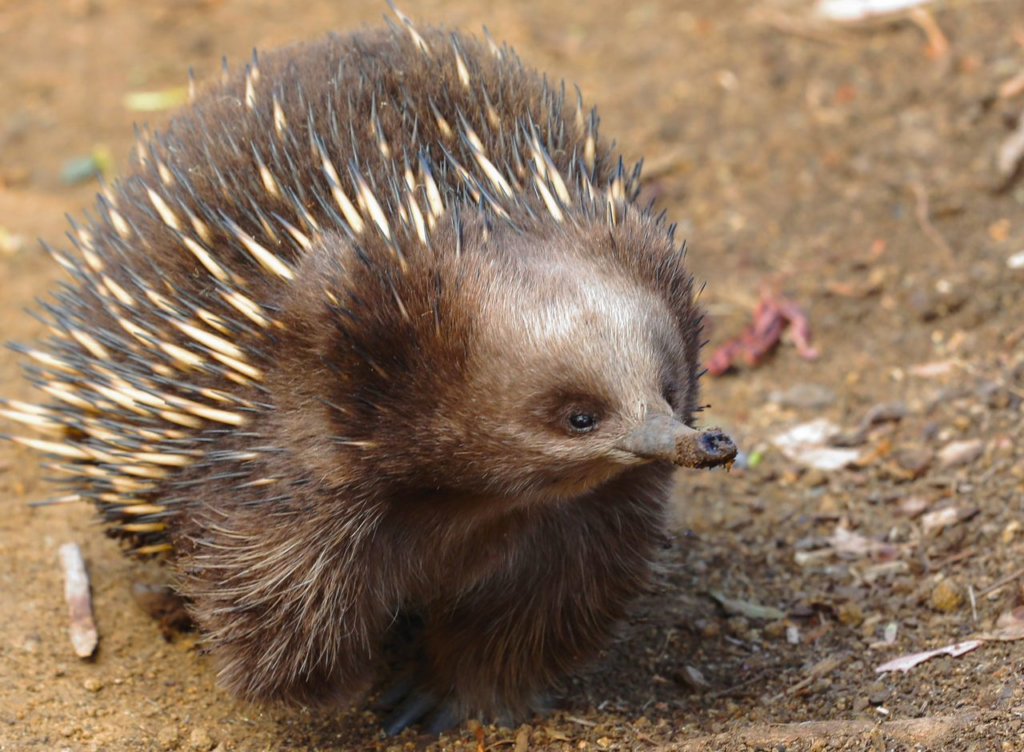
The echidna, one of nature’s most captivating creatures, stands as a unique marvel of evolution. it distinguishes itself as one of the few mammals that indeed lays eggs. Physically, its identifiable by its protective coat of durable spines and its elongated, snout like beak.
They employ a unique, spine covered tongue designed to pull insects from narrow crevices, showcasing a ingenious evolutionary solution. As conservation efforts continue to protect this superior species.
They possess an extraordinary sense of smell, enabling them to forage for ants and termites, their primary diet, hidden beneath the earth. unlike most other mammals, echidnas are entirely edentulous.
3- Old World Porcupine
Scientific Hystricidae
Class: Mammalia
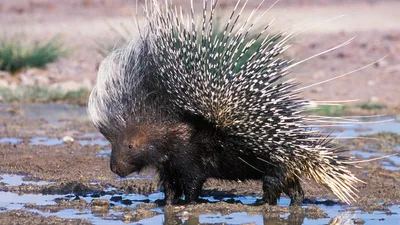
The Old World porcupine is a resident of Europe, and Africa. Porcupine are animal with spikes on back. It a special protective system, easily removable quills. Other animals that look like porcupines are also very attractive.
These quills, frequently marked with serve as both a shield and a interaction instrument, bright both. allowing the animals to signal various purposes, through its protective positions. Their plant-eating nutrition, leaves, underground stems, influences several intriguing habits.
When influences for food, they demonstrate a remarkable sense of smell and dexterity, gnawing through tough materials with their strong teeth. They have been observed basking in the sun Unlike many nocturnal creatures, showcasing their curious nature.
4- Hedgehogs
Scientific name: Erinaceus europaeus
Class: Mammalia
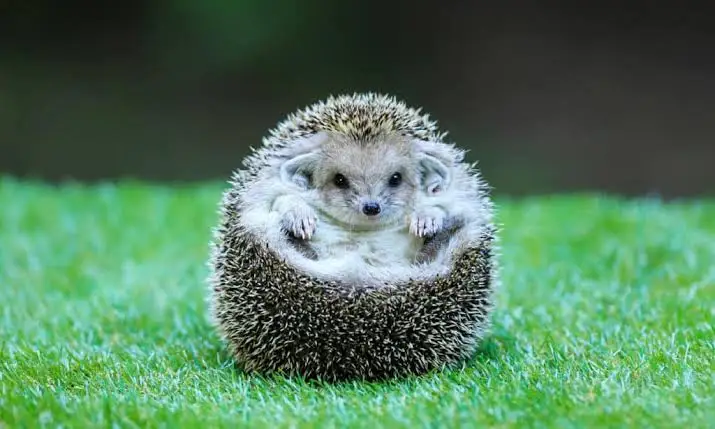
Animals like hedgehogs are perfect example of weakest animals with spikes. Contrary to popular belief, these defensive structures are not not merely defensive mechanisms against predators they play a crucial role in the hedgehog’s everyone survival. They are short leg animals.
When confront with danger, a displaying its protective covering armor, hedgehog can contract into a compact sphere, which discourages many would be attackers. They are shy animals of wild. They are consider natures chubby animals.
When animals like hedgehogs groom themselves, they release a chemical secretion from their skin that helps them territorial marking. Their quills are not just protective, they function as a unique aspect of hedgehog culture, contributing to social behavior.
5- North American Porcupine
Scientific name: Erethizon dorsatum
Class: Mammalia
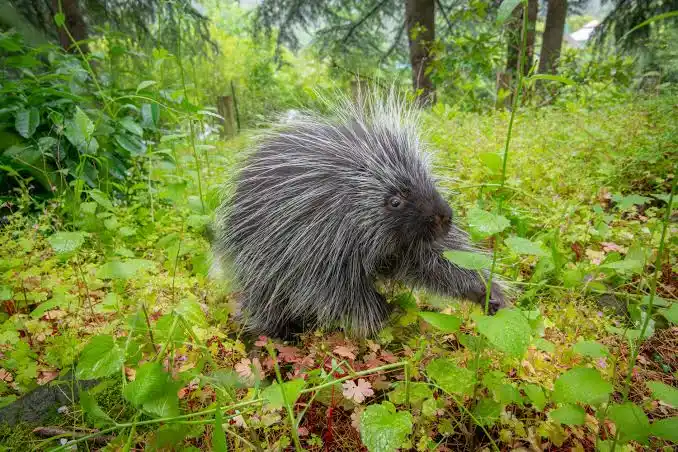
The North American porcupine, a captivating inhabitant of forests and shrublands, showcases a peerless adaptation in its quill. Covered physiognomy, which serves as both armor and a countermeasure against predators.
The quills are coated with a unique lubricant that speeds up their entry into skin, making encounters with a porcupine much more painful for would-be predators. Beyond their defensive capabilities, porcupines reveal a captivating diet that reflects their ecological role.
They are primarily herbivores, feasting on leaves, bark, and roots, and are particularly drawn to the cambium layer of trees, which aids in the growth and sustainability of wooded areas. This diet not only supports their health but also fosters a balance within their ecosystems.
The porcupine’s often solitary and nocturnal lifestyle invites curiosity; their shy demeanor masks a surprisingly playful nature, especially evident in their social interactions during the mating season.
6- Thorny Devil Lizard
Scientific name: Moloch horridus
Class: Reptilia
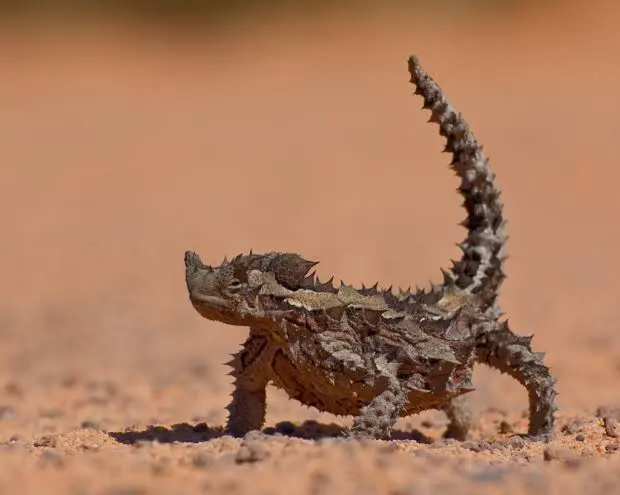
The Thorny Devil Lizard, with its spiky exterior resembling a moving fortress, embodies nature’s innovation in utilizing quills as a defense mechanism. This unique reptile uses its quilled armor for much more than just a scary appearance. It has developed an extraordinary method to survive in a hostile environment.
The lizard can assimilate moisture through its skin from the rain or dew, channeling water toward its mouth via channels formed by its spines. the Thorny Devil exemplifies how organisms with quills leverage their anatomical features not just for survival, but as a testament to the sophistication of evolution in arid ecosystems.
The thorny Devil’s survival strategy is comprehensive. While its spikes dissuade predators, the lizard’s ability to dissuade into its surroundings showcases a perfect integrate of camouflage and physical defense. If encountered, it can inflate its body to appear larger and more imposing, further intimidating any potential threats.
7- Sea Urchin
Scientific name: Strongylocentrotus purpuratus
Class: Echinoidea
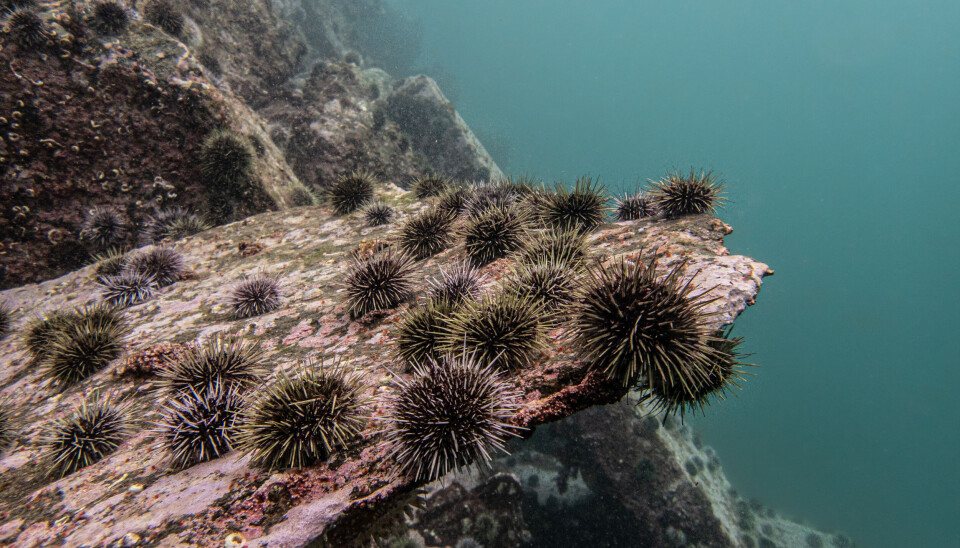
Sea urchins are much more than basic seabed residents, they are amazing examples of ocean life, especially for their needle like protective. They also help in movement across stony surfaces. Each spine can be compared to a finely tuned instrument, capable of delivering a sharp sting due to small toxic barbs designed to repel any predator hoping for a meal.
They play a vital part in their survival, allowing them to maneuver complex ecosystems where hunting pressure pressure is high. Watching a sea urchin travel with spins spread out like a vigilant protector adds a sense of intrigue to their life, proving that in the wild, beauty and hazard are often connected.
8- Pufferfish
Scientific name: Tetraodon nigroviridis
Class: Actinopterygii
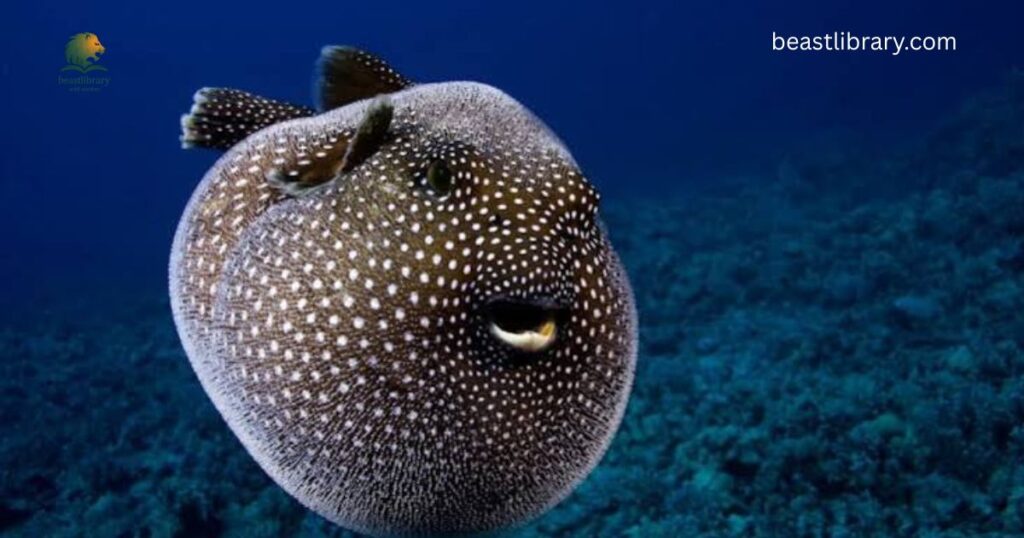
Pufferfish are greedy animals that have quills. These a potent neurotoxin found in their hide and internal parts intriguing creatures boast a unique adaptation high levels of tetrodotoxin. Remarkable, not every species of pufferfish carries the same toxicity level.
Some are even regarded as delicacies in specific traditions, such as fugu in japan. This duality raises questions about the pufferfish’s ecological role and the evolutionary pressures that shape its survival strategies.
9- African Brush‑tailed Porcupine
Scientific name: Atherurus africanus
Class: Mammalia
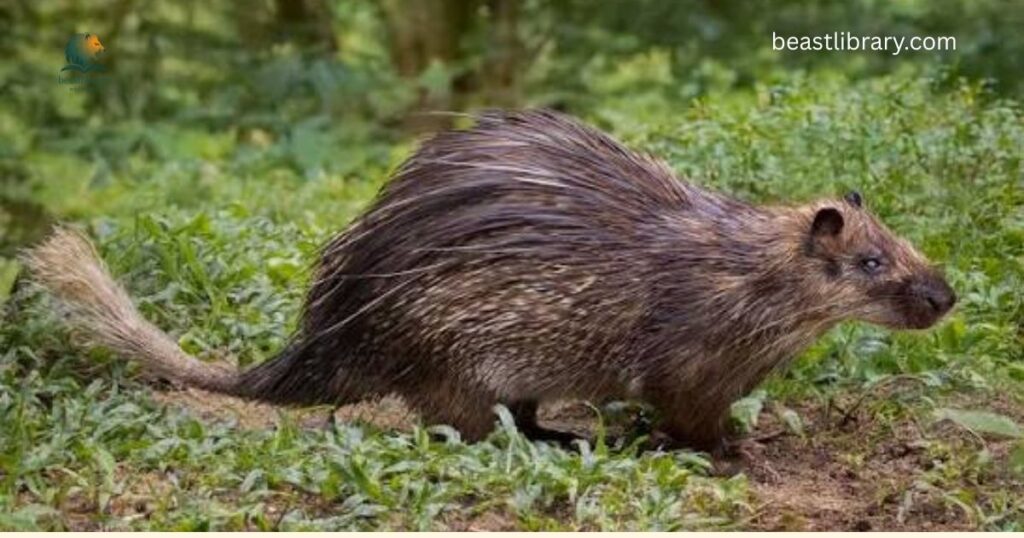
The African brush-tailed porcupine, a extraordinary creature featuring an collection of quills, is often outshone by its North American cousins. These night hunters display a remarkable flexibility, utilizing their impressive quills not only for protection but also as tools for communication.
Their unique quills are not simply spines, they are a simply to evolution’s brilliance, each armed with a unique barbed structure that can embed in the skin of would be attackers. When detecting danger, they beat their tails against the earth to create a resonating noise designed to scare away predators and alert potential mates.
A captivating mix of defensive tactics and social communications. residing in the thick woodlands across Africa. These rodents have adapted to a diet consisting of various tubers, fruits, and bark playing a vital part in their environment as seed spreaders.
10- Lowland Streaked Tenrec
Scientific name: Hemicentetes semispinosus
Class: Mammalia
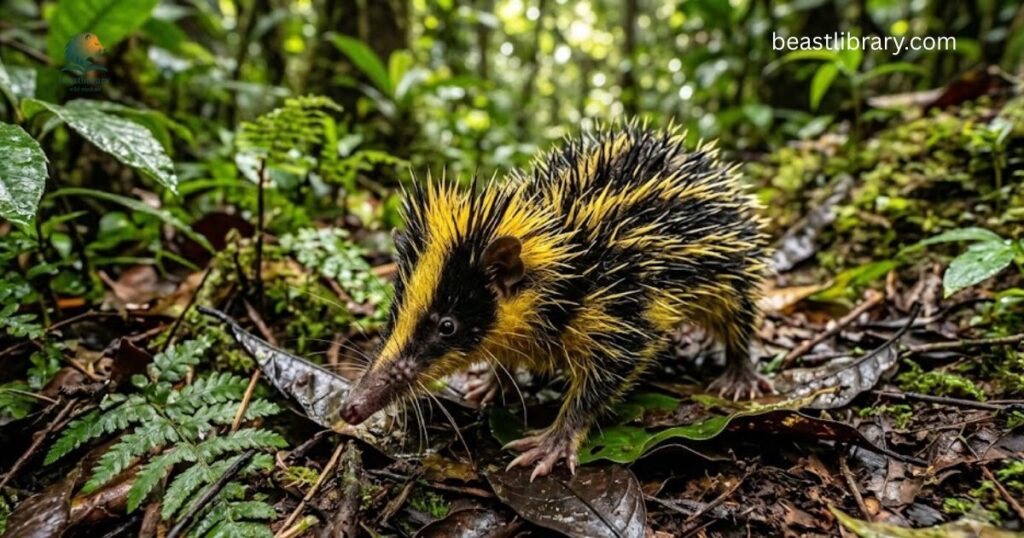
The Lowland Streaked Tenrec is a unique creature that defies the typical expectations of quilled animals. Native to the rainforests of Madagascar, aiding in communication and social interaction among these solitary mammals, its quills are not merely for defense, highlighting the complexity of their social behaviors.
When threatened, signaling danger to potential predators, while subtle movements of these spines can convey emotions to others of its kind. Its adaptability to the forest floor is a testament to the evolutionary pressures it faces.
What truly sets the Lowland Streaked Tenrec apart is its unique method of locomotion. Unlike this tenrec demonstrates agility and speed, many other quilled animals that tend to rely on defensive mechanisms, darting through the underbrush in search of insects and small invertebrates.
11- Spiny rats
Class: Mammalia
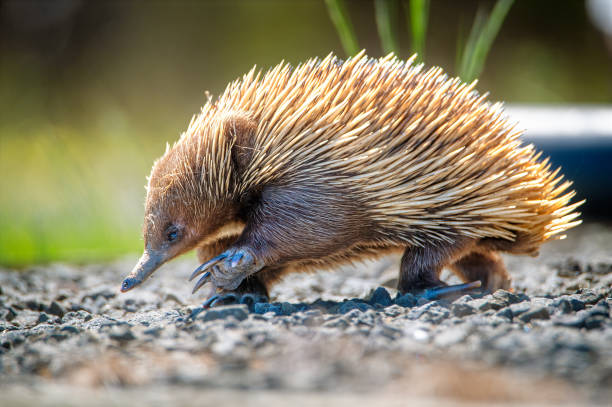
Spiny rats are animals with quills. These quills serve as a potent defense against predators, primarily found in the lush environments of Central and South America.
Observing the interactions within their groups unveils a rich tapestry of communication and cooperation that challenges the traditional perception of rodent social structures. These creatures are not merely passive defenders.
They play a crucial part in seed dispersal. By foraging for fruits and seeds, they inadvertently promote forest regeneration, showcasing the intricate relationships within their habitats. Spiny rat quills are softer and easily detachable, allowing them to shed these protective spines when threatened.
Conclusion:
Animals with quills have the most unique defense mechanisms in the natural world. From the animals like hedgehogs to porcupine every animal with spikes on back uses its sharp needles to protect themselves.
FAQs
What are animals with quills or spines?
Animals with quills or spines are creatures that have sharp, needle-like hairs or structures on their bodies used as a natural shield against predators.
What animals is also known as a quill pig?
The animal known as a “quill pig” is the porcupine. It gets this name because of its pig-like body and sharp quills.
Animals with spines are called?
Animals with spines are commonly called spiny animals or acanthomatous animals (like hedgehogs and sea urchins). If you mean animals with a backbone spine, they are scientifically called vertebrates.