Interesting Top 15 Animals with Long Horns (With Pictures)
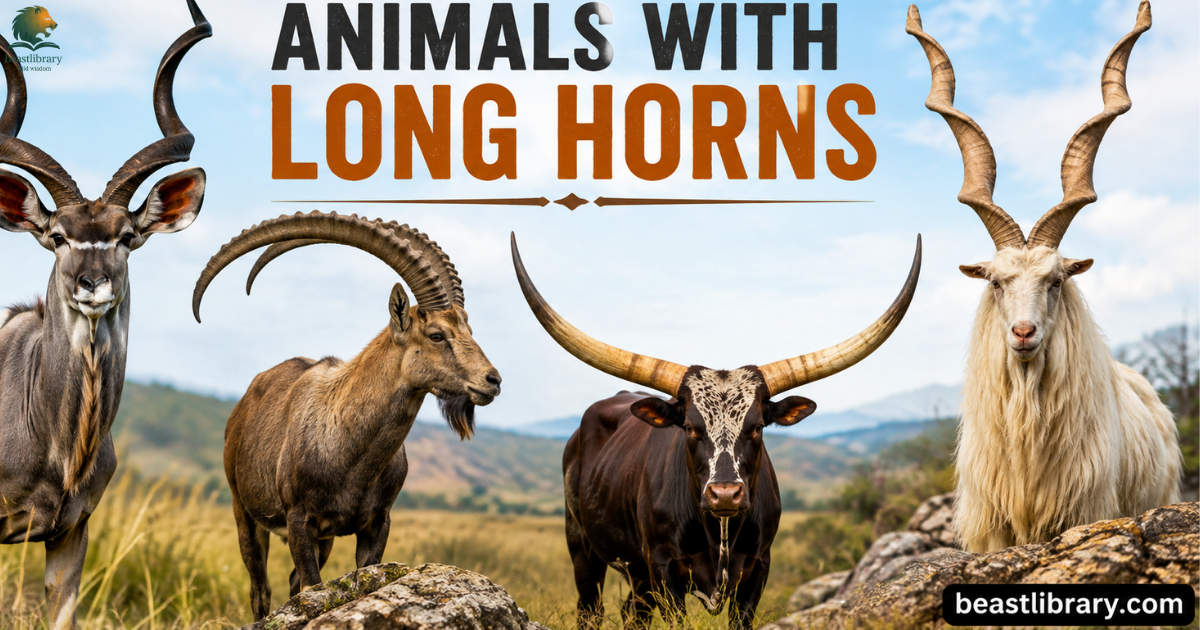
Animals with Long Horns are not just a striking view; they have developed incredible adaptations that allow them to survive in various environments. We’ll delve into the qualities, habits, and nature-related importance of these remarkable beings.
List of Animals with Long Horns
Here is list of animals that have long horns:
| Number of Animals | Names of Animals with Long Horns |
| 1 | Springbok |
| 2 | Texas Longhorn |
| 3 | Giant Eland |
| 4 | White Rhinoceros |
| 5 | Ankole-Watusi |
| 6 | Asian Water Buffalo |
| 7 | Pronghorn |
| 8 | Bighorn Sheep |
| 9 | Wild Yak |
| 10 | Greater Kudu |
| 11 | Scimitar Oryx |
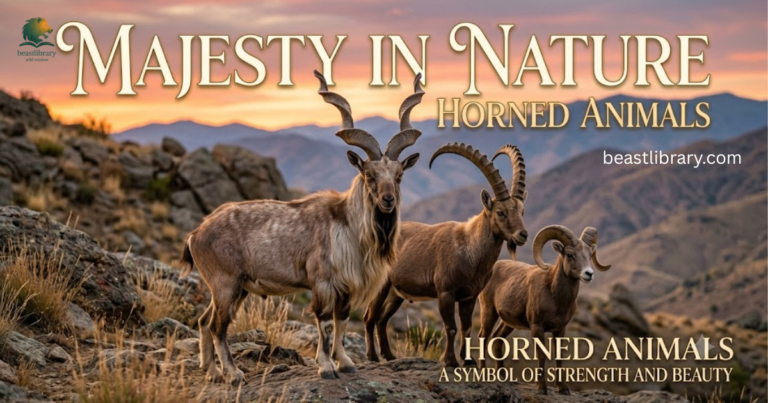
| 12 | Markhor |
| 13 | African Buffalo |
| 14 | Sable Antelope |
| 15 | Alpine Ibex |
1- Springbok– Animals with long Horns
Scientific Name: Antidorcas marsupialis
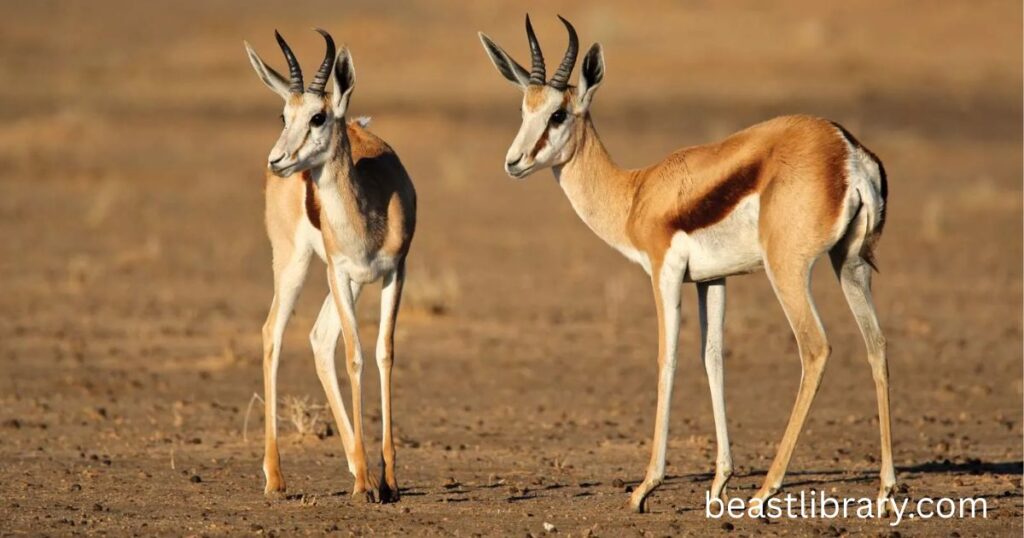
The springbok, a mid-sized antelope indigenous to southern Africa, is not only renowned for its remarkable speed but also for its remarkable long, slender horns that curve gracefully backward. These Animals with Long Horns which can grow up to 18 inches in males, are not just for show; they serve a critical role in establishing dominance and attracting mates during the breeding season.
The elegance of their curving horns becomes an integral part of their ritualistic combat, When springboks engage in dramatic displays of strength, known as sparring, highlighting both their physical capability and their complex social structure.
What truly sets the springbok apart is its exceptional talent for “pronking” or displaying a joyful series of jumps that can elevate them up to 10 feet off the ground.
2- Texas Longhorn
Scientific Name: Bos taurus
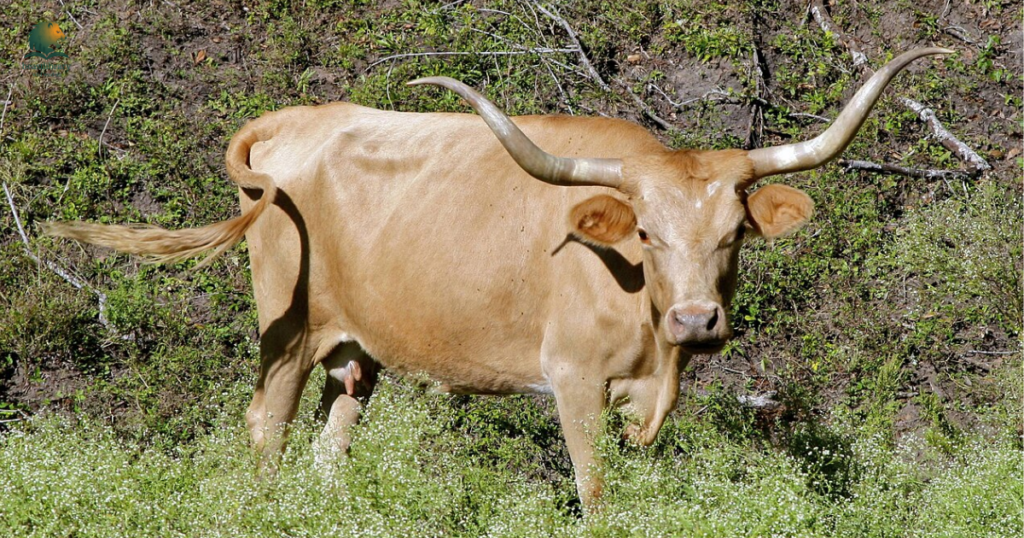
The Texas Longhorn is a living testament to endurance and evolutionary. Originating from Spanish cattle brought to the Americas in the 16th century, these creatures have adapted to flourish in varied and are Animals with Long Horns.
Aside from their distinct bodily features, Texas Longhorns also embody a deep cultural legacy. often featured in rodeos and festivals that celebrate Western tradition, They have become symbols of Texas pride and cowboy culture, making them hardier than many conventionally bred cattle their less-selective breeding process has led to a unique genetic diversity.
Allowing them to remain a vital part of the ecosystem, this durability is not only advantageous for ranchers looking for low maintenance herbs. Each Longhorn is a story one of survival and an integral piece in the tapestry of American heritage
3- Giant Eland
Scientific Name: Taurotragus derbianus
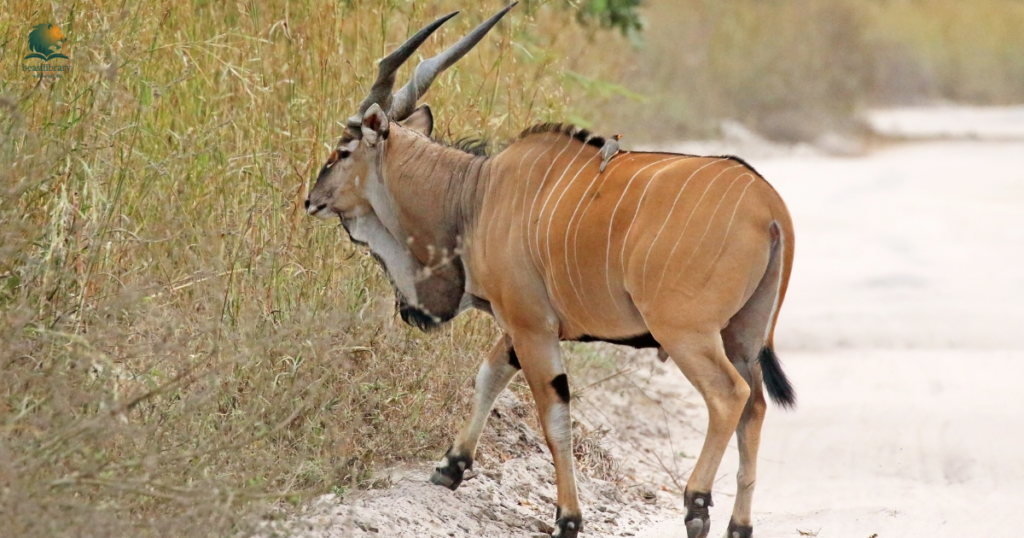
The Giant Eland, an remarkable antelope domestic to the grasslands of Central and West Africa, features the longest horns of any antelope species, with males commonly displaying spiraled horns that can reach lengths of up to 40 inches.
Males engage in ritualistic clashes known as “Animals with Long Horns” attracting potential mates and solidifying their status within the herd. the spectacle highlights their health. This fascinating ability, facilitating the growth of plant life as they graze and seed the terrain.
4- White Rhinoceros
Scientific Name: Ceratotherium simum
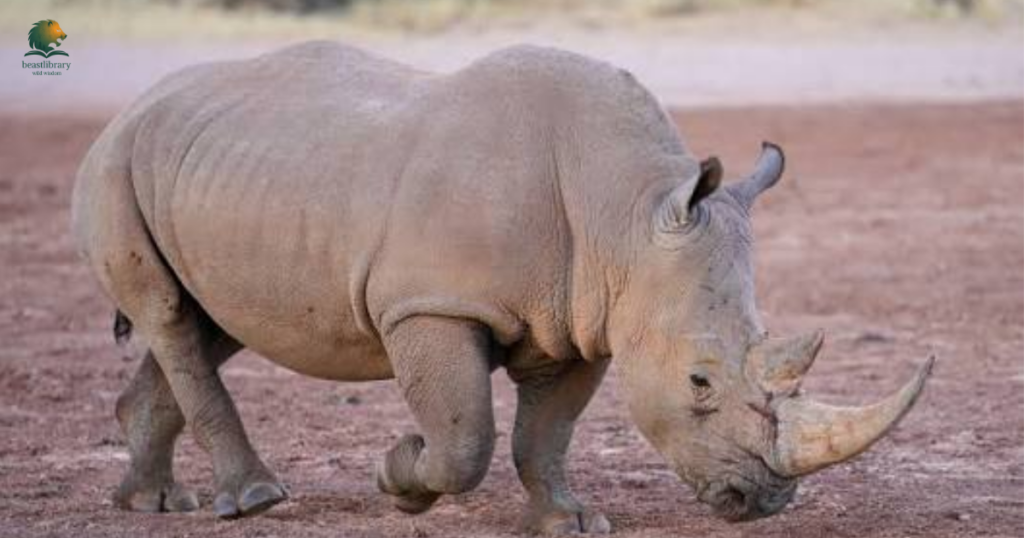
The white rhinoceros, frequently eclipsed by its massive size, is an exceptional creature that possesses not only great mass but also impressive horn growth. The white rhino’s two horns are more straightforward yet striking.
Unlike the intricate and spiraled horns of some species, with the front horn reaching lengths of up to five feet. These horns serve as a critical tool for survival in their grassland habitat, aiding in foraging and navigating social interactions.
5- Ankole Watusi
Scientific Name: Bos taurus
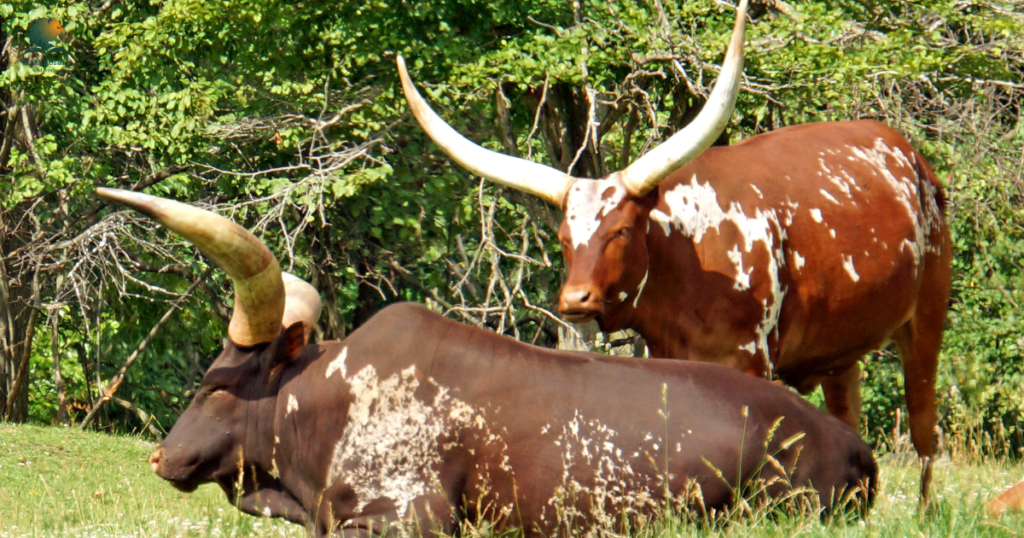
The Ankole-Watusi, with its remarkably long, curved horns, is frequently viewed as a living proof of nature’s creativity. These magnificent horns, which can reach up to 8 feet in length, they are not just for protecting the animal, they also act as a natural cooling system.
In addition, conservation efforts aimed at preserving the Ankole-Watusi are crucial as they face challenges from modern agricultural practices and habitat loss. typing to protect this special breed does not just save a unique animal, it also keeps safe the cultural traditions connected to them .
6- Asian Water Buffalo
Scientific Name: Bubalus bubalis
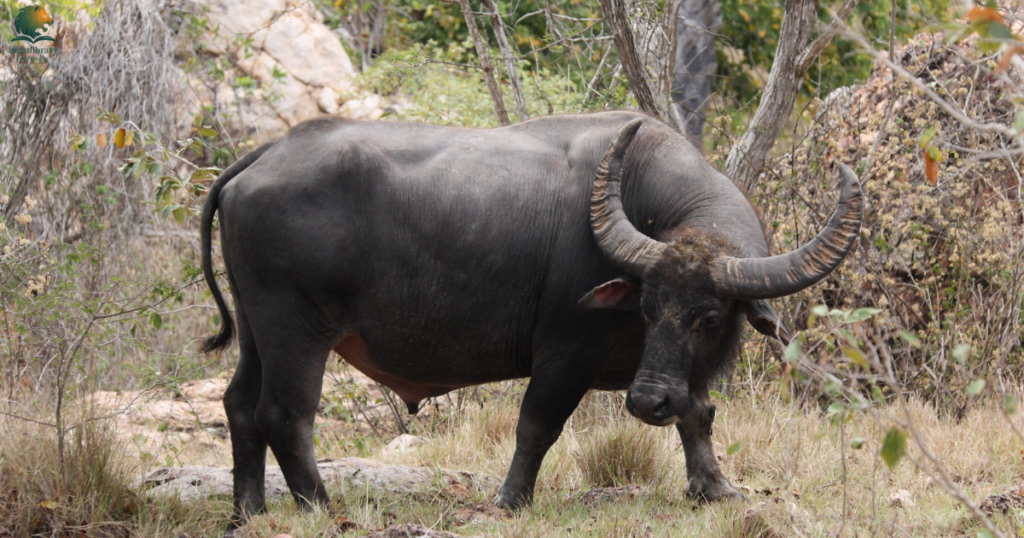
The Asian water buffalo is a powerful symbol of strength and toughness Asia. With its impressive long, curved horns, long curved horns that can reach up to 1.5 meters, this beautiful animal looks very impressive and plays an important role in its environment.
Apart from their grand looks, Asian water buffalo are revered for their adaptability to wet and marshy environments, making them incredibly important for local farming. Their ability to plow fields and provide milk reflects a symbiotic relationship with humans.
Showcasing how deeply intertwined their fate is with traditional lifestyles. we can appreciate not just their ecological significance, but also the cultural heritage they embody, By recognizing the integral role of the Asian water buffalo.
7- Pronghorn
Scientific Name: Antilocapra americana
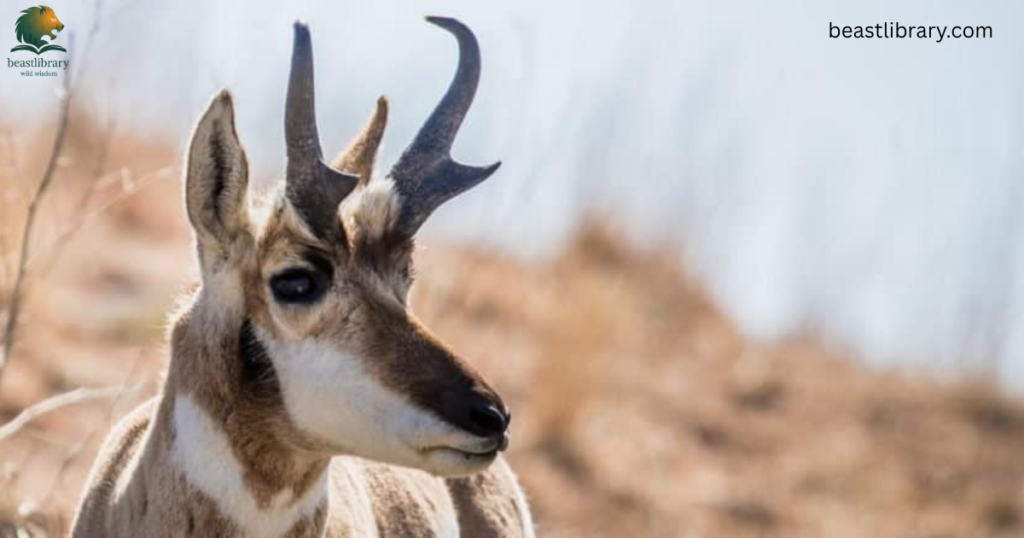
The pronghorn, often mistakenly referred to as an antelope. They live in prairies. Unlike true antelopes, pronghorns have a unique set of horns that feature a remarkable sheath capable of shedding annually.
Their shape, akin to a twin fork, establishing them as one of North American’s swiftest land mammals. What truly distinguishes pronghorns is not merely their astonishing velocity , they can reach up to 55 miles per hour but their exceptional stamina.
Pronghorns can maintain high speeds over long distances, While many animals rely on bursts of speed to escape predators, a trait that stems from their evolution as prey animals in the open landscapes of North America.
8- Bighorn Sheep
Scientific Name: Ovis canadensis
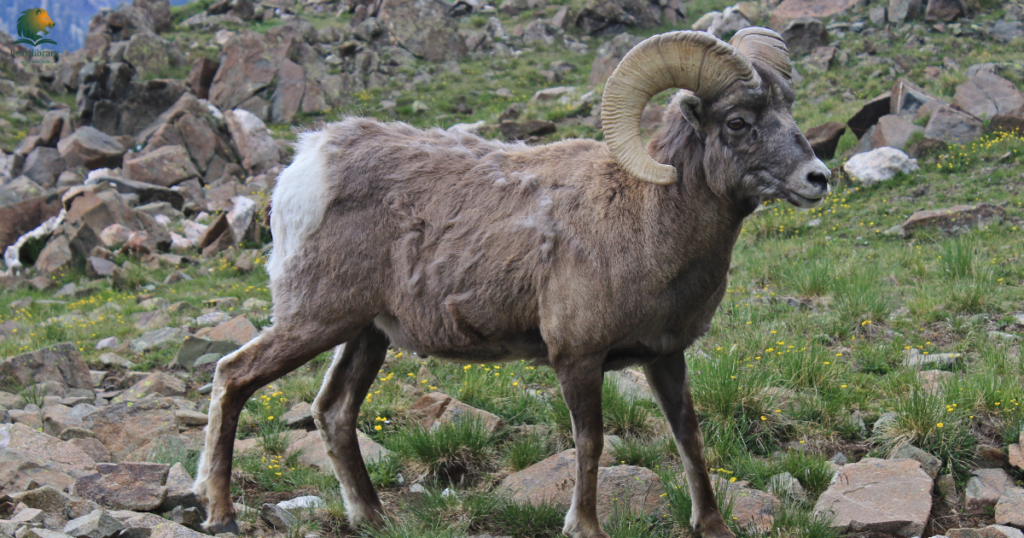
Bighorn sheep are not just remarkable for their iconic, curled horns; they also represent an incredible mixture of communal behavior and adaption tactics in the wild. Where their impressive horns serve dual purposes as a tool for forging their dominance and as a defense mechanism.
Showcasing their strength and determination during the mating season, towering rams engage in bone-rattling headbutts. This behavior is far more than a simple exhibition of force; it’s an intricate dance of biology and evolution, proving how these massive creatures have adapted to not only endure but truly flourish in the most unforgiving environments.
These creatures form deep communal connections, mentoring juvenile members and maintaining a tight knit herd structure. Observing them, one realizes that their survival depends not only on individual strength but also on collective awareness and cooperation.
9- Wild Yak
Scientific Name: Bos mutus
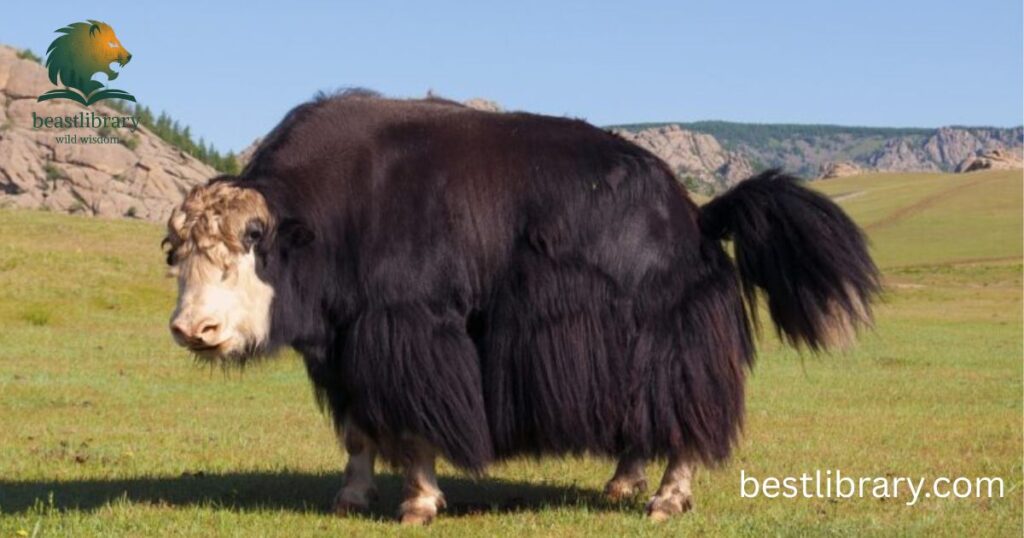
Wild yak is thick fur grand animal indigenous to harsh Himalayan peaks, stands out not only for its impressive long horns but also for its remarkable adaptability in extreme environments. these splendid beasts flourish at elevations surpassing 15,000 feet, where few other species can survive.
Their horns, which can grow up to 40 inches, allowing them to navigate through snow-draped landscapes while warding off predators, serve as vital tools for both foraging and defense.Beyond their physical capabilities, wild yaks exhibit fascinating social structures. Living in small herds, they are recognized for keeping deep family ties, often nurturing a close-knit community where mothers fiercely protect their calves.
10- Greater Kudu
Scientific Name: Tragelaphus strepsiceros
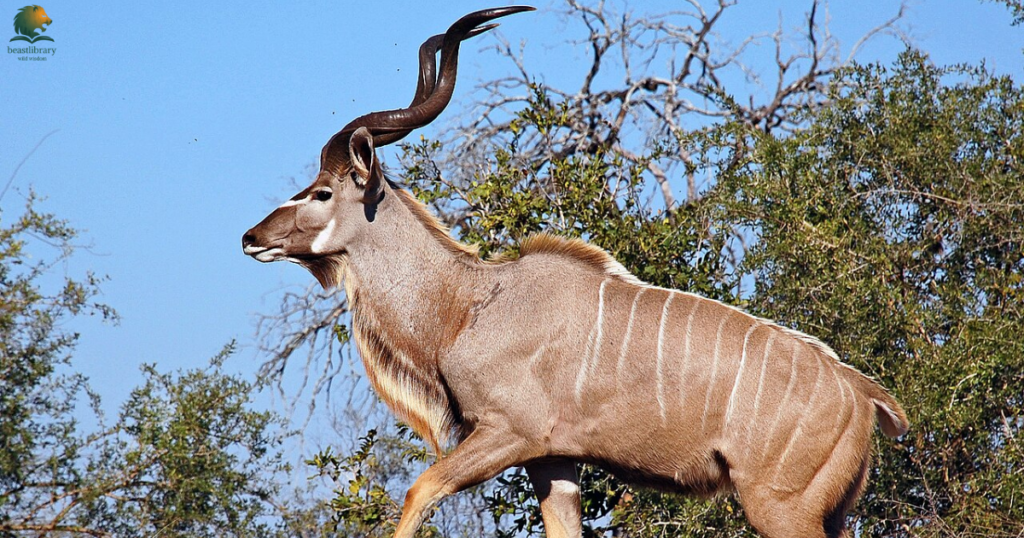
The Greater Kudu, with its impressive spiral horns reaching lengths of up to 27 inches, represents both a breathtaking creature and a brilliant example of ecological development. These majestic antelopes utilize their remarkable horns for defense against predators and as a display of dominance during mating rituals Found predominantly in southern and eastern Africa.
These gentle giants are also known for their remarkable agility; despite their heavy frame, they are capable of jumping distance of up to 10 feet and traversing rugged slopes with ease. This unique combination of grace and strength enables them to thrive in various habitats, ranging from thick forest to wide savannahs.
11- Scimitar Oryx
Scientific Name: Oryx dammah
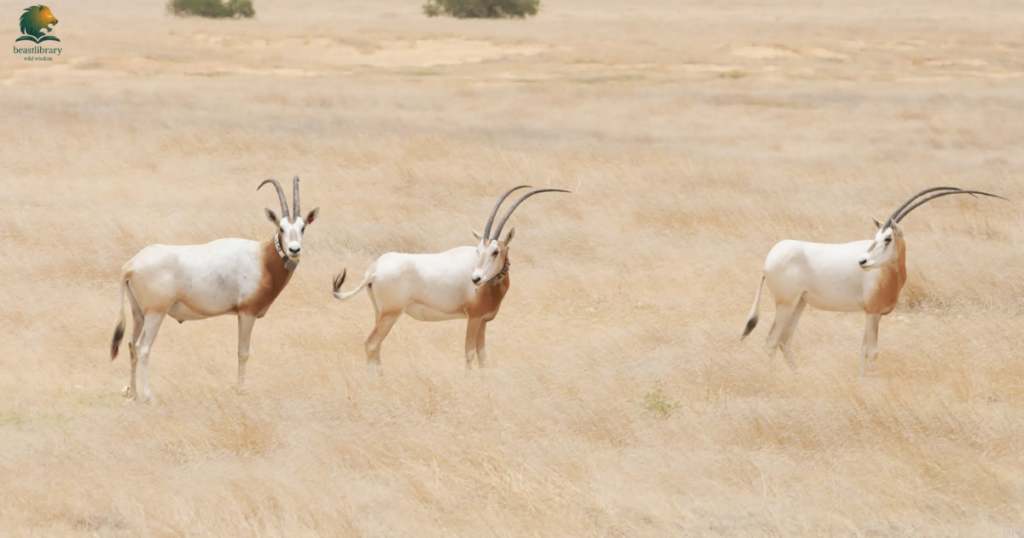
The Scimitar Oryx, once native to the arid deserts of North Africa, stands as a magnificent testament to biological evolution, elegant horns that can reach lengths of up to 3 feet. these remarkable features are far more than just visual decorations.
The horns serve as tools for defense against predators and, their unique crescent shape allows them to navigate through dense vegetation with surprising agility, establishing them as true survivors of their unforgiving habitat.
12- Markhor
Scientific Name: Capra falconeri

The Markhor, an extraordinary wild get goat species indigenous to the elevated mountain ranges of Central Asia, twisted horns that can reach lengths of up to five feet is renowned for its impressive long. These massive horns are far more than just a striking visual features, they play an indispensable part in the animals daily survival and courtship behaviors.
Beyond their physical strength, Markhors adeptly navigating steep, rocky terrains with incredible agility and masters of their rugged habitats. Their digestive system is uniquely adapted to process the tough grasses and shrubs that thrive in high-elevation territories, enabling them to flourish in extreme conditions where very few other animals can survive.
13- African Buffalo
Scientific Name: Syncerus caffer
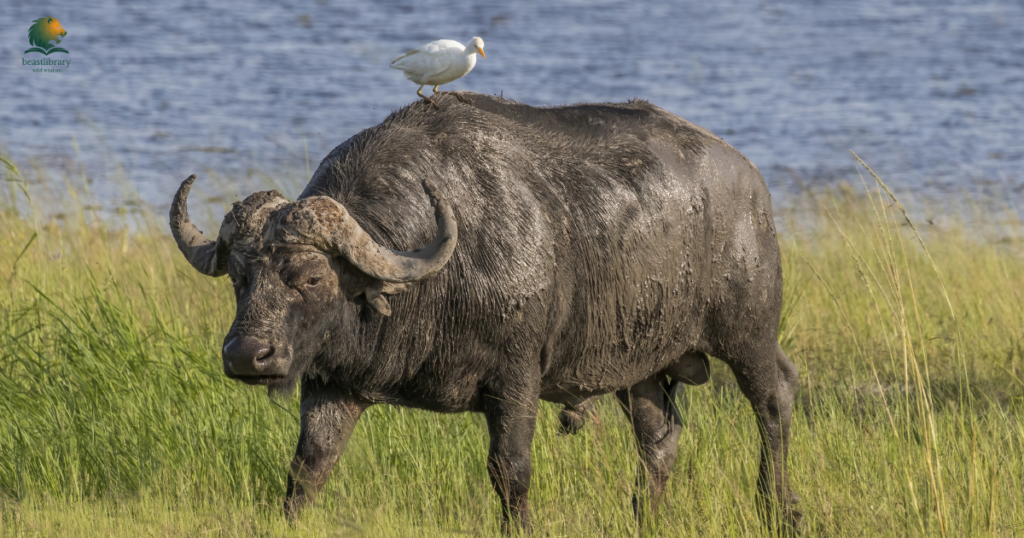
The African buffalo, or Syncerus caffer, showcases one of the most formidable sets of horns in the animal kingdom. These impressive horns, which can span nearly three feet, are not merely for display; they play a crucial role in social dynamics and protection within herds.
Interestingly, buffalo horns are not uniform; they can differ significantly in size and shape, reflecting both the individual’s genetic lineage and social status. This natural variation can be a signifier for other herdsmen in the wild, allowing them to assess potential mates or competitors without a physical confrontation.
14- Sable Antelope
Scientific Name: Hippotragus niger
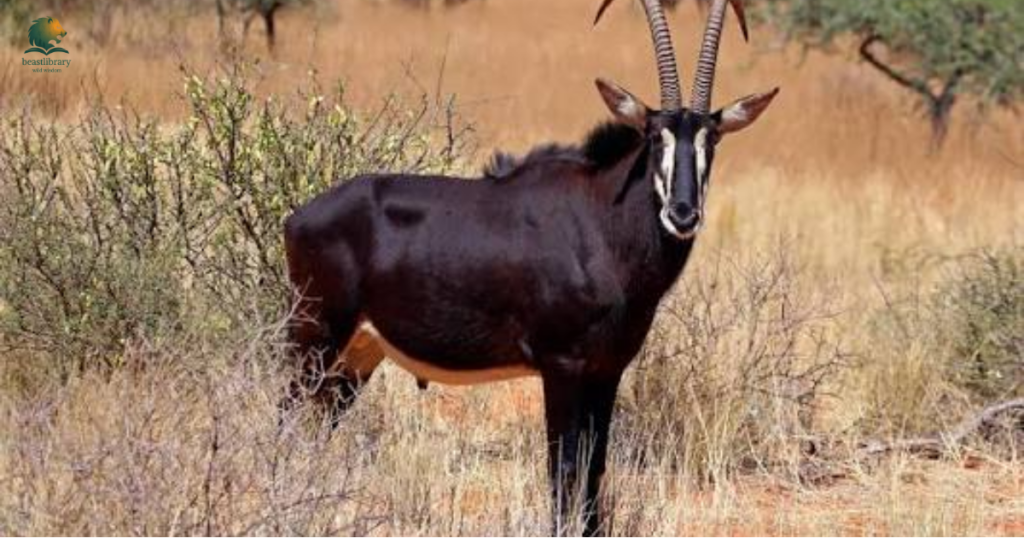
The sable antelope, with its strikingly long, curved horns, is a true marvel of the African savanna. These majestic creatures can have horns that reach lengths of up to 63 inches, making them not only visually stunning but also highly functional.
Male sable antelopes can use their impressive horns in intricate displays of dominance during mating rituals, establishing their strength and genetic fitness to potential mates.
What sets the sable antelope apart is also its unique social structure. Living in groups called herds, these animals exhibit a sophisticated hierarchy that facilitates cooperation and protection.
15- Alpine Ibex
Scientific Name: Capra ibex
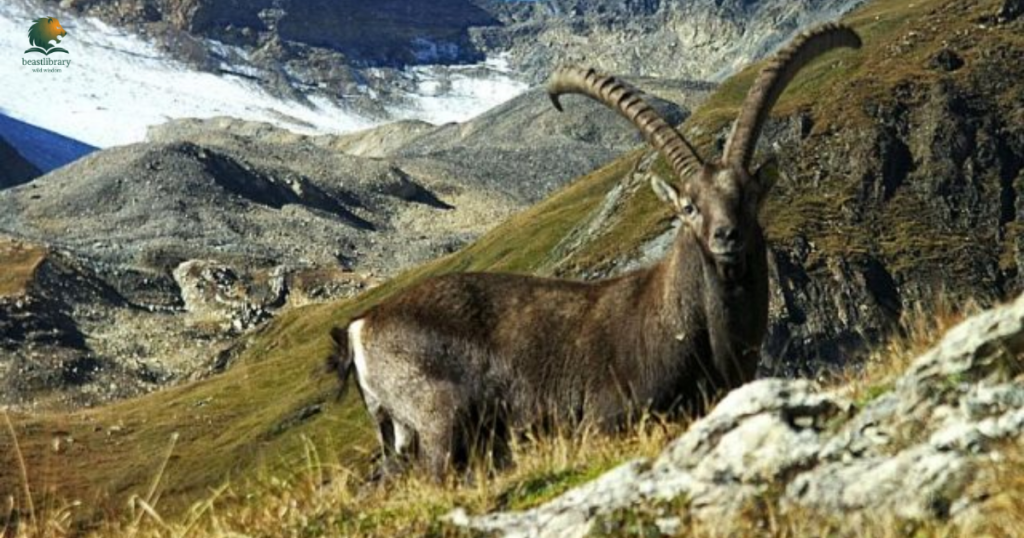
The Alpine ibex, known for its impressive, backward-curving horns, epitomizes resilience in the harsh mountain landscapes of the European Alps. These majestic creatures can grow horns up to 3 feet long, making them not only a striking visual but also a vital tool for survival.
Beyond their physical prowess, Alpine ibex exhibit remarkable adaptability. They are expert climbers, navigating steep rocky terrains with agility that belies their size. This skill not only allows them access to better food sources but also serves as a vital escape route from lurking threats.
Final Words– Animals with Long Horns
Animals with long horns showcase the incredible diversity of adaptations found in the animal kingdom. These majestic structures serve various purposes, from attracting mates to defending territory, highlighting the complex interplay of survival strategies in nature.
FAQs
Which animal has the longest Horns?
The Asian Water Buffalo holds the record for the longest horns on a wild animal, reaching up to 13 feet 10 inches from tip to tip. In domestic animals, the Texas Longhorn and Ankole-Watusi cattle also grow massive horns spanning over 11 feet wide or 40 inches thick.
What animal has long straight Horns?
The Gemsbok is famous for its long, rapier-like straight horns that can reach up to 4 feet in length. From a distance, these tightly aligned horns can make the animal look like a mythical unicorn, which likely inspired early legends.