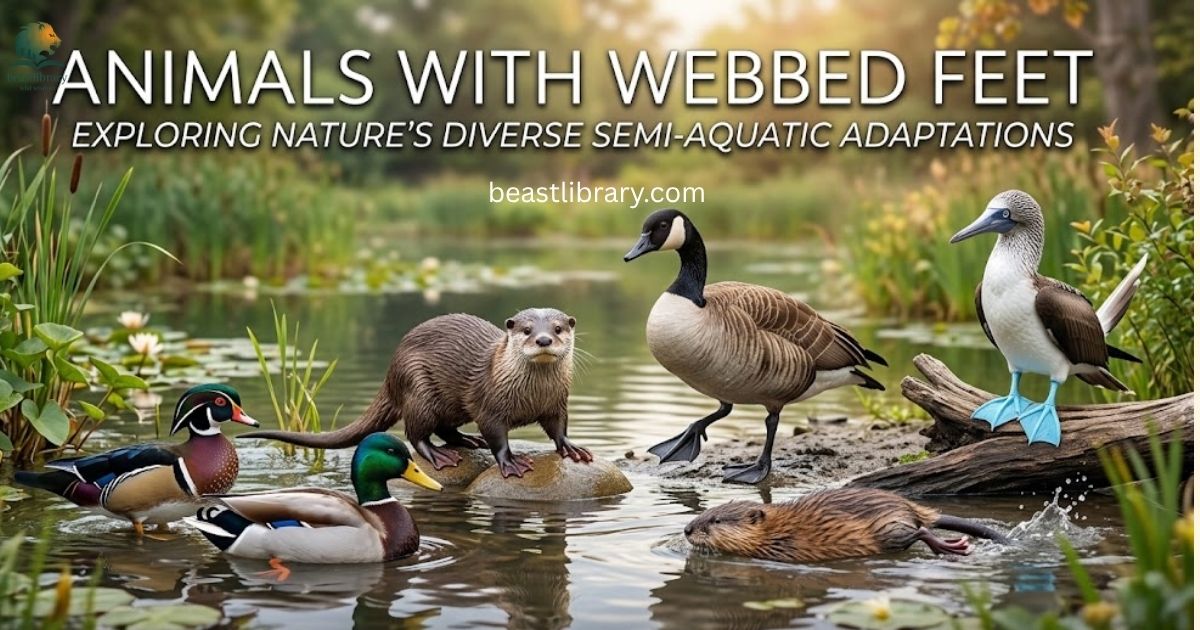
Top 15 Animals with Webbed Feet: How they use them to Swim
Animals with webbed feet are uniquely adapted for life in water, mud & soft land. While many speice rely heavily on animals with webbed feet for swimming, this unique trait also helps birds, mammals, and amphibians jump, dive, and safely navigate wetlands.
Table Of 15 Animals With Webbed Feet
| Rank | Animal Name | Scientific Name | Class | Diet |
| 1 | Mallard Duck | Anas platyrhynchos | Aves | Omnivore |
| 2 | American Beaver | Castor canadensis | Mammalia | Herbivore |
| 3 | Northern Pike | Esox lucius | Actinopterygii | Carnivore |
| 4 | Common Frog | Rana temporaria | Amphibia | Insectivore |
| 5 | American Alligator | Alligator mississippiensis | Reptilia | Carnivore |
| 6 | Canadian Goose | Branta canadensis | Aves | Herbivore |
| 7 | Platypus | Ornithorhynchus anatinus | Mammalia | Carnivore |
| 8 | Sea Otter | Enhydra lutris | Mammalia | Carnivore |
| 9 | American Toad | Anaxyrus americanus | Amphibia | Insectivore |
| 10 | Common Moorhen | Gallinula chloropus | Aves | Omnivore |
| 11 | Painted Turtle | Chrysemys picta | Reptilia | Omnivore |
| 12 | Red-Eared Slider | Trachemys scripta elegans | Reptilia | Omnivore |
| 13 | Wood Duck | Aix sponsa | Aves | Omnivore |
| 14 | African Clawed Frog | Xenopus laevis | Amphibia | Carnivore |
| 15 | Tufted Puffin | Fratercula cirrhata | Aves | Carnivore |
Detailed List of Animals With Webbed Feet with Pictures
1. Mallard Duck
- Scientific Name: Anas platyrhynchos
- Class: Aves
- Diet: Omnivore
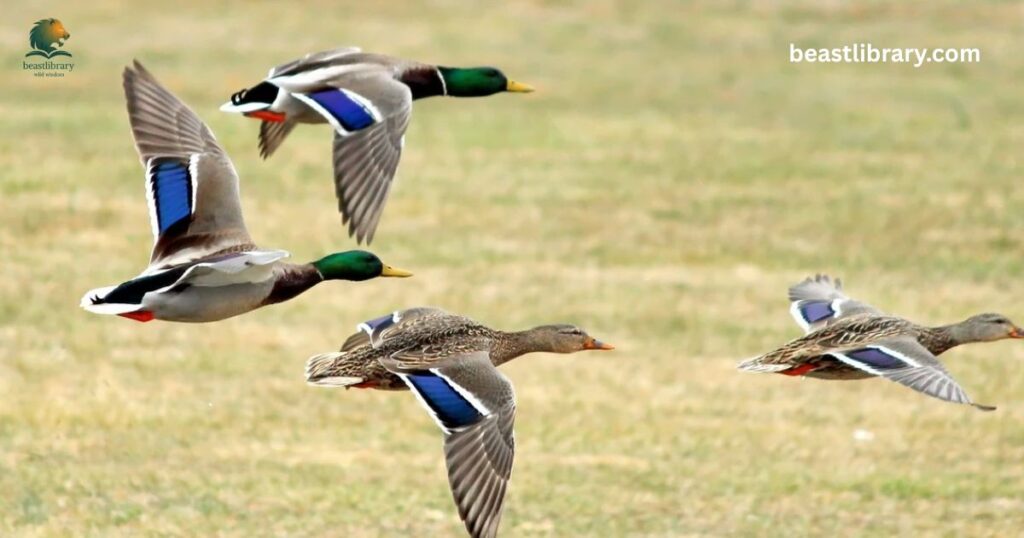
Mallard duck is one of the most familiar webbed foot bird. Its wide, flat webbing enables it to swim well in the lakes, rivers and ponds. Mallards can also use their feet to stir mud, revealing aquatic vegetation, seeds, insects, as well as small fish.
Their webbed feet are useful in keeping them balance on slippery surfaces and also in swimming like paddles. Webbed feet are used in rapid take-offs of water surfaces. These adaptations enable mallards to be very adaptable to every environment.
Fun fact: Mallards are one of the few duck species that flourish in urban environments and can often be seen in city ponds.
2. American Beaver
- Scientific Name: Castor canadensis
- Class: Mammalia
- Diet: Herbivore
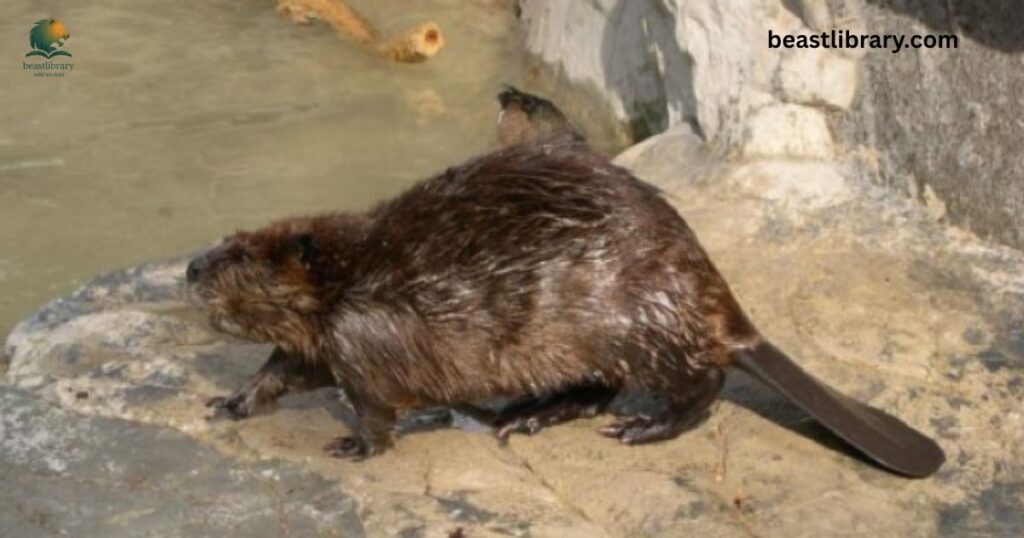
American beaver is a huge whisker rodent, with flat tail. Its hind feet are completely webbed and this help it to swim in the water and also help in navigation. Beavers live in rivers, streams, ponds and wetlands, where they make dams and lodges that define whole ecosystems.
Webbed feet help rapid movement underwater which will help in predator evasion and also help in transporting materials to their lodges. It can stay up to 15 minutes under water. The webbed feet are necessary to move around and it provide stability during construction in the water.
Fun fact: Beaver dams create wetlands that support birds, fish, and amphibians, increasing biodiversity.
3. Northern Pike
- Scientific Name: Esox lucius
- Class: Actinopterygii
- Diet: Carnivore
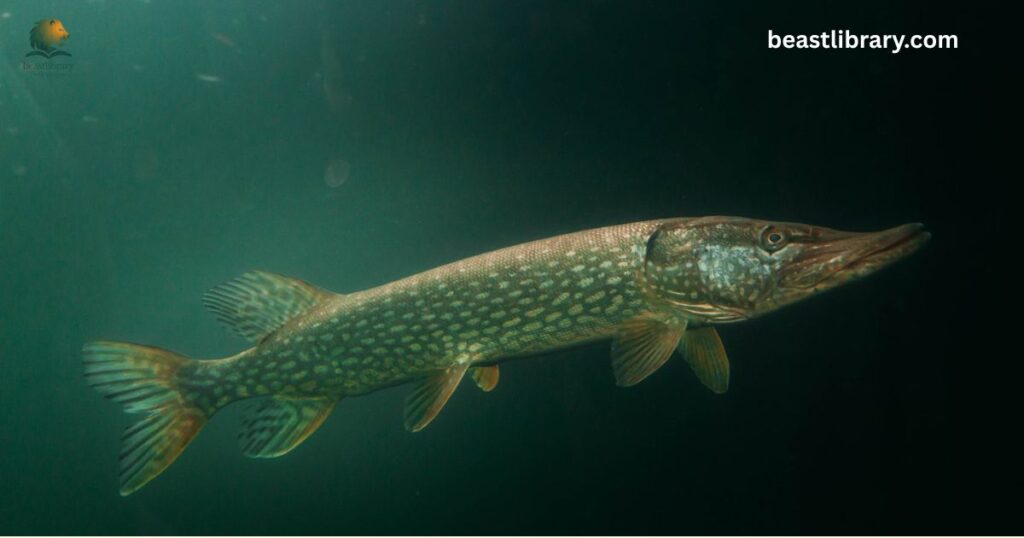
The northern pike is a freshwater fish that is commonly found in lakes, rivers and in marshes of North America, Europe and Asia. Its webbed paddling like fins enables it to make accurate moves and make sudden speedy bursts to hunt prey.
They are effective swimmers who can suddenly leap and turn, as they have webbed fins, which are added to the streamlined body. They also have short bursts that can make them to get away when they are being chased by predators such as the otters or large birds.
Fun fact: Northern pike are sometimes called “water wolves” because of their stealthy hunting style.
4. Common Frog
- Scientific Name: Rana temporaria
- Class: Amphibia
- Diet: Insectivore
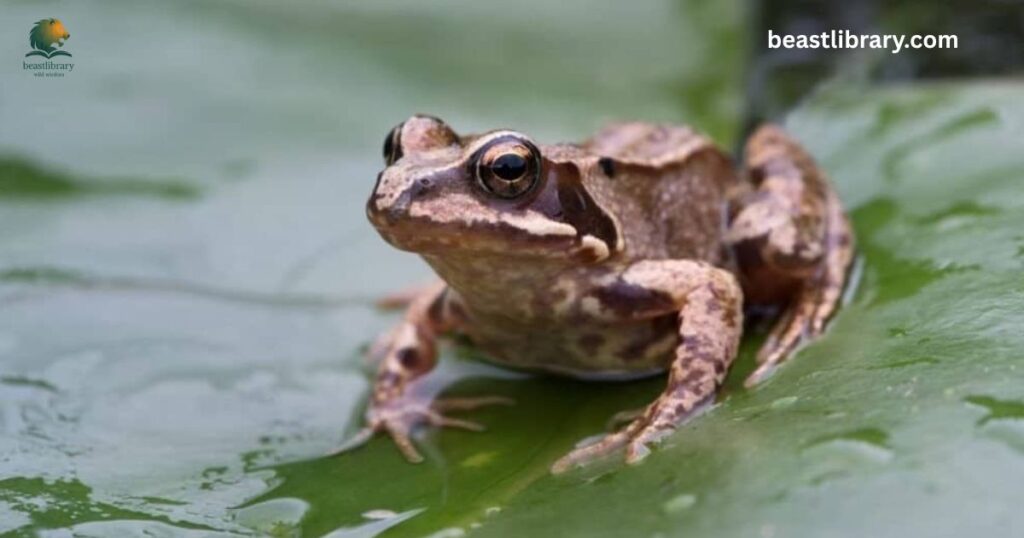
Common frog, which is a European amphibian and has entirely webbed feet hence is a good swimmer. It inhabits ponds, wet marshes and wet woodland. The webbing facilitates high push in water thus the frog gets out of trouble within a short time and also changes habitats and food.
Frogs are carnivorous creatures that inhabit insects, worms and other small creatures. They are also able to jump a long distance on land and their feet are also webbed, thus helping them to swim and to jump.
Fun fact: Common frogs can jump over 20 times their body length, thanks to their strong webbed feet.
5. American Alligator
- Scientific Name: Alligator mississippiensis
- Class: Reptilia
- Diet: Carnivore
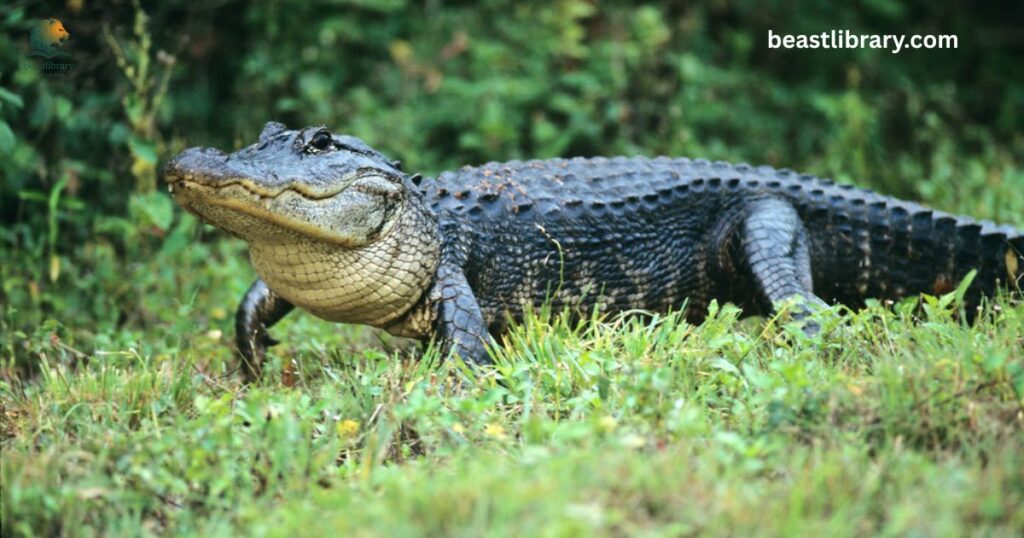
The alligator is a large growl reptile that has semi-webbed feet and is well adapted to fresh water environments such as rivers, lakes, swamp, and marshes in the south east of the United States. The toes are webbed to give a thrust in water so that alligators do not make noise when hunting.
Webbed feet make short bursts of speed in water which is very essential in trapping prey. Adults walk in a clumsy manner on the land but use water to do most of their hunting and travelling. Women make nests of reeds around water and protect their eggs until they are hatched.
Fun fact: American alligators have sharp teeth and can survive for months without food due to their slow metabolism and energy-efficient swimming.
6. Canadian Goose
- Scientific Name: Branta canadensis
- Class: Aves
- Diet: Herbivore
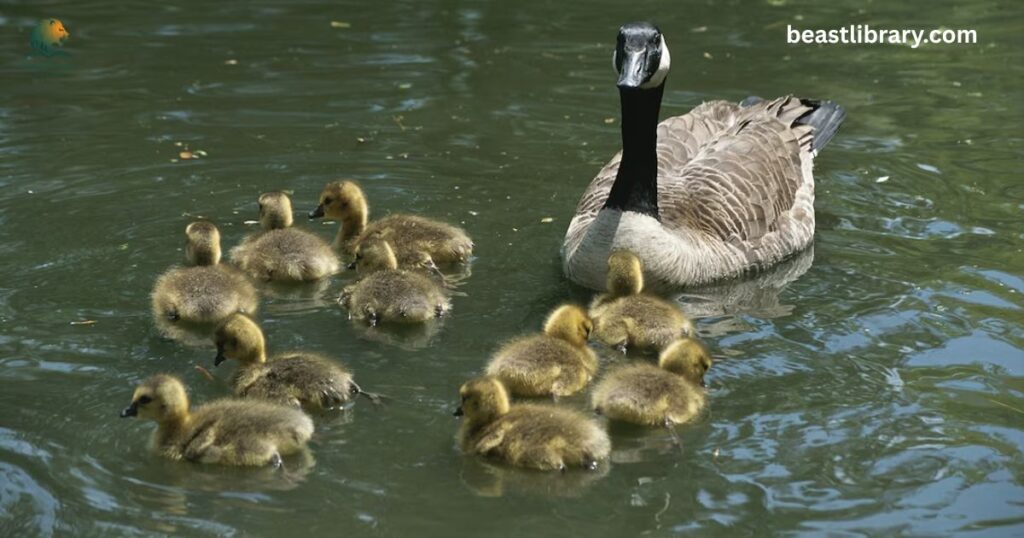
Canadian goose is a giant water bird which is present in North America as well as in some regions of Europe and Asia. The webbed feet enable it to swim effectively and move in the shallow ponds, lake, rivers and marshes.
Webbed feet adaptation give a push in water and a stand on soft or muddy ground and this feature is essential during searching. Geese are friendly, and tend to be found in flocks. They live close to water and make permanent pairs and both parents guards the eggs.
The young swims immediately after hatching. Geese are good at flying and their webbed feet help them to take off of the water surfaces. In winter, the Canadian geese are seen in groups of birds with shared roosts. They can also quickly escape predators through webbed feet swimming.
Fun Facts: Canadian geese can migrate over 3,000 miles each year using their webbed feet.
7. Platypus– Animals With Webbed Feet
- Scientific Name: Ornithorhynchus anatinus
- Class: Mammalia
- Diet: Carnivore
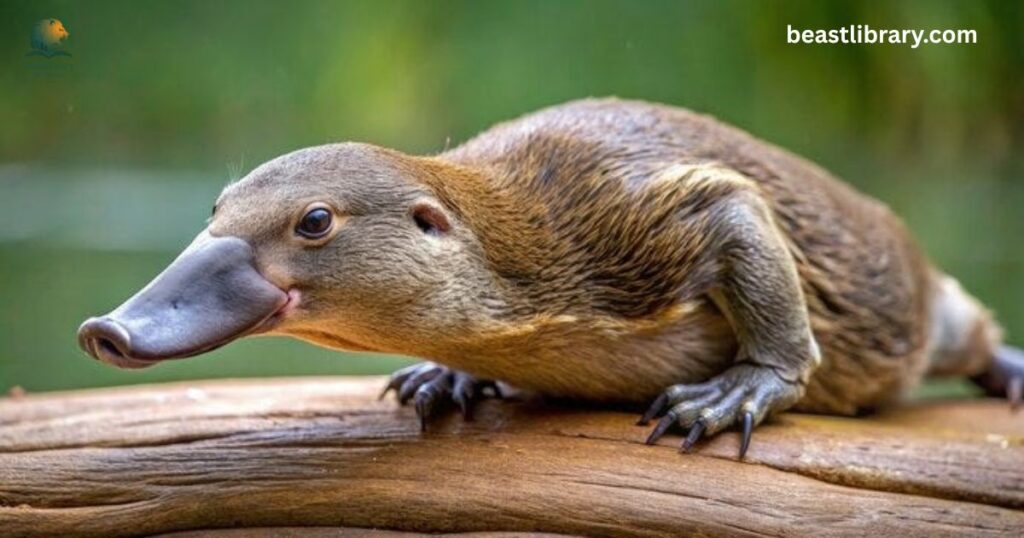
Platypus is a unique flat tail monotreme species in the eastern part of Australia, including Tasmania. The front feet are completely webbed and utilized like paddles as a mechanism of thrust, and the hind feet partially webbed and used as a guiding mechanism.
Their special structure of webbed feet, bill and tail enables them to be ideally fitted to underwater fishing and burrowing. The sight of a platypus makes us realize that a special adaptation can be developed through evolution in order to survive in the freshwater.
Fun fact: Platypuses close their eyes, ears, and nostrils underwater, relying on their webbed feet and bill to detect prey.
8. Sea Otter
- Scientific Name: Enhydra lutris
- Class: Mammalia
- Diet: Carnivore
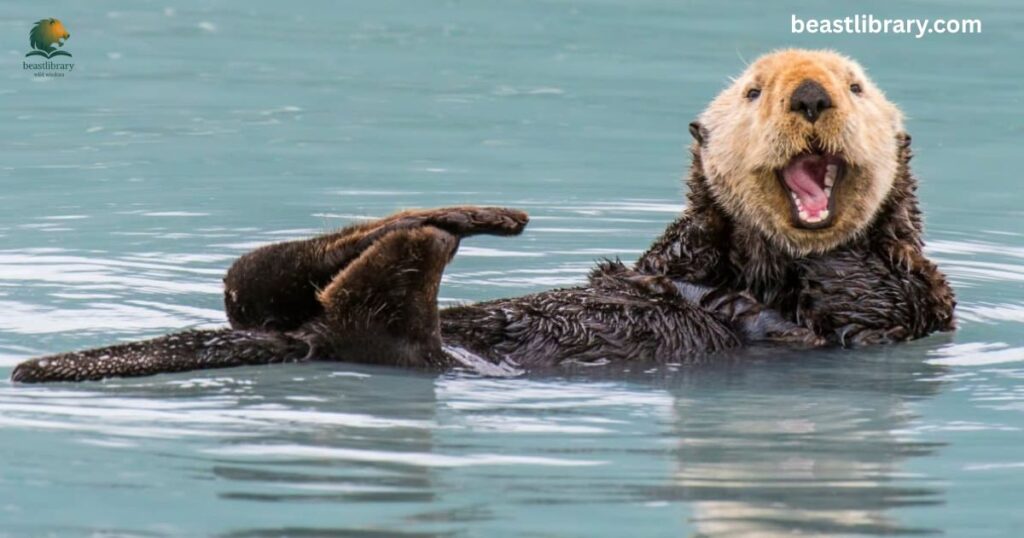
The sea otter is a short leg marine mammal that is also found along the beach of the north pacific ocean. Its hind feet are completely webbed in nature which serve effective in swimming and diving. The webbed feet also enable accurate control when foraging in the water.
Sea otters have small ear and the ability to eat a quarter of their body weight of food per day and this depends on the use of webbed feet to forage effectively. Their ability to weave underwater is of significance as evidenced by their agility during survival, feeding & socialization.
Fun fact: Sea otters are chubby mammals with webbed feet use agile paws to crack open shells and catch prey with remarkable precision.
9. American Toad
- Scientific Name: Anaxyrus americanus
- Class: Amphibia
- Diet: Insectivore
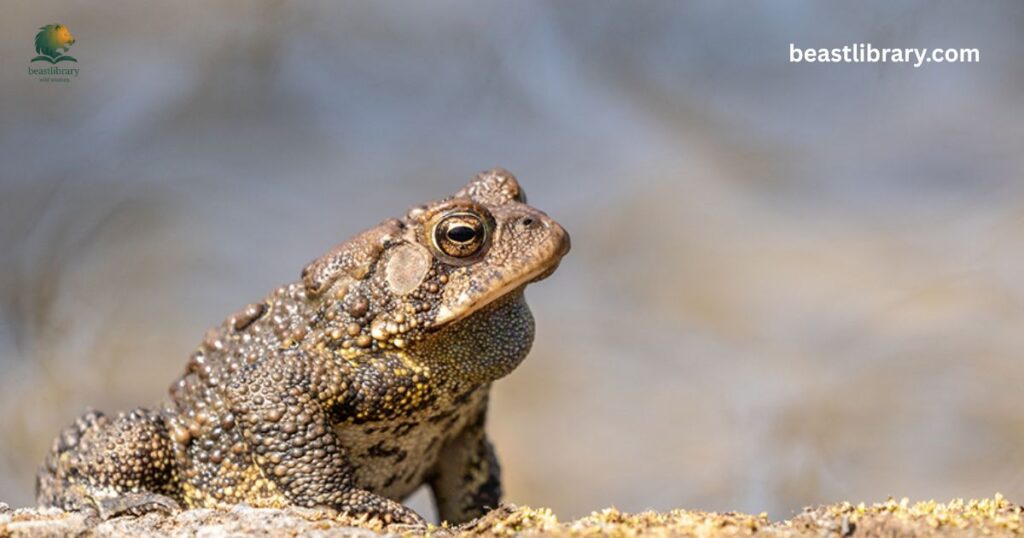
American toad is a widely spread amphibian in most parts of North America. It is a strong swimmer and its hind feet are partially webbed which enables it to swim well in ponds, wetlands, and streams. They are spotted animals of wild.
American toads are mostly nocturnal and they use camouflage to escape the predators. Adults also move to the shallow waters and lay eggs especially in groups and are usually attached to aquatic plants during the breeding season.
The American toads are able to secrete toxins in the skin to keep off predators and additionally tend to swell up on occasions when they are threatened. The webbed feet improve swimming and survival in the migrations to breeding ponds.
Fun fact: American toads can survive underwater for extended periods and use their webbed feet to escape predators quickly.
10. Common Moorhen
- Scientific Name: Gallinula chloropus
- Class: Aves
- Diet: Omnivore
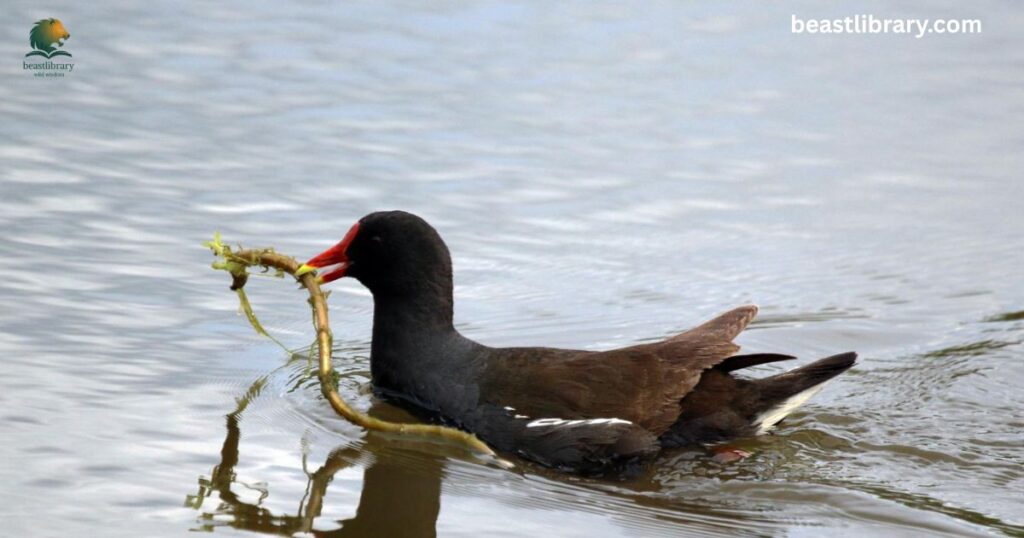
The common moorhen is a water bird that is distributed in Europe, Asia, Africa and Americas. Its long toes and partly webbed feet enable it to walk on floating plants and to swim well in the ponds and lakes and marshes.
Moorhens are carnivorous, they feed on seeds, aquatic plants, insects, snails and small fish. The webbed feet give stability to soft surfaces that are uneven and the power of paddling in water. Their webbing is also useful in quick take-off on the water surfaces.
Fun fact: Common moorhens can walk on floating vegetation thanks to their long toes and partially webbed feet, appearing to “walk on water.”
11. Painted Turtle
- Scientific Name: Chrysemys picta
- Class: Reptilia
- Diet: Omnivore
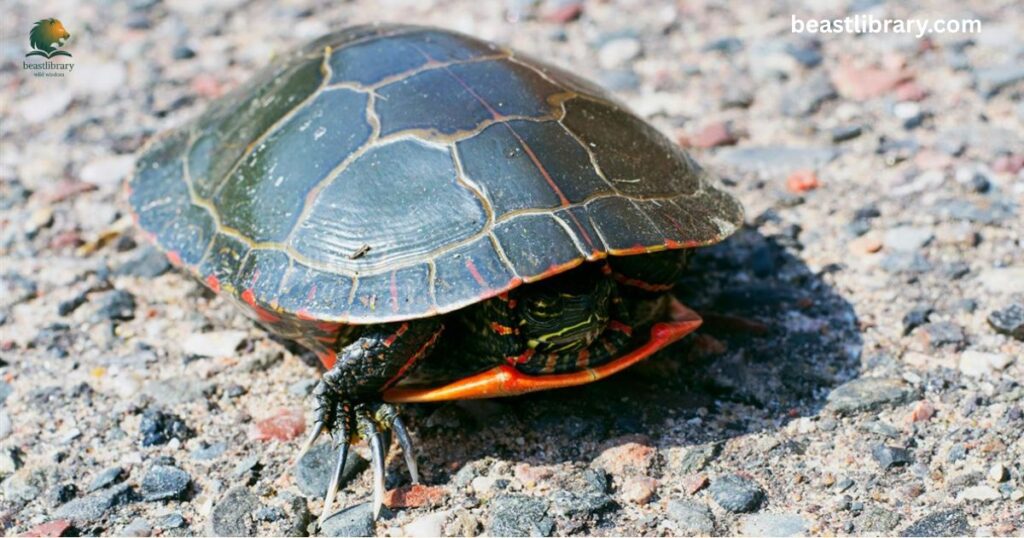
The painted turtle is a fresh water scaled reptile known around North America living in ponds, lakes, rivers, and marshes. The webbed feet enable effective swimming and navigation in aquatic plants. Painted turtles are omnivorous and they feed on aquatic plants, insects, small fishes and carrions.
Their feet are webbed, thus they are agile in water and in muddy beaches. They swim in slow-moving ponds, and by observing them it will be possible to see how evolution has adapted their feet to survive in semi-aquatic conditions.
Fun fact: Painted turtles can survive underwater during winter months by using their webbed feet to help control buoyancy and movement beneath the ice.
12. Red-Eared Slider
- Scientific Name: Trachemys scripta elegans
- Class: Reptilia
- Diet: Omnivore
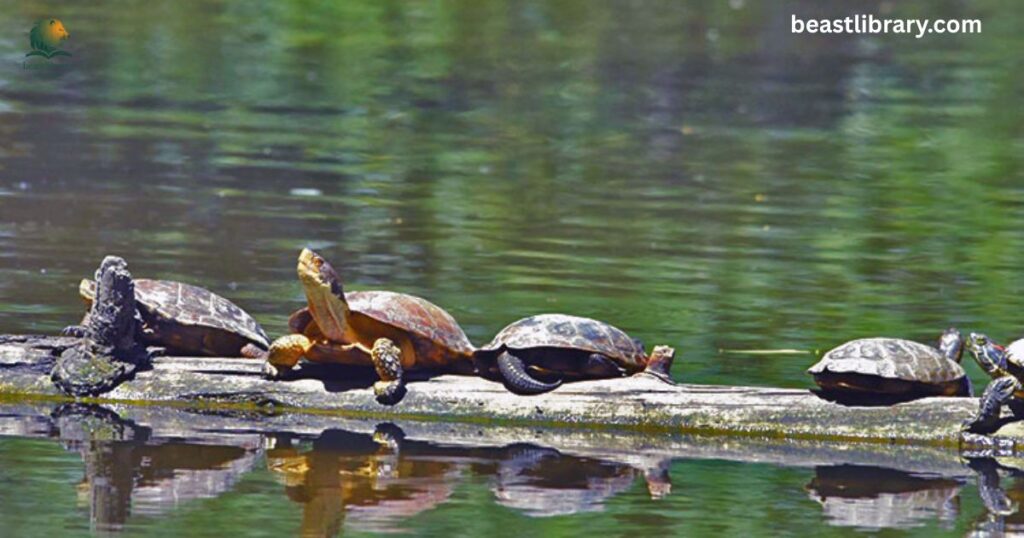
The red-eared slider is a fresh water turtle that is native to the southern region of the United States but it is introduced in other places all over the world. The webbed feet enable it to swim heavily and navigate swiftly in the ponds, lakes, rivers and canals.
Red-eared sliders are omnivores, and they feed on aquatic plants, insects, crustaceans and small fish. They have flat tails. Their webbed feet enable them to forage effectively, as well as to avoid predators, whereas their claws are used in climbing logs or nesting.
Fun fact: Red-eared sliders can hold their breath underwater for up to 30 minutes, using their webbed feet to maintain stability while submerged.
13. Wood Duck
- Scientific Name: Aix sponsa
- Class: Aves
- Diet: Omnivore
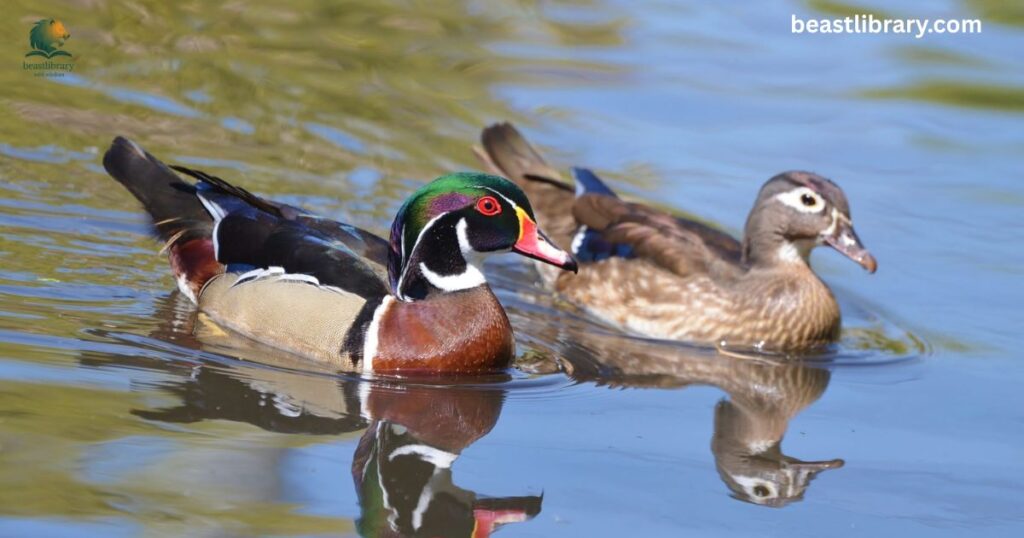
Wood duck is a freshwater flat tail duck that is native to North America. It has webbed feet which enable it to swim strongly in the ponds, streams and swamps. Wood ducks are omnivorous and feed on seed, fruit, aquatic plants and little invertebrates.
Ducklings have an early departure in the nest soon after they are hatched and with the help of their webbed feet, they swim to water. Wood ducks are quick flyers and swimmers, having webbed feet that help them in taking off on water surfaces.
Fun fact: Wood duck ducklings can leap from tree cavities up to 50 feet high and immediately swim using their webbed feet.
14. African Clawed Frog
- Scientific Name: Xenopus laevis
- Class: Amphibia
- Diet: Carnivore
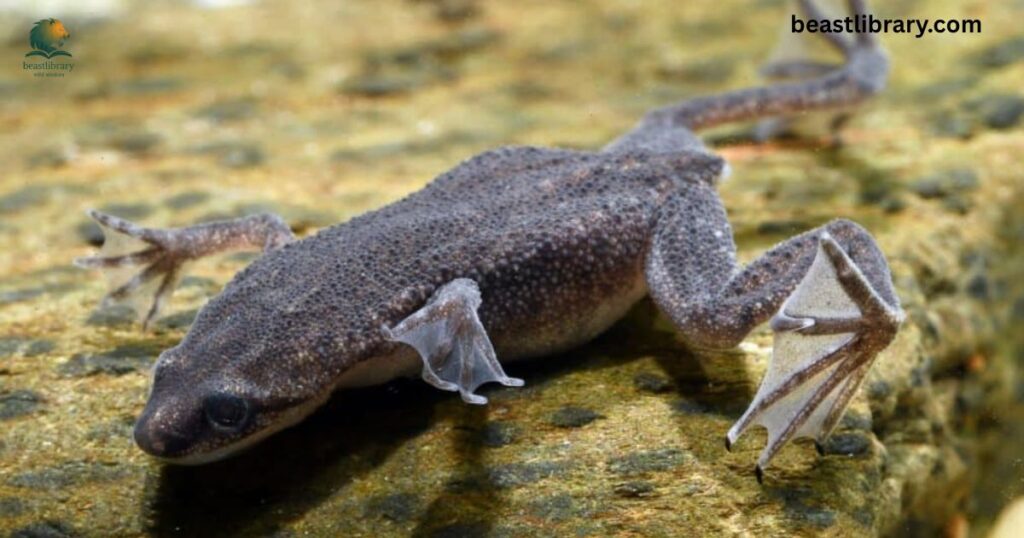
African clawed frog is a fully aquatic amphibian which is native to southern Africa. Its hind feet are completely webbed and they make it extremely fast to swim in the water. These frogs are carnivores where they feed on small invertebrates, insects and tadpoles.
They also can easily move through water as their webbed feet enable them to move quickly when hunting or evading predators. In adult frogs the webbed feet are used when hiding in soft sediment. Their feet are also webbed so that they can stand in the fast flowing water.
Fun fact: African clawed frogs use their webbed feet to create water currents that bring prey closer for easier capture.
15. Tufted Puffin
- Scientific Name: Fratercula cirrhata
- Class: Aves
- Diet: Carnivore
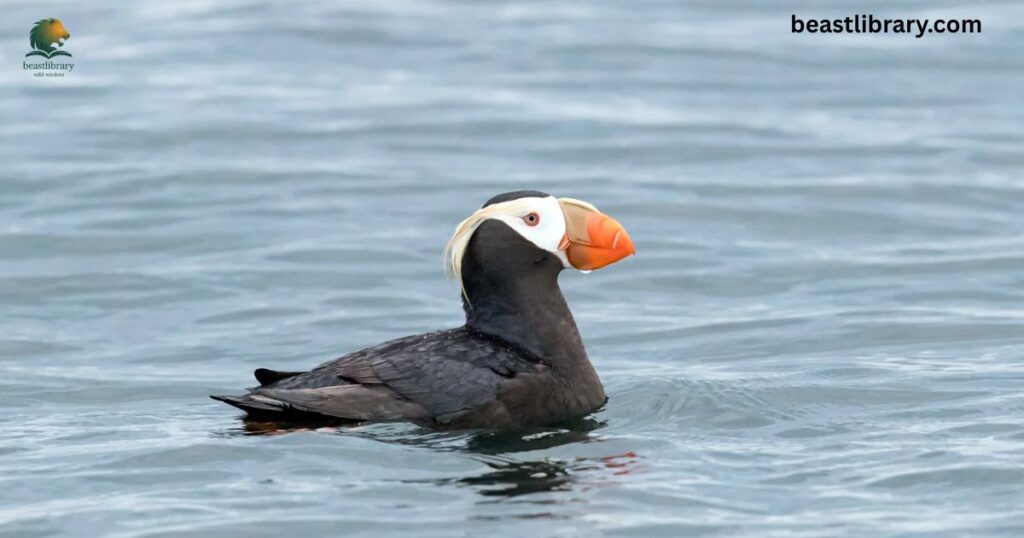
The tufted puffin is a sea bird that inhabits the north pacific ocean. Its webbed feet serve as flippers which helps it to be really propelled as it swings and dives to feed itself. Tufted puffins are carnivorous which feed on fish, squid and crustaceans.
The webbed feet enable very accurate underwater navigation when diving to a depth of more than 60 meters. They also move by walking on land on webbed feet when climbing a rock or digging a nest.
Fun fact: Tufted puffins can swim underwater using their webbed feet and wings together, catching several fish in a single dive.
Conclusion
Animals with webbed feet possess a remarkable trait that allows diverse species including birds, mammals, reptiles, and amphibians to swim, hunt, and trace muddy landscapes. These webbed feet animals shows the elegance of nature’s design and deepens our understanding of wildlife connectivity in wet environments.
FAQs:
What are animals with webbed feet called?
Webbed animals are biologically described as aquatic or semi-aquatic species possessing interdigital webbing. In zoology, particularly for birds, this specific foot structure is referred as being palmate or totipalmate.
What are the webbed feet of animals?
Webbed feet are a special type of foot found in many animals where a thin layer of skin (called a membrane) connects the toes.
What birds have webbed feet?
Waterfowl like ducks, geese, and swans are famous for their Webbed Feet, which they use like paddles to glide through rivers and ponds. Seabirds like pelicans, penguins and puffins also rely on this trait for high speed swimming, diving.