Unique 20 Animals With Long Neck: Facts & Pictures
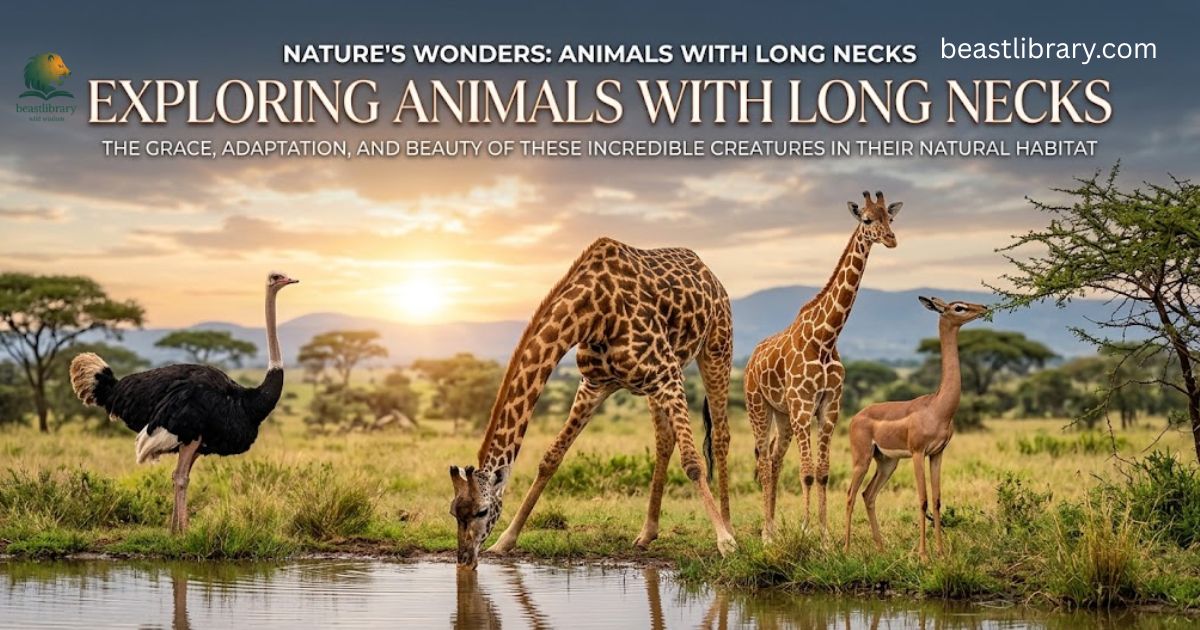
Animals with long necks are amazing proof of how uniquely nature adjusts to survival. Long neck animal use necks to reach food, spot potential threats and maintain balance across different environments like savannas, mountain and wetlands.
Table of Animals with long neck & Scientific name
| No. | Common Name | Scientific Name |
| 1 | Giraffe | Giraffa camelopardalis |
| 2 | Swan | Cygnus olor |
| 3 | Camel | Camelus dromedarius |
| 4 | Okapi | Okapia johnstoni |
| 5 | Llama | Lama glama |
| 6 | Alpaca | Vicugna pacos |
| 7 | Emu | Dromaius novaehollandiae |
| 8 | Ostrich | Struthio camelus |
| 9 | Heron | Ardea cinerea |
| 10 | Flamingo | Phoenicopterus roseus |
| 11 | Turkey | Meleagris gallopavo |
| 12 | Black-necked Stork | Ephippiorhynchus asiaticus |
| 13 | Mute Swan | Cygnus olor |
| 14 | Black Stork | Ciconia nigra |
| 15 | Horse | Equus ferus caballus |
| 16 | Zebra | Equus quagga |
| 17 | Peacock | Pavo cristatus |
| 18 | Turkey Vulture | Cathartes aura |
| 19 | Anhinga | Anhinga anhinga |
| 20 | Great Blue Heron | Ardea herodias |
Detailed Look at long neck animals
1- Giraffe
Scientific name: Giraffa camelopardalis
Class: Mammalia
Diet: Herbivore
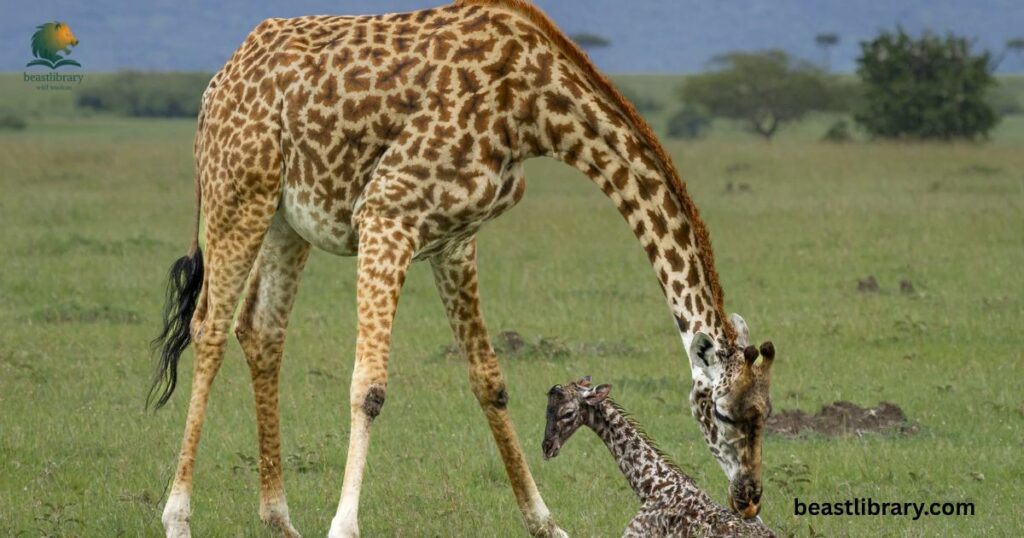
Spotted Giraffes primarily live in the open woods and savannas of Kenya and South Africa. It is clumsy animal with long neck. This provides them with an access that few animals can access. They feed on leaves and buds with a particular preference for acacia trees.
They move in loose herds as quiet animals. Mothers care for calves. The infant can stand after one hour of being born. It is that speed of strike in a lion and hyena hunt. Adult giraffes often observe one another quietly and use their height to keep a sharp eye on everything happening around them.
When it comes to drinking, giraffes have to spread their front long legs wide or bend down on their knees. They drink a lot of water. A giraffe has long tail. It circulates the blood support their long neck. Giraffes are skinny animals.
Fun fact: It is necessary for giraffes to drink daily, they need water every couple of days. Additionally, their tongues can reach a length of almost 20 inches.
2- Swan
Scientific name: Cygnus olor
Class: Aves
Diet: Omnivore (plants, small aquatic life)
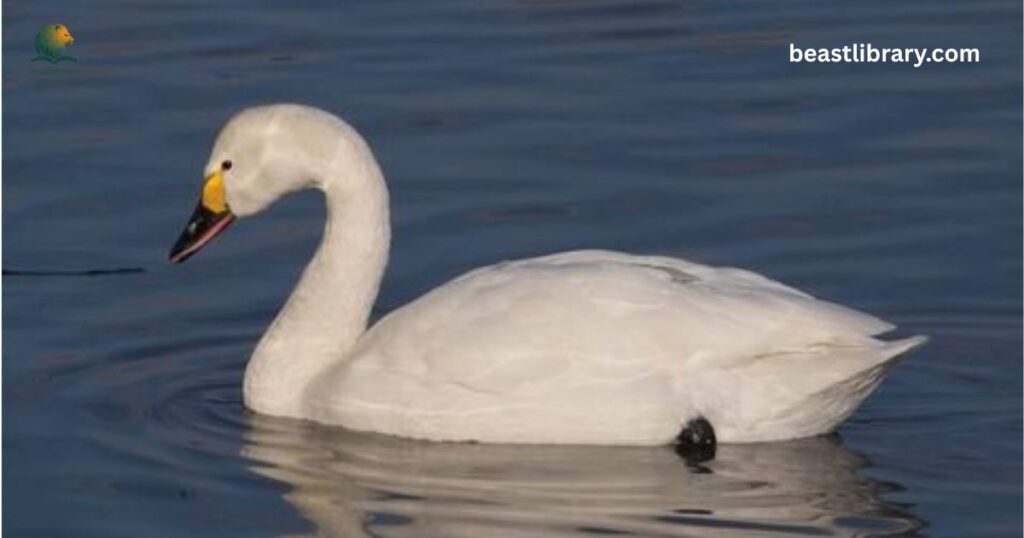
Swans are docile long necked curved water birds you find them in lakes and slow rivers in Europe and Asia. They are like silent webbed feet boats that oar on water. They get their food by plunging those necks in water. Their necks have curvy S-shapes.
Swans feed on water plants, roots, pieces of insects or small fish. On land, they can be seen walking along the edge of the water Cygnets stay close to adults. During spring, they build large nests among reeds where both parents work together to protect their eggs and offspring.
In flight, swans are strong. Their wings swing lethargically and broad. They are long distance migrators. Sometimes ever at night. They form a V shape. There birds which can have a wingspan of over 2 meters, are found in various locations including Northern Europe Asia .
Fun fact: Swans are capable of migrating hundreds of miles with a massive wingspan that often exceeds 2 meters.
3- Camel
Scientific name: Camelus dromedarius
Class: Mammalia
Diet: Herbivore
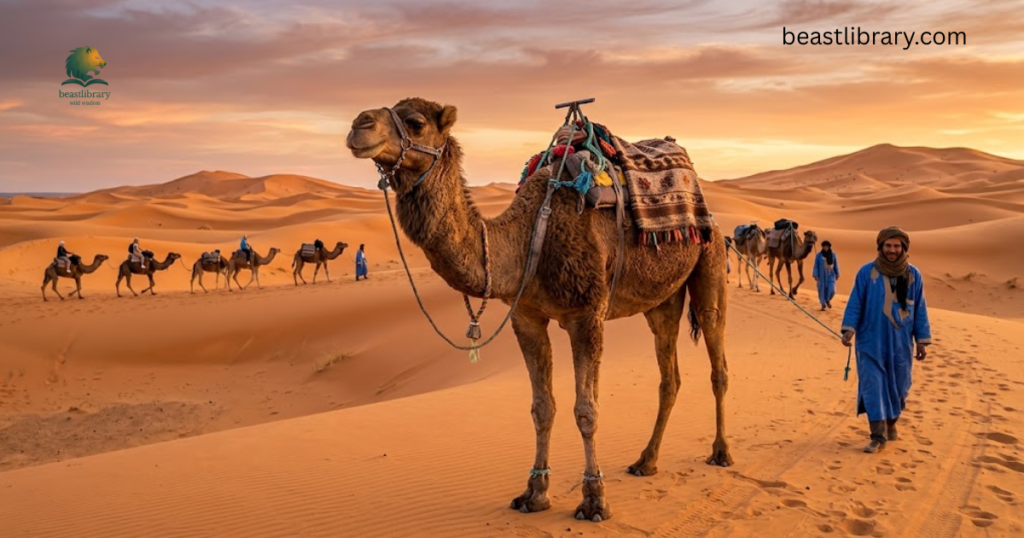
Inhabiting in the wilderness, camel is stubborn animal with a long neck and fur. The camel of the dromedary has a single hump. These are situated in the Middle East and North African deserts. Their necks are gilled and mobile. Camel drink a lot of water and is desert mammal.
These animals travel for many hours in collectives known as caravans. Their feet are sprawled out in the sand. They blink to keep out dunes. They protect their eyes from grit by blinking and often rest with their legs crossed while observing the heat waves ascend.
Fun fact: A ssingle hydration session for a camel can exceed 100 liters. their unique, extended necks further assist them in securing sustenance that remains unavailable to others.
4- Okapi
Scientific name: Okapia johnstoni
Class: Mammalia
Diet: Herbivore
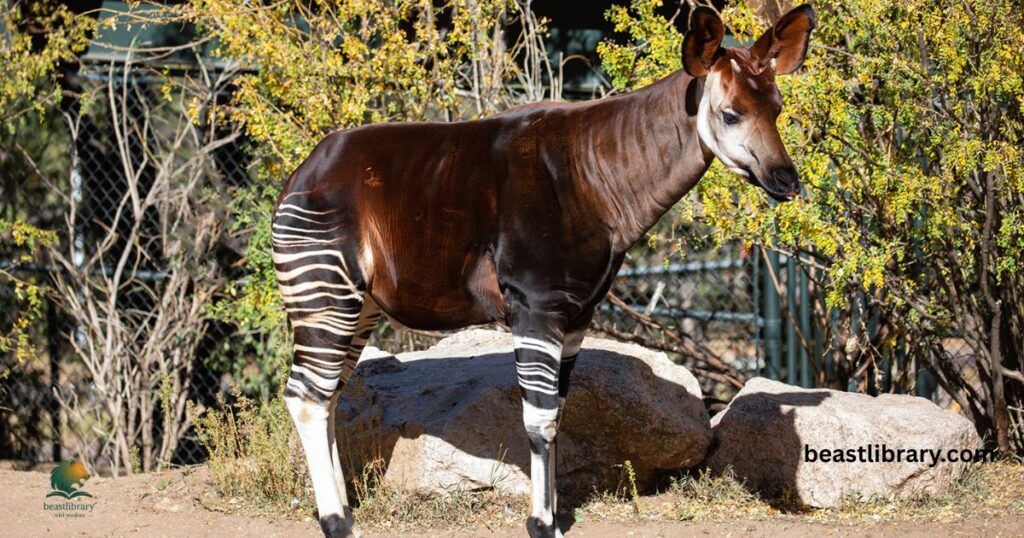
The stripped okapi populates the dense woodlands of central Africa. It is long neck mammal. It can easily reach vegetation in high branches . They hide in the shade. It is shy animal on spongy ground.
Their diet composed of buds, fruits and leaves. Okapis are known for creating distinct trails through the woods. They spend their days reposing in the cool shade and become more using their large, nocturnal, sensitive ears to detect any approaching predators.
Because they are reclusive, they avoid open areas and rely on the thick forest for concealment. The offspring remain concealed takes his stand alone. They come back to the mother to nurse. They are long legs animals.
Fun fact: Okapi have incredibly long tongues so long in fact that they use them to wash their own eyes and ears.
5- Llama
Scientific name: Lama glama
Class: Mammalia
Diet: Herbivore
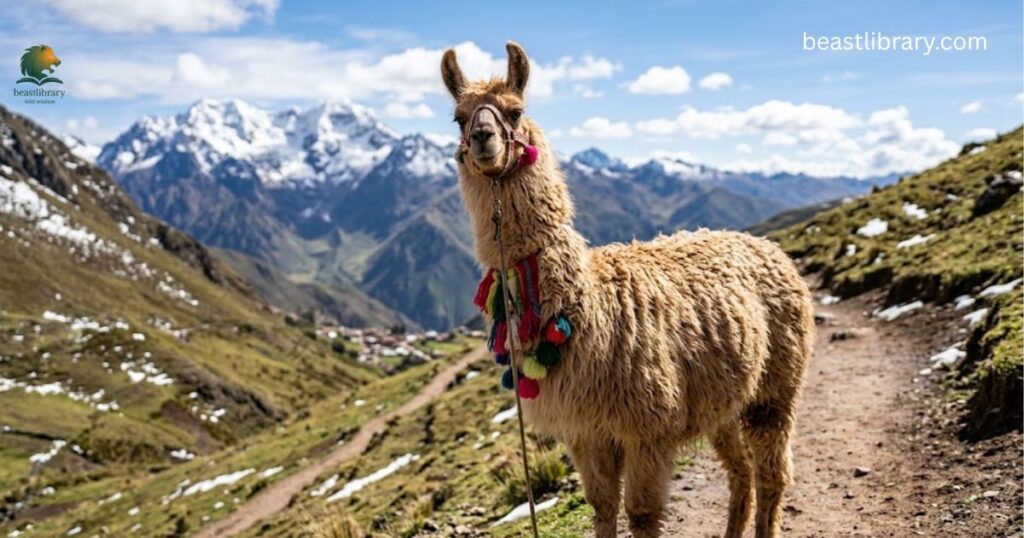
Llamas is docile long neck mammal and have fur, in the high Andes. They foraging along sloping hillsides and high mountain plateaus. Llamas consume grass, herbs, and leaves. They select plants which grow in thin mountain air.
Llamas are serene yet attentive creatures that travel in herds. A humming llama has content about. Llamas when startled call out in a high voice. They spit whenever they are endangered. They are consider as stubborn animals.
Llamas inhabit places that are harsh to other animals. It is natural to have frost, wind, and cold and warm wool. at night they congregate for warmth, while during the day, they graze in open pastures.
Fun fact: Llamas usually spit at each other to settle arguments over food or rank. they rarely spit at humans unless they feel seriously threatened.
6- Alpaca
Scientific name: Vicugna pacos
Class: Mammalia
Diet: Herbivore
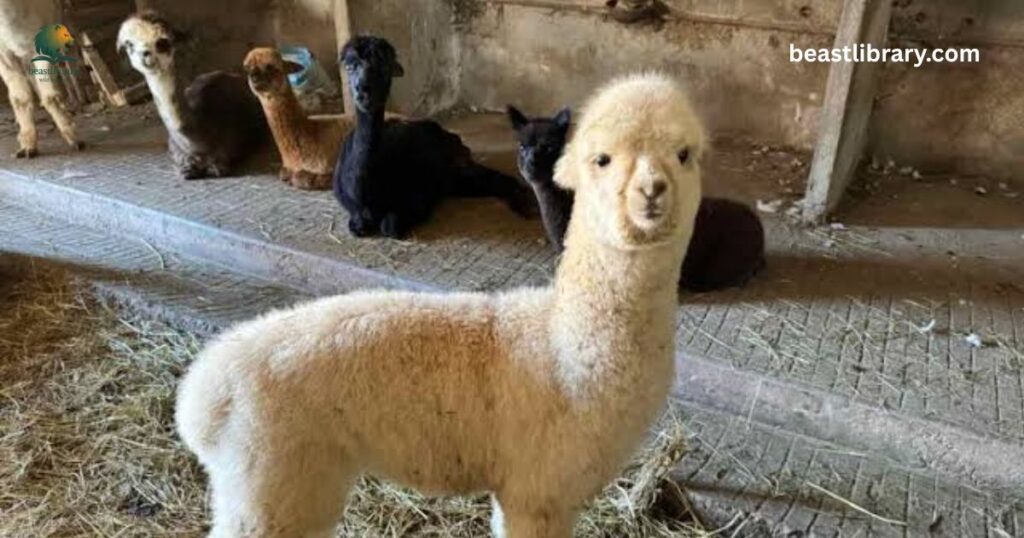
Alpacas are mountain long neck mammals. They inhabit the elevated areas of South America principally Bolivia Peru, and Chile. It is a cold wind blowing over the hill. These animals typically graze in close proximity to one another.
Because of their long necks, they can reach flora without having to commute great range. They chew for long periods. They eat slowly. This optimizes energy at high-altitude. Alpacas are communal. They live in herds. Another alpaca will be sentry when the other alpacas are grazing.
The Alpacas talk in soft vocalization tones. The meanings of these sounds are comfort or slight distress. In case of danger they raise their heads and observe. They are skinny animals. Their coat keeps them warm. Human beings have been domesticating alpacas to get wool.
Fun fact: Alpaca have a built in defense mechanism .while the group eats, at least one alpaca stays on guard to watch for predators ensuring the herb’s security.
7- Emu
Scientific name: Dromaius novaehollandiae
Class: Aves
Diet: Omnivore
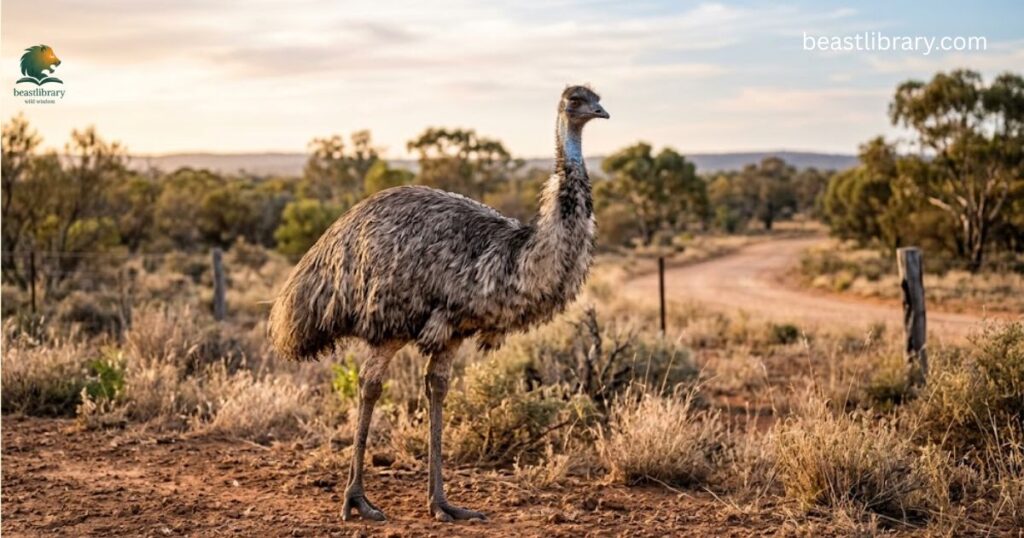
The emu is a long-necked, tall bird having strong legs. It lives across Australia. It is found in grasslands, open forests and dry plains because they are unable to fly. They run fast instead. When they move, their neck remains upright.
These birds have an all eating diet that includes plants, insects, seeds, and small creatures.. They swallow stones so that they can assist in crushing food. their long necks give them the benefit of reaching both high leaves and low lying plants. They walk great distances to seek food and water.
Emus tend to move in poor groups. emus tend to follow weather pattern. Emus appear when the food grows following rain. in a uncommon display among bird species, it is the male who sits on the egg to hatch them and remains responsible for raising the young chicks.
Fun fact: Emus are physically unable to walk backward .this is why they are shown on the Australian Coat of arm to represent a nation that is always moving forward.
8- Ostrich
Scientific name: Struthio camelus
Class: Aves
Diet: Omnivore
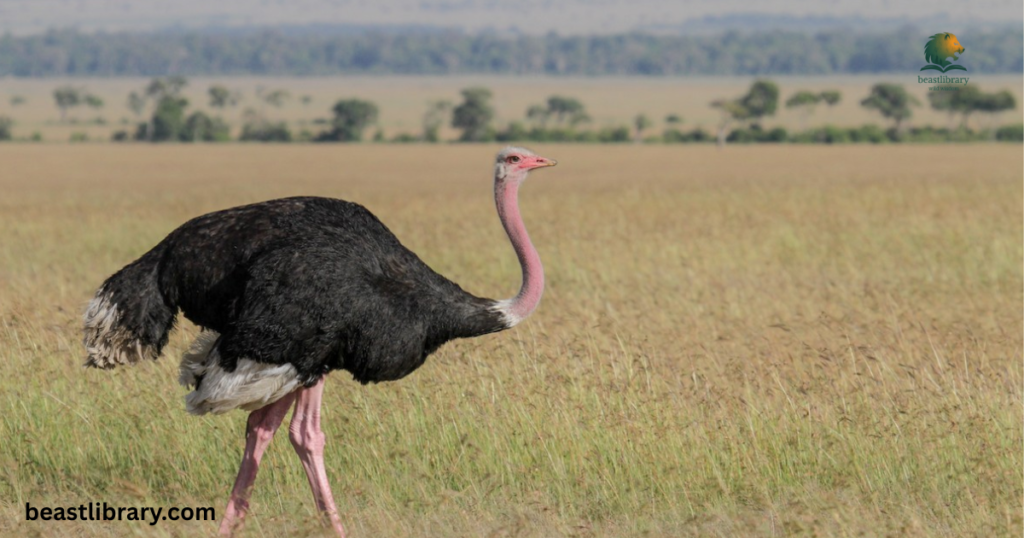
Ostrich is clumsy tallest bird on earth. It extends with a long neck and big feet above grass and shrubs. Ostriches live in Africa. They like open savanna and dry plains. These birds have a omnivorous habits that includes plants, and small animals.
Ostriches run when peril is at hand. They can reach high speeds. Their long legs are strong. One kick is enough to stop a predator. The famous Illusion they never actually hide their heads in the ground. They have big eyes.
Fun fact: An ostrich’s eye is around 2 inches across the largest of any land animals. its actually bigger than its entire brain.
9- Heron
Scientific name: Ardea cinerea
Class: Aves
Diet: Carnivore
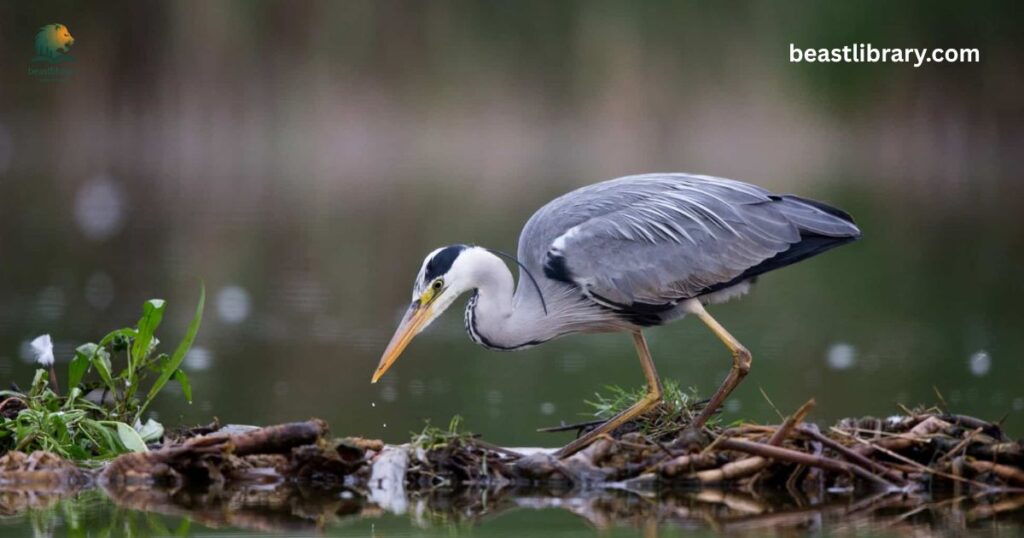
Herons are long necked water birds with pointed bills that predominantly inhabit around wetlands, rivers, lakes. You find them standing in shallow water. Their neck has a shape of S. This helps them swiftly launch.
When the fly the traverse gracefully and pull their neck back and they typically build their nests in tree colonies near consistent food sources. These birds are commonly found across Europe, Africa, Asia , where they tend to to hunt during the morning and every hours.
Fun fact: Its most remarkable features is its long, elegant neck, which is anatomically designed to stay in an “S” shape while at rest.
10- Flamingo
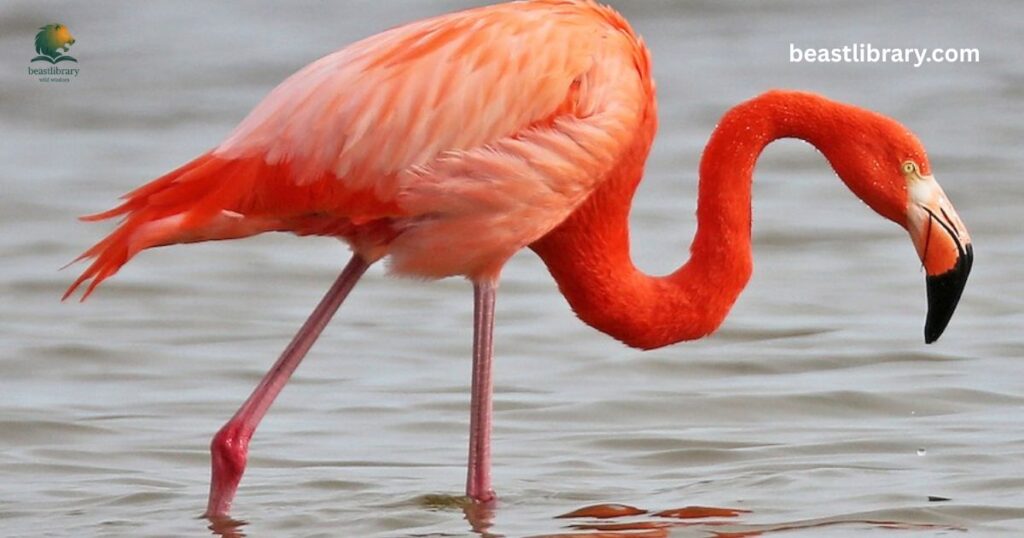
They are known by necks and stick-like long legs. Flamingos forage with their necks invested. The bill is just in the right place with their neck. They sieve water from algae and animals. They often feed in groups.
Flamingos reproduce in colonies. They build mud nests. Feedback of chicks is executed by parents. Chicks become gray and then pink. Their famous pink coloration is actually a direct result of the specific diet they consume.
Fun fact: A Flamingos vibrant pink plumage is actually sourced from the nutrients in the food they eat.
11- Turkey
Scientific name: Meleagris gallopavo
Class: Aves
Diet: Omnivore
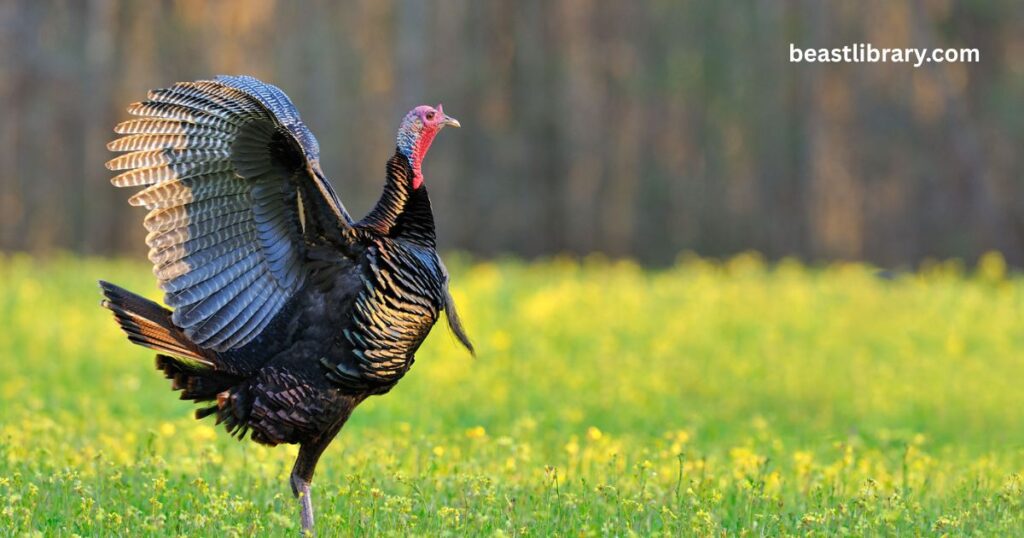
The turkeys are long necked vigilant birds. Their indigenous range is in North America. They are well adapted to ecotones, open woodland and grassland. As they walk, they keep their necks extended forward. It withdraws as they feel perceived threat.
Their neck help them in searching for food and danger. Wild turkeys are good runners. In the season of mating, males are displayed. They blow up feathers, and wave tails. The color of their neck skin alters. This shows strength.
At night the turkeys roam in trees. This ensures that they are not preyed on. They scratch leaves as a means of food. Increasingly living near large urban urban environments, these adaptable birds still prefer habitats that offer plenty of natural concealment.
Fun fact: These North American birds are famous for their long neck, which they stretch out while walking but tuck away instantly if they get spooked.
12- Black-necked Stork
Scientific name: Ephippiorhynchus asiaticus
Class: Aves
Diet: Carnivore
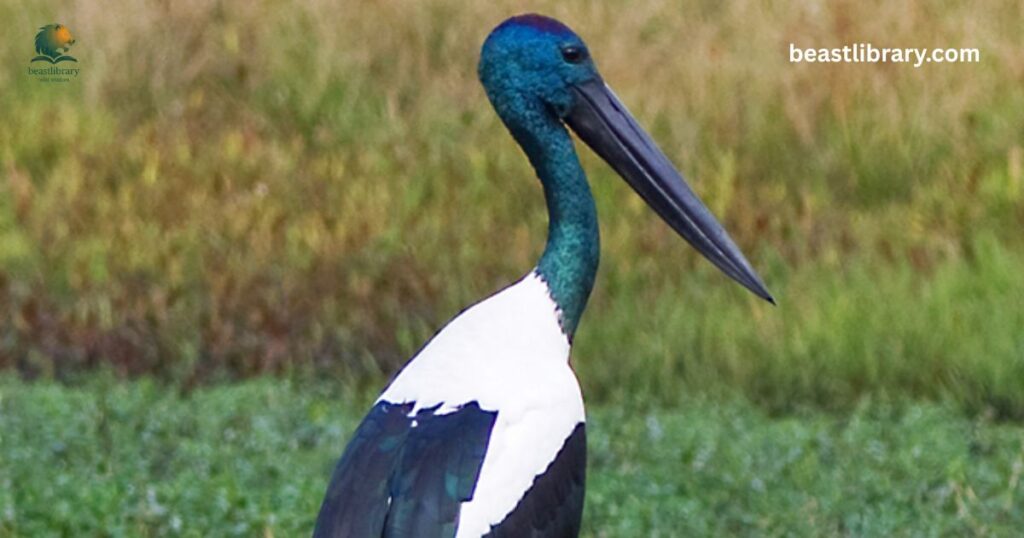
Black-necked Stork is long neck animal. This avian species relies heavily on its elongated neck to scan shallow wetlands and strike at prey with its sword-like bill. We often associate massive height advantages with iconic long neck mammals roaming the plains.
This bird proves that the feathered world utilizes the exact same evolutionary trait to lead its environment. Watching this beautiful bird walk through the water shows how perfectly its body is built for hunting and surviving.
Fun fact: The Black-necked Stork is one of the largest storks in the world, with some adults reaching over 5 feet tall.
13- Mute Swan
Scientific name: Cygnus olor
Class: Aves
Diet: Herbivore
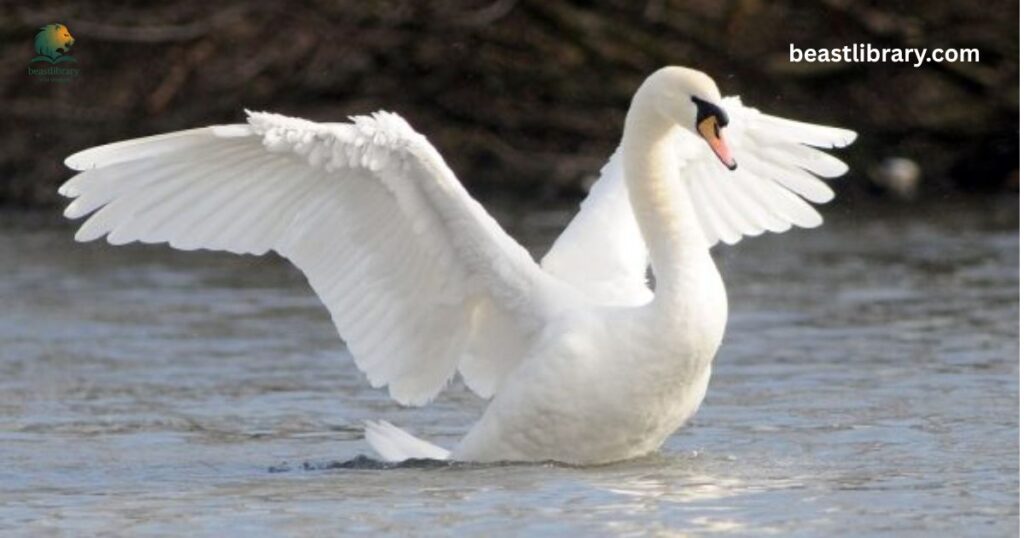
Mute swans are massive birds of water with long curved necks. They occupy lakes, rivers and wetlands of Europe and part of Asia . They have a strong and flexible neck. They feed on roots and stems. Their food eating is apt to agitate the mud.
Mute swans stay near water bodies throughout the year as long as the surface doesn’t freeze, however in freezing climates, they will migrate short distance to find open water. They swim quietly on water with poise. On land, they walk slowly. They are strong and hefty when in the sky.
Fun fact: A single Mute Swan has over 25,000 feathers, most of these are located on their head and neck to help keep them warm while swimming in cold water.
14- Black Stork
Scientific name: Ciconia nigra
Class: Aves
Diet: Carnivore
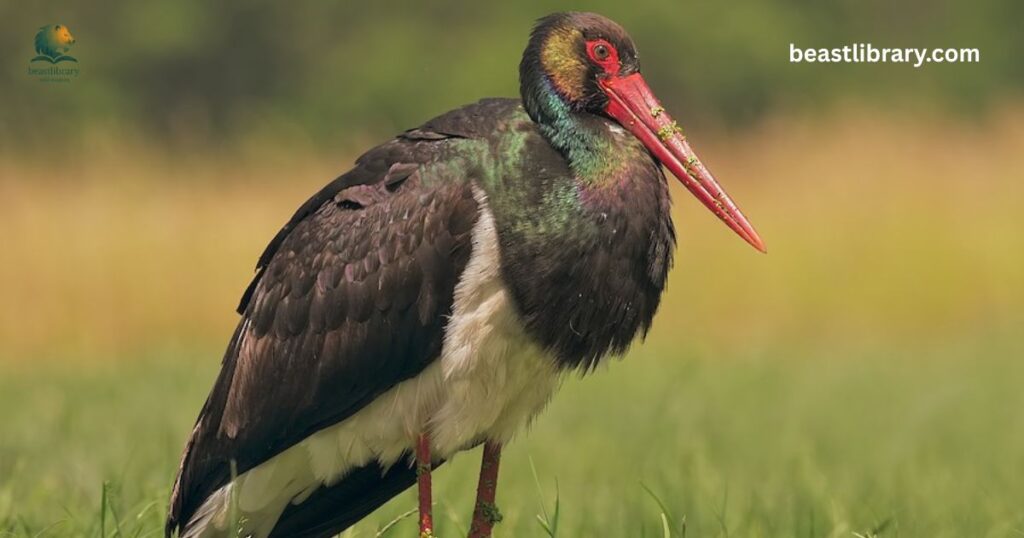
Black storks are reclusive neck birds. They inhabit on the rivers and wetlands in woodlands. They mostly reside in Europe and Asia unlike many other species, these birds are exceptionally reserved and go to great lengths to evade human contact.
They are fish and frog and insect predator. to capture their quarry, they traverse quietly through shallow water with their necks extended. Because they require unspoiled water and silent, undisturbed environments, their survival is closely intertwined to the health of their habitat.
Fun fact: Unlike many others birds black stocks are mostly mute. because they almost never make a sound, opting for absolute serenity outside of their nesting areas.
15- Horse
Scientific name: Equus ferus caballus
Class: Mammalia
Diet: Herbivore
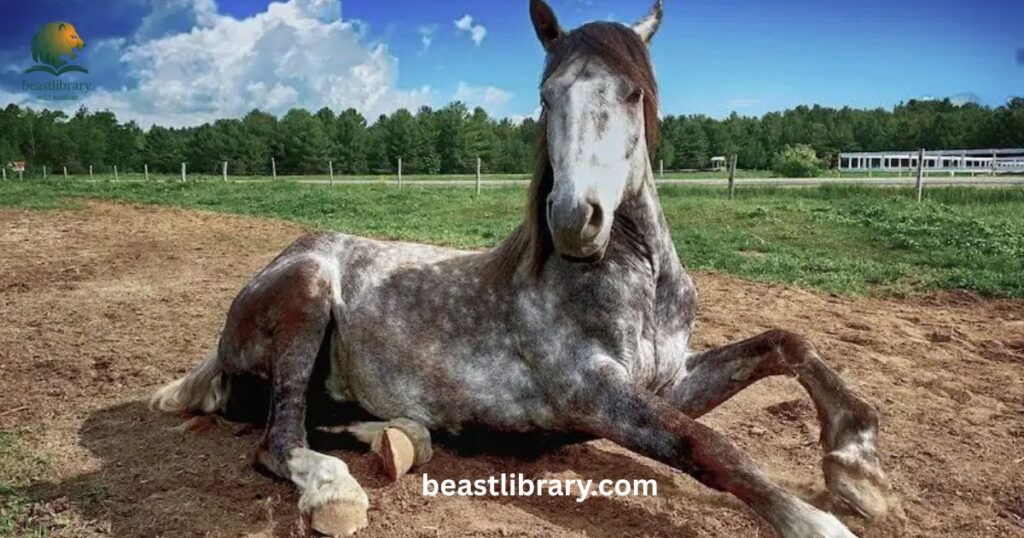
Horses have long necks that assist with stability and foraging. They occupy various landscapes such as plains, meadows, and agricultural lands globally. Wild horses still range open land. Horses are hooved animals and can either while standing up or lying down.
Their neck allows them to graze low grass and lift heads fast. Horses are stubborn animal. This helps them detect danger. They live in herds with clear roles. They rely on running to evade from predators. Their strong neck muscles support movement and control.
Fun fact: Because of l locking specialized mechanism in their legs, horses are able to sleep while standing
16- Zebra
Scientific name: Equus quagga
Class: Mammalia
Diet: Herbivore
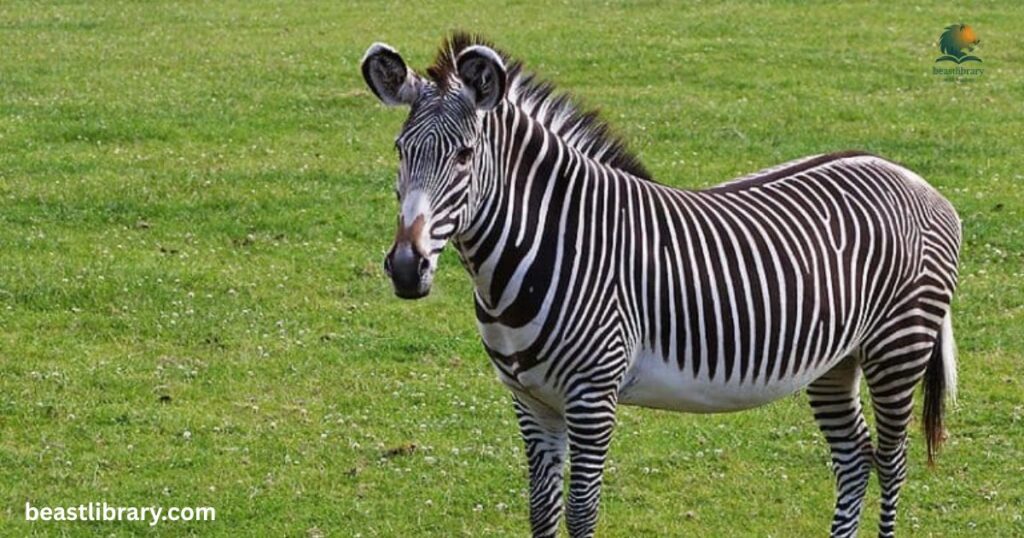
Zebra are stubborn grassland species known by their long necks. The belong to eastern and southern Africa. They mostly live in open plains and savannas. Their neck enables them to forage and monitor surrounding.
Their neck movement is swift and seamless. this dexterity helps them spot approaching threats, such as lions, from a very young age. These herds offer safety. Zebras live in groups. They present temperament and caution in the position of their neck.
They follow seasonal rains. When drought strike, they migrate to the water points. Their bodies are stripped. They sleep in the hottest hours. Zebras sleep in short bursts. Even when they have to rest, their neck remains straight One or two remain vigilant.
Fun fact: Every zebra is born with its own unique configuration, making them easy to distinguish if you look closely.
17- Peacock
Scientific name: Pavo cristatus
Class: Aves
Diet: Omnivore
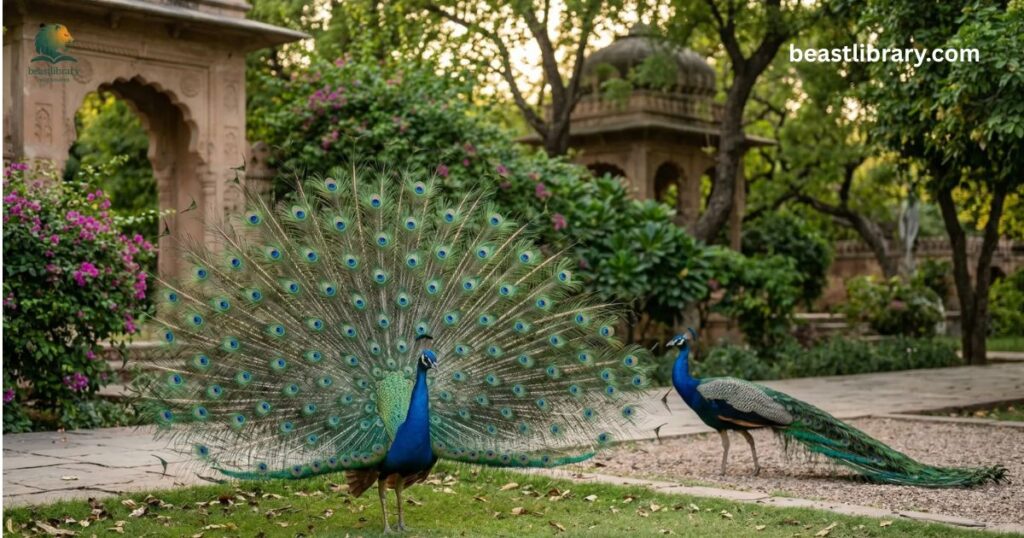
Peacocks are animals with a long neck. They live in the natural habits and open woods of South Asia. You always find them around farms and villages. They have a slender upright neck. It assists them to foraging the ground for insects and seeds.
Plants and small animals are also their food. They develop tail feathers during the mating period. act shows their strength and health. The females watch this display behavior very carefully.
Fun fact: Male peachicks are not born with their famous fancy feathers. they don’t start growing their majestic, colorful plumage until they are about three years old.
18- Turkey Vulture
Scientific name: Cathartes aura
Class: Aves
Diet: Carnivore
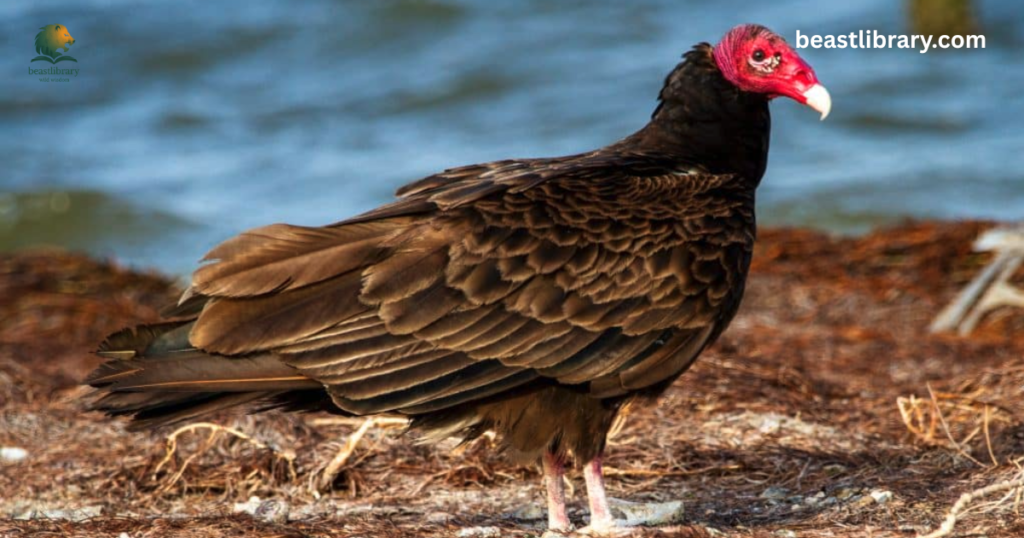
Turkey vultures are animals with long neck. They inhabit in the Americas. Their range includes open fields, deserts and forests. Their necks do not have feathers so they can stay hygienic while eating. They decent their prey from high in the sky.
They roost in aggregations. This offers security. They avoid conflict and instead they fly. The turkey vultures fly in the hot air. Their wings rarely flap. During flight, their necks contract. It extends itself forward when it is feeding.
Fun fact: Turkey vultures have an extraordinary sense of smell that allows them find food even when it is completely hidden from their sight. such as under a thick canopy of trees.
19- Anhinga– Animals With Long Neck
Scientific name: Anhinga anhinga
Class: Aves
Diet: Carnivore
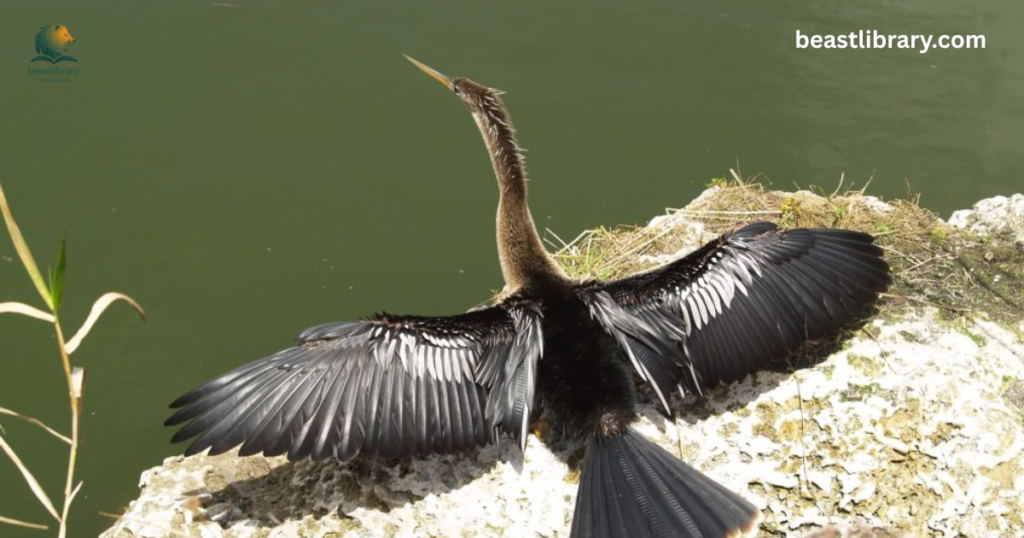
The anhinga is animal with a long neck. It swamps warm areas like near lakes, swamps and rivers. Its neck acts like a spear. It hunts fish underwater. A quick lunge catches target. Then it picks the fish and flies away and eats it.
They build their nests in trees located near the water. They usually live in groups along with other types of birds. These birds are most relaxed in a peaceful and quiet environment. Anhinga swim low in water. This assists in diving and limits flight. Their feathers soak up water.
Fun fact: Alhingas are often called “snake birds” because of the shape of their neck.
20- Great Blue Heron
Scientific name: Ardea herodias
Class: Aves
Diet: Carnivore
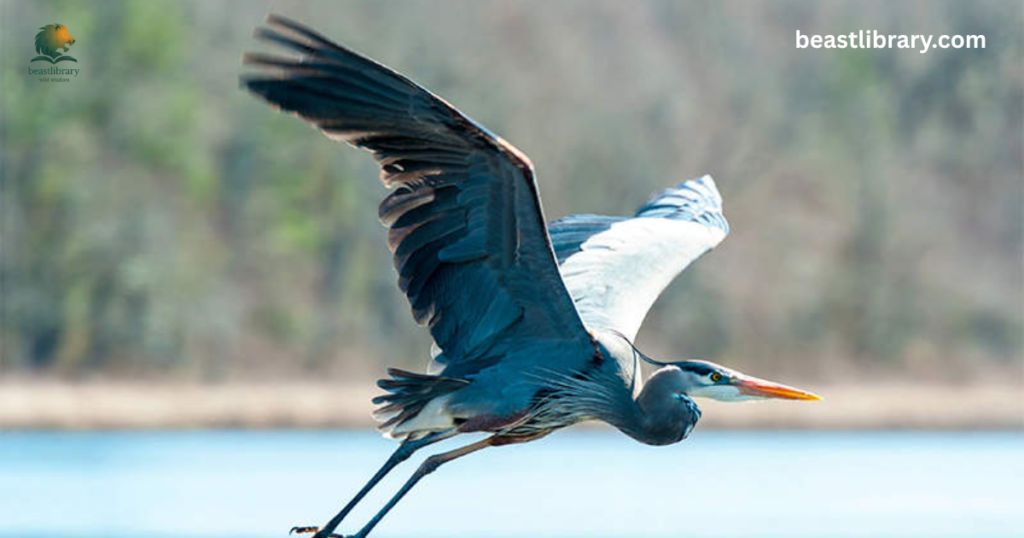
The great blue heron is a tall bird with a very long neck, commonly found across North America. they usually live near aquatic habitats like wetlands, lakes, rivers. This allows rapid lunges. Its neck folds into an S shape.
It solitary hunter most of the time. It preys on small mammals, fish and frogs. Their nest is in high trees along the water. colonies are formed. When prey is abundant, In flight, the neck pulls back. Herons are known for their remarkable stillness.
Fun fact: They don’t chew their food, they can swallow large fish and sometimes even small turtles or baby ducks, completely whole.
Conclusion
Animals with long necks truly show us how creative nature can be when it comes to survival. Whether it is a tall bird catching fish in the wetlands or a animal with long neck and fur grazing in the African savanna. These creatures prove that height is a massive advantage in the wild.
FAQs
Why do there exist animals with long necks?
Accessing high reach vegetation or feeding underwater. Increasing stability and balance during rapid movement or specialized locomotion.
What are the animals with long necks called?
Animals with long necks do not have a single scientific name, but they are often broadly categorized as long-necked mammals (like giraffes) or long-necked birds (like ostriches). In biology, animals that develop elongated necks for survival having elongate or specialized cervical structures.