Interesting 20 Animals With Sharp Teeth: Facts & Pictures
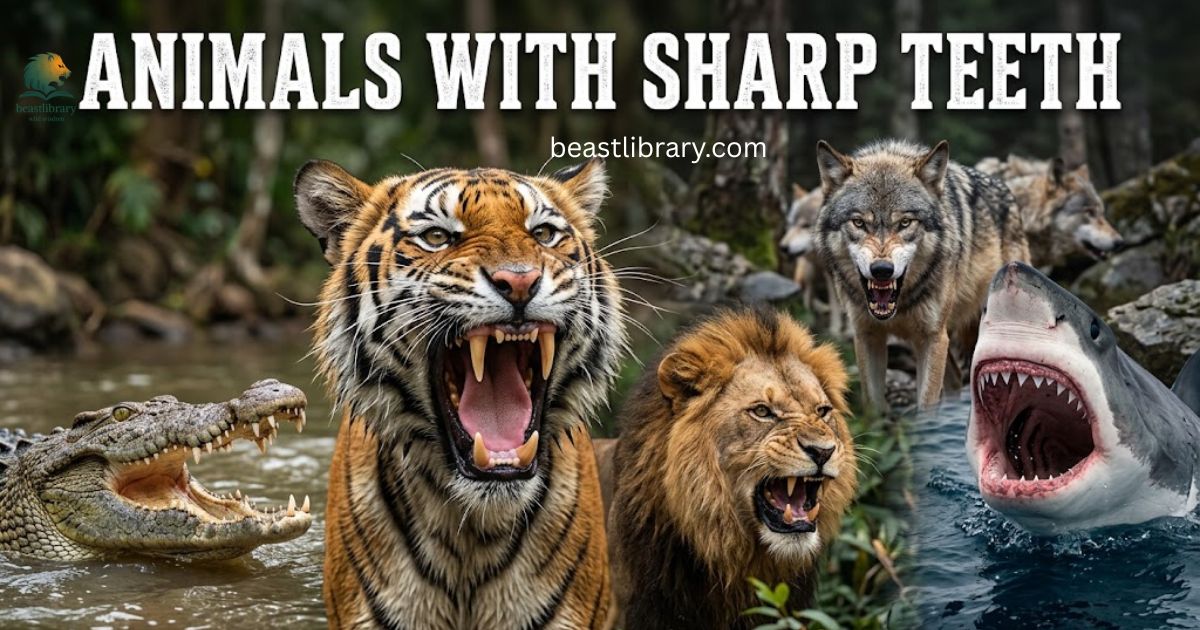
Animals With Sharp Teeth have evolved over millions of years to become highly efficient killing machines. The animal kingdom is home to some of the most fearsome predators on Earth. Sharp teeth animals are equipped with razor-sharp teeth designed for hunting, killing, and survival.
Table of Animals With Sharp Teeth
| No. | Animal Name | Scientific Name | Class | Diet |
| 1 | Lion | Panthera leo | Mammalia | Carnivore |
| 2 | Great White Shark | Carcharodon carcharias | Chondrichthyes | Carnivore |
| 3 | Crocodile | Crocodylus niloticus | Reptilia | Carnivore |
| 4 | Wolf | Canis lupus | Mammalia | Carnivore |
| 5 | Tiger | Panthera tigris | Mammalia | Carnivore |
| 6 | Hyena | Crocuta crocuta | Mammalia | Carnivore |
| 7 | Polar Bear | Ursus maritimus | Mammalia | Carnivore |
| 8 | Snake | Ophiophagus hannah | Reptilia | Carnivore |
| 9 | Leopard | Panthera pardus | Mammalia | Carnivore |
| 10 | Alligator | Alligator mississippiensis | Reptilia | Carnivore |
| 11 | Jaguar | Panthera onca | Mammalia | Carnivore |
| 12 | Komodo Dragon | Varanus komodoensis | Reptilia | Carnivore |
| 13 | Orca | Orcinus orca | Mammalia | Carnivore |
| 14 | Tasmanian Devil | Sarcophilus harrisii | Mammalia | Carnivore |
| 15 | Barracuda | Sphyraena barracuda | Actinopterygii | Carnivore |
| 16 | Piranha | Pygocentrus nattereri | Actinopterygii | Carnivore |
| 17 | African Wild Dog | Lycaon pictus | Mammalia | Carnivore |
| 18 | Wolverine | Gulo gulo | Mammalia | Carnivore |
| 19 | Moray Eel | Muraenidae | Actinopterygii | Carnivore |
| 20 | Saber-Toothed Cat | Smilodon fatalis | Mammalia | Carnivore |
Detailed Guide of Animals With Sharp Teeth
1– Lion– Animals with Sharp Teeth
- Scientific Name: Panthera leo
- Class: Mammalia
- Diet: Carnivore
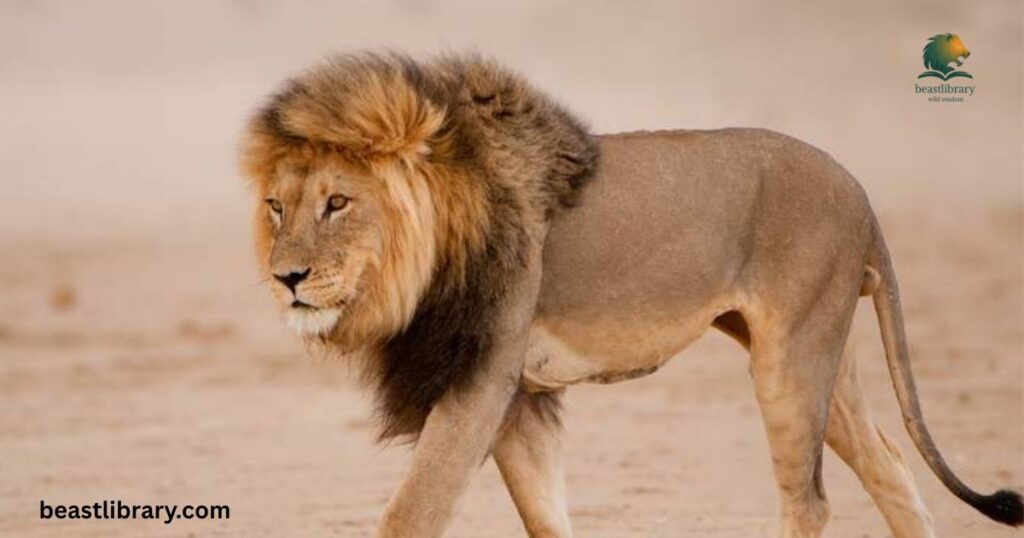
The lion also called the “King of the Jungle,” is one of the most powerful predators on Earth, primarily found in the grasslands and savannas of sub-Saharan Africa. Lions possess large, curved canine teeth that can grow up to 3 inches long, designed specifically to grip.
Apex predators, lions hunt large mammals such as zebras, wildebeest, and buffalo, often working in coordinated group hunts called prides. Their sharp carnassial teeth work like scissors to shear meat from bone, making feeding efficient even on large carcasses.
Fun Facts:
- A lion’s roar can be heard from up to 8 kilometers away, used to communicate territory and location.
- Lions are the only truly social big cats, living in groups called prides of up to 30 individuals.
- Female lions do approximately 90% of the hunting for the pride, while males primarily guard territory.
2- White Shark
- Scientific Name: Carcharodon carcharias
- Class: Chondrichthyes
- Diet: Carnivore
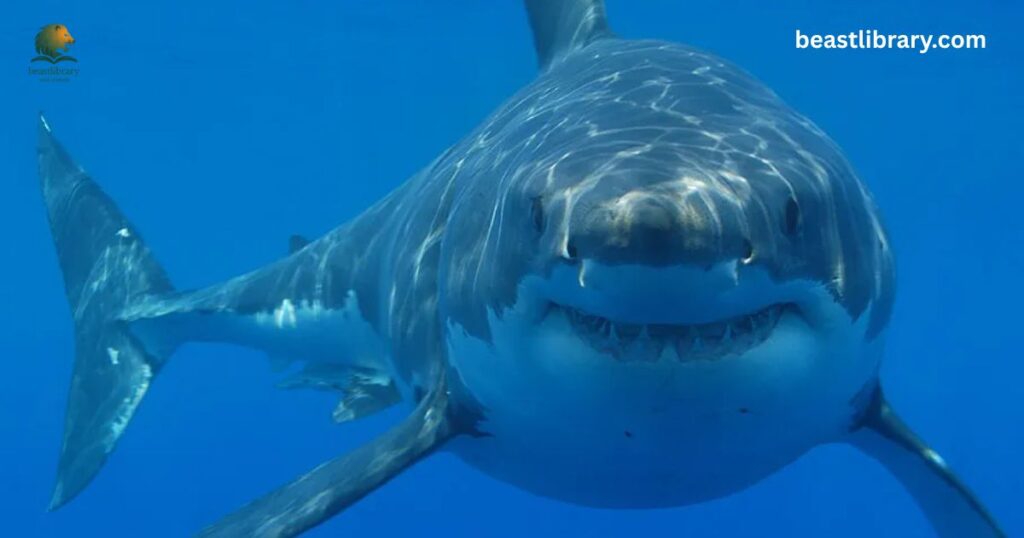
The great white shark is the ocean’s most iconic apex predator, found in coastal and offshore waters across every major ocean on the planet. It possesses up to 300 serrated, triangular teeth arranged in multiple rows, which are continuously shed and replaced throughout its lifetime.
Classified under the class Chondrichthyes, their teeth are not rooted in the jawbone but instead embedded in the gums, allowing for rapid replacement. They are scaled creatures and with bite force estimated at over 4,000 PSI and teeth that function like serrated blades.
Fun Facts:
- Great white sharks can detect a single drop of blood in 25 gallons of water from up to 3 miles away.
- They can have up to 50,000 teeth over the course of their lifetime due to continuous replacement.
- Great whites can launch their entire body out of the water while hunting, a behavior called breaching.
3- Crocodile
- Scientific Name: Crocodylus niloticus
- Class: Reptilia
- Diet: Carnivore
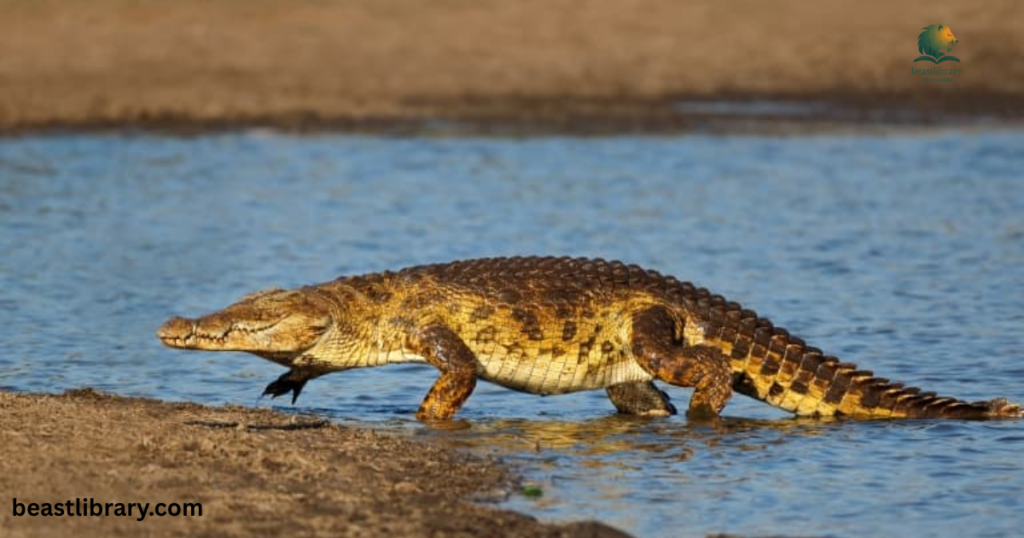
Crocodiles are among the oldest living reptiles on Earth, having survived virtually unchanged for over 200 million years, making them true evolutionary success stories. They possess 64–68 large, conical teeth designed not for chewing but for gripping and holding prey.
Classified under the class Reptilia and order Crocodilia, crocodiles are opportunistic carnivores that feed on fish, birds, mammals, and even large animals like buffalo and wildebeest near water sources. They are found in savannas.
Fun Facts:
- Crocodiles cannot chew food. They swallow rocks called gastroliths to help grind food in their stomachs.
- Despite their fierce reputation, mother crocodiles are remarkably gentle when carrying their hatchlings in their mouths.
- Crocodiles can go up to a year without eating after consuming a large meal.
4- Wolf
- Scientific Name: Canis lupus
- Class: Mammalia
- Diet: Carnivor
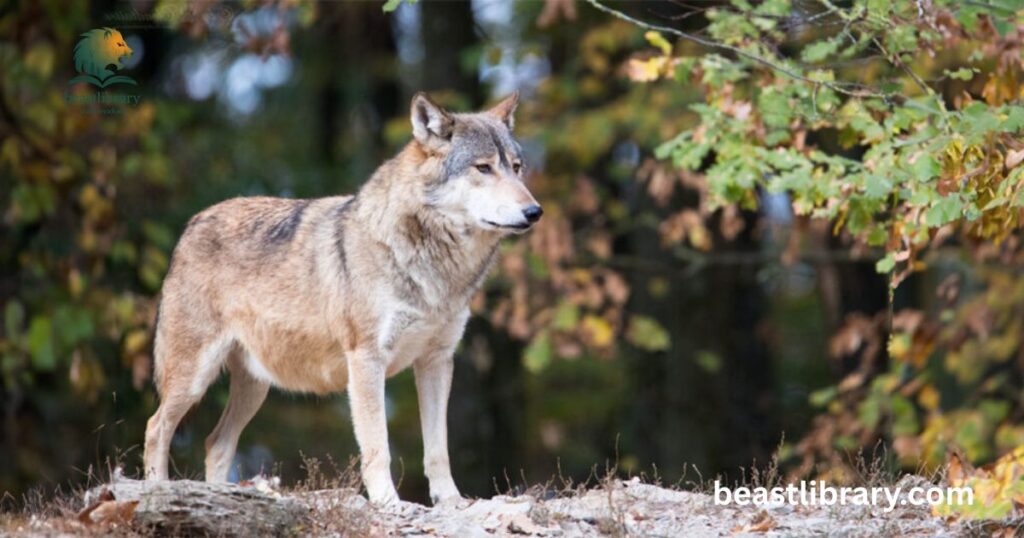
Wolf do purr and is nature’s most intelligent. It is found across North America, Europe, Asia, and parts of the Middle East. Wolves possess 42 teeth, four prominent canines that can grow up to 2.5 inches, built for gripping, and tearing through thick flesh and even crushing bone.
Their carnassial teeth are specially adapted to shear meat efficiently, minimizing wasted energy during feeding. Wolves have a bite force of 400 PSI, and their teeth are so strong they can crack large femur bones to access nutritious marrow inside.
Fun Facts:
- Wolves can travel up to 125 miles in a single day while tracking or chasing prey.
- The howl of a wolf is unique to each individual, allowing pack members to identify one another by sound.
- Wolves play a crucial ecological role their reintroduction to Yellowstone in 1995 dramatically restored river ecosystems through a trophic cascade.
5- Tiger
- Scientific Name: Panthera tigris
- Class: Mammalia
- Diet: Carnivore
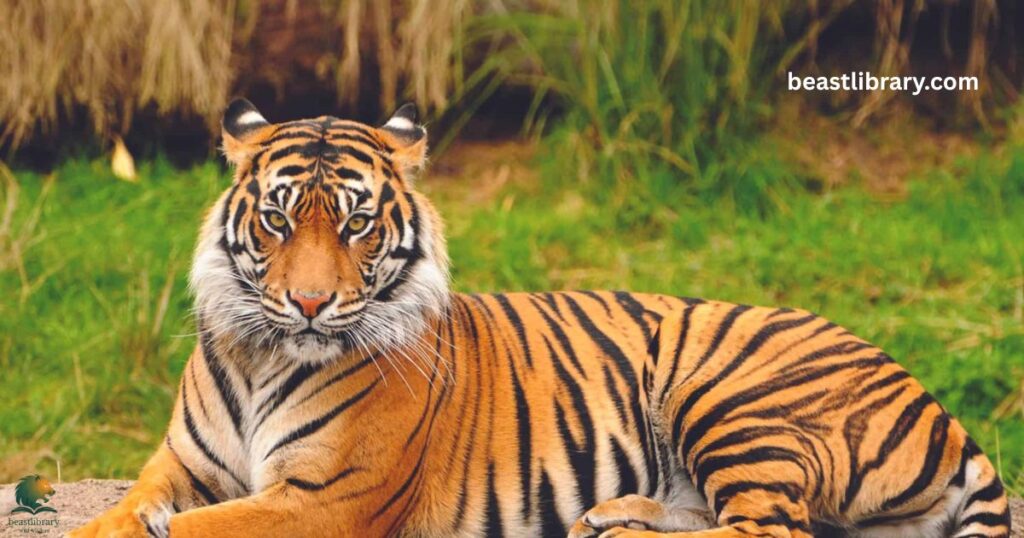
The tiger is the largest wild cat species on Earth and a solitary apex predator found across diverse habitats in Asia. Tigers eat a lot and have four dagger-like canine teeth that can measure up to 3 inches in length among the longest of any living field.
Unlike lions, tigers hunt alone, relying on stealth, camouflage, and explosive bursts of speed rather than cooperative strategies. Their bite force of 1,050 PSI, combined with muscular retractable claws, makes the tiger one of the most lethal solitary hunters in the animal kingdom.
Fun Facts:
- No two tigers have the same stripe pattern & their markings are as unique as human fingerprints.
- Tigers are powerful swimmers and actually enjoy water, unlike most other big cats.
- A tiger’s roar can paralyze prey momentarily due to infrasound frequencies below the range of human hearing.
6- Hyena
- Scientific Name: Crocuta crocuta
- Class: Mammalia
- Diet: Carnivore
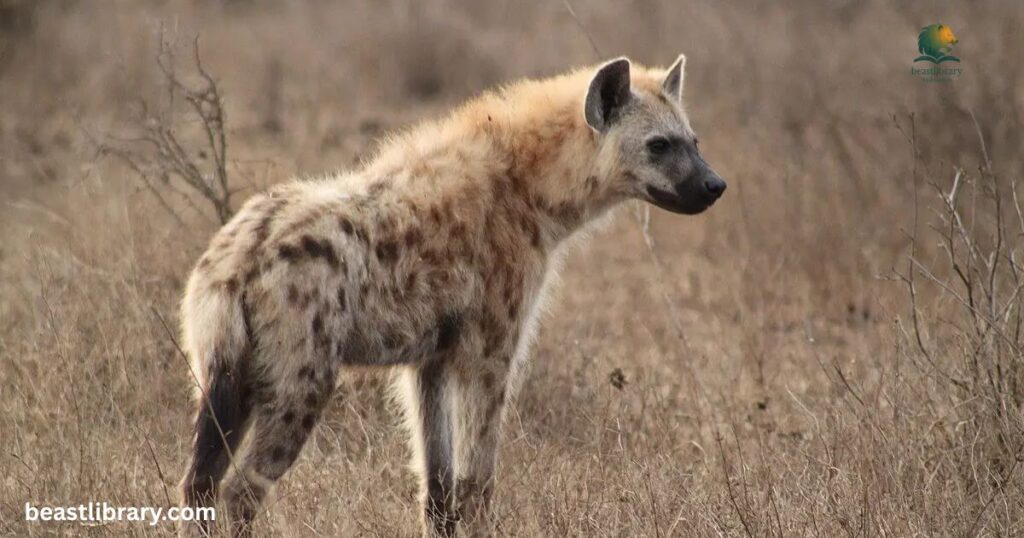
The spotted hyena is striped Africa’s most misunderstood predators, wrongly dismissed as merely a scavenger when in fact it is a highly skilled and aggressive hunter. Classified under class Mammalia.
Hyenas possess some of the most powerful jaws of any land mammal, with a bite force exceeding 1,100 PSI strong enough to crush thick bones that other predators discard. Their teeth include large, blunt premolars called “bone-crackers” that are uniquely evolved to extract bone marrow,
A nutrient-rich food source unavailable to most other carnivores. Hyenas are dietary opportunists, hunting wildebeest, zebras, and gazelles but also readily consuming carrion, skin, hooves, and even horns with their remarkable dentition
Fun Facts:
- The famous “laugh” of a hyena is actually a vocalization expressing excitement or submission, not amusement.
- Hyena clans are matriarchal, meaning females dominate and lead the social hierarchy.
- Hyenas have such strong stomach acid that their droppings turn white from the calcium-rich bone fragments they digest.
7- Polar Bear
- Scientific Name: Ursus maritimus
- Class: Mammalia
- Diet: Carnivore
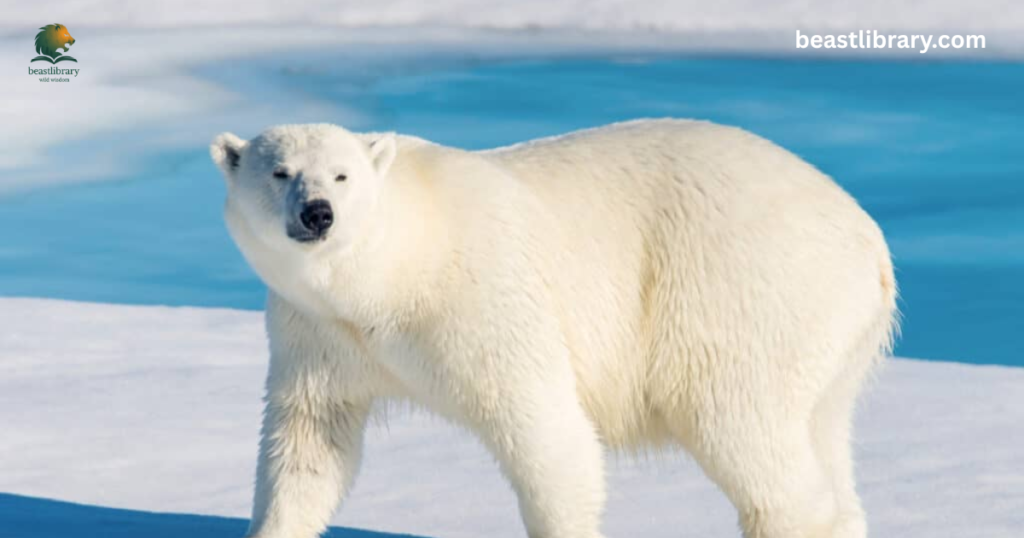
The polar bear is chubby world’s largest land carnivore and a formidable Arctic predator perfectly adapted to one of the harshest environments on the planet. Classified under class Mammalia and family Ursidae, polar bears have 42 teeth including sharp canines and jagged.
Unlike brown bears, polar bears rely almost entirely on ringed and bearded seals for sustenance, stalking them patiently at breathing holes in the ice or ambushing them in open water. Their teeth are designed to grip slippery, struggling prey and tear through thick blubber and flesh.
Fun Facts:
- Polar bear fur is not actually white. Each hair shaft is transparent and hollow, scattering light to appear white.
- They can swim continuously for days, covering over 60 miles without rest in icy Arctic waters.
- Polar bears have black skin beneath their thick fur, which absorbs heat from the sun to help keep them warm.
8- Snake
- Scientific Name: Ophiophagus hannah
- Class: Reptilia
- Diet: Carnivore
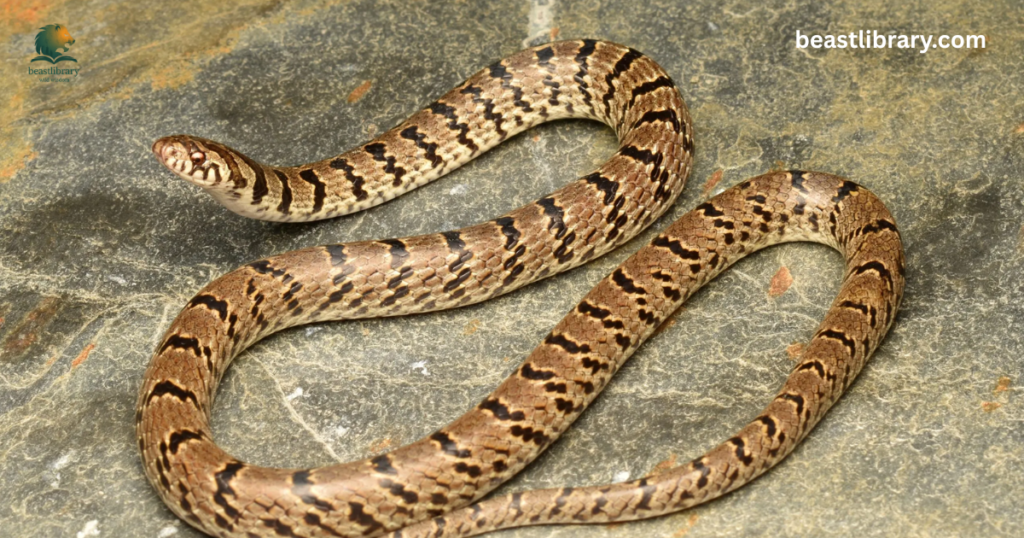
Snakes are quiet animals and represent most diverse groups of predatory reptiles, with over 3,700 known species found on every continent except Antarctica. Classified under class Reptilia and order Squamata, venomous snakes possess specialized hollow fangs.
Highly evolved sharp teeth that function as hypodermic needles to inject venom deep into prey or threats. Different species have radically different dental structures: vipers have long, hinged front fangs for deep injection. They are animals with out legs.
Fun Facts:
- The black mamba can travel at speeds of up to 12 mph, making it the fastest snake on Earth.
- Some snakes, like the king cobra, can raise up to one-third of their body off the ground and still move forward.
- Snakes smell their environment by flicking their tongues to collect scent particles and deliver them to the Jacobson’s organ in the roof of their mouth.
9- Leopard
- Scientific Name: Panthera pardus
- Class: Mammalia
- Diet: Carnivore
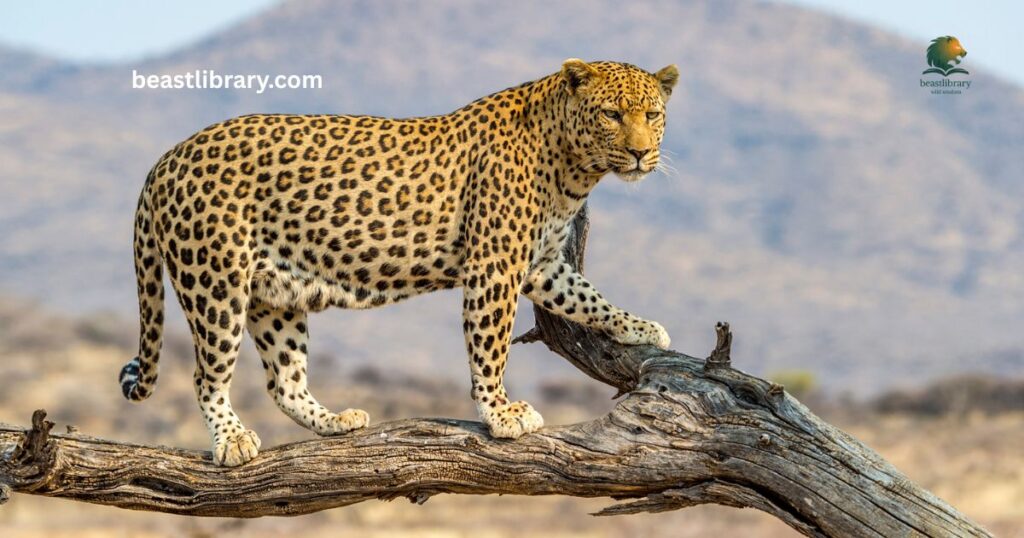
The leopard is one of the most adaptable and elusive big cats in the world, found across a vast range spanning Africa, the Middle East, Central Asia, and parts of the Russian Far East. Classified under class Mammalia and genus Panthera, leopards possess four large canine teeth.
Powerful jaw muscles that give them a bite force of 300–310 PSI, strong enough to haul prey heavier than themselves up into tall trees. Their teeth are designed for a killing bite to the throat or back of the skull, and their carnassials slice through muscle and tendon during feeding.
Leopards are long tail solitary, opportunistic carnivores that hunt an extraordinarily diverse diet including antelope, monkeys, rodents, reptiles, and even insects, making them the most dietary-flexible of all big cats.
Fun Facts:
- Leopards are exceptional swimmers and will readily hunt fish and crabs in rivers and streams.
- A leopard’s spots are called rosettes and provide camouflage in dappled forest light and tall grass.
- Leopards are so secretive that researchers in some areas only confirmed their presence through camera trap footage after years of searching.
10- Alligator
- Scientific Name: Alligator mississippiensis
- Class: Reptilia
- Diet: Carnivore
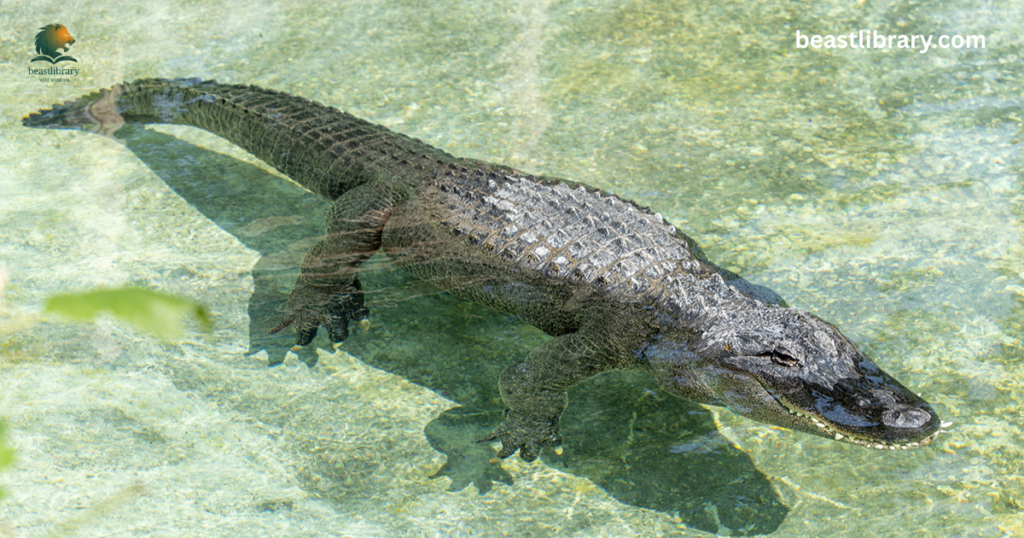
The American alligator is a living fossil and one of North America’s most powerful apex predators, native to the freshwater swamps, rivers, and marshes of the southeastern United States. Classified under class Reptilia and order Crocodilia.
Alligators possess approximately 80 teeth at any given time, with the remarkable ability to replace each tooth up to 50 times over their lifetime, potentially cycling through over 3,000 teeth in total.
With a bite force of approximately 2,125 PSI and a prehistoric body plan that has remained virtually unchanged for millions of years, the alligator is proof that evolution sometimes reaches perfection early.
Fun Facts:
- Alligators can regrow damaged or lost teeth throughout their entire lives thanks to a stem-cell-based replacement system.
- They play a vital ecological role by creating “gator holes” — water-filled depressions that serve as refuges for wildlife during droughts.
- Alligators can enter a dormant state called brumation during cold weather, slowing their metabolism to survive without food for months.
11- Jaguar
- Scientific Name: Panthera onca
- Class: Mammalia
- Diet: Carnivore
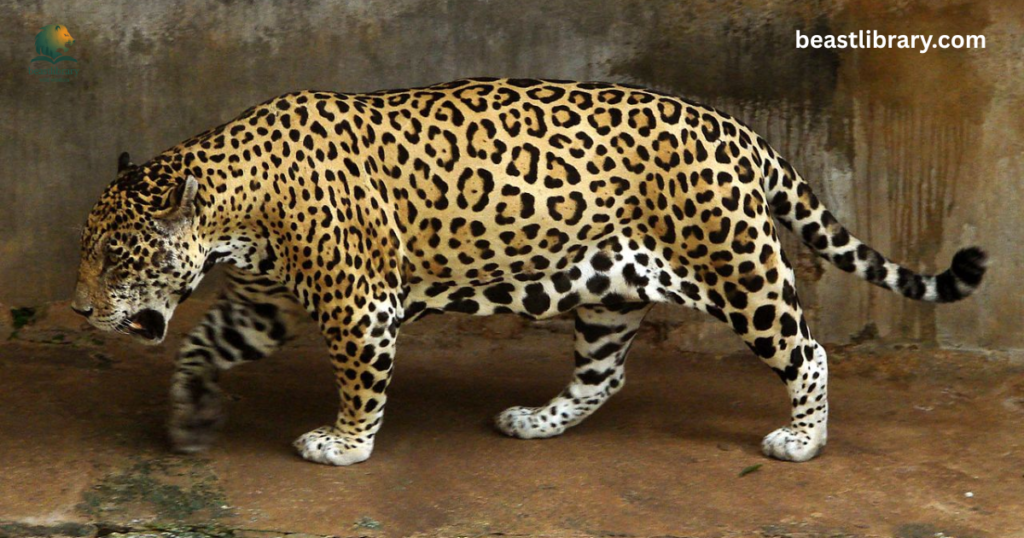
The jaguar is the largest big cat in the Americas and the apex predator of the dense rainforests, wetlands, and grasslands stretching from Mexico down through South America. Classified under class Mammalia and genus Panthera.
The jaguar possesses the strongest bite force relative to body size of any big cat, measuring approximately 1,500 PSI powerful enough to pierce the shells of river turtles and the thick skulls of caimans.
Unlike other large cats that target the throat, jaguars deliver a unique killing bite directly through the skull or spine of their prey, instantly severing the brain stem or spinal cord. Their diet is remarkably diverse, encompassing over 85 known prey species as dominant generalist predators.
Fun Facts:
- Jaguars are one of the few big cats that genuinely love water and are excellent swimmers who actively hunt fish and caimans.
- The jaguar’s name is derived from the Indigenous Tupi-Guaraní word “yaguara,” meaning “he who kills with one leap.”
- Unlike leopards, some jaguars are melanistic (black panthers), carrying a gene mutation that darkens their coat while their rosette pattern remains faintly visible underneath.
12- Komodo Dragon
- Scientific Name: Varanus komodoensis
- Class: Reptilia
- Diet: Carnivore
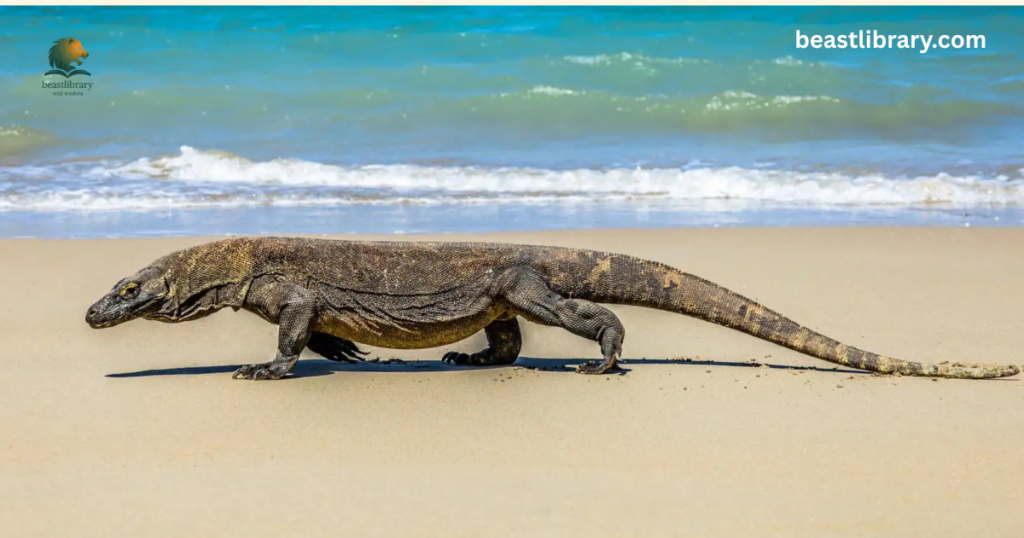
The Komodo dragon is the world’s largest living lizard, native to a handful of Indonesian islands including Komodo and Flores, where it reigns as the undisputed apex predator. Classified under class Reptilia and family Varanidae.
Their diet includes deer, pigs, goats, water buffalo, and carrion, and they can consume up to 80% of their own body weight in a single feeding session. It use a forked tongue to detect chemical signals in the air with precision, tracking dying prey animals over distances of several kilometers.
Fun Facts:
- Komodo dragons can reproduce through parthenogenesis, females can produce offspring without fertilization by a male.
- They have a flexible skull with loosely connected jaw bones, allowing them to swallow large prey whole.
- Komodo dragons can run at speeds of up to 12 mph in short bursts, fast enough to ambush unsuspecting prey.
13– Orca
- Scientific Name: Orcinus orca
- Class: Mammalia
- Diet: Carnivore
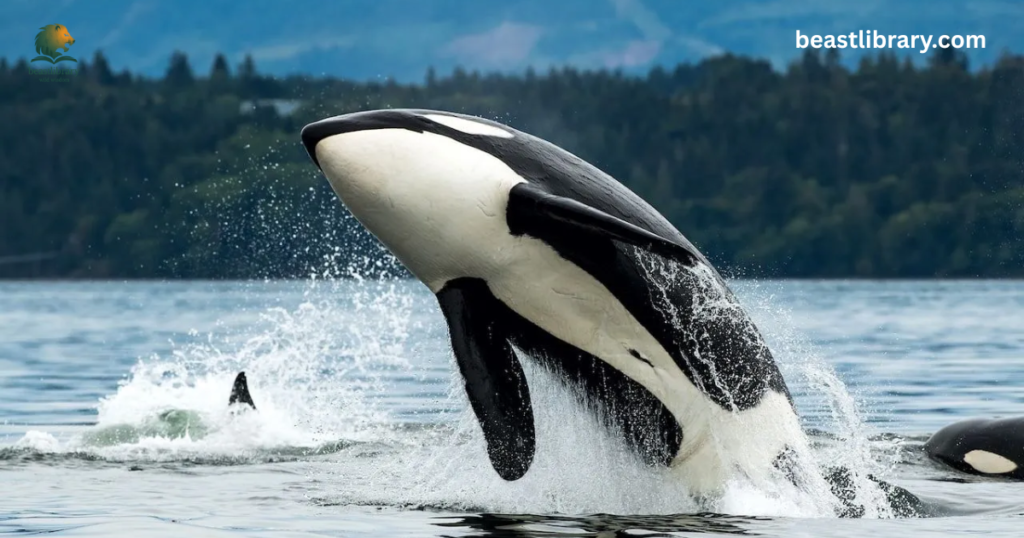
The orca, or killer whale, is the apex predator of every ocean on Earth. The only marine mammal with no natural predators whatsoever across all of the world’s seas. Classified under class Mammalia, order Cetacea, and family Delphinidae.
Orcas display extreme dietary specialization by population; some groups eat only fish like salmon, others specialize in marine mammals like seals and great white sharks, and some pods hunt whales many times their own size.
Their sophisticated hunting strategies rival those of any predator on Earth, including beaching themselves temporarily to snatch seals from shore, using waves to wash prey off ice floes, and coordinating carousel feeding to herd fish
Fun Facts:
- Orcas have been documented teaching their calves specific hunting techniques, a rare form of animal cultural transmission.
- Different orca populations have distinct dialects unique click and whistle patterns that identify their social group.
- Orcas are one of only three known species that experience menopause, alongside humans and short-finned pilot whales.
14- Tasmanian Devil
- Scientific Name: Sarcophilus harrisii
- Class: Mammalia
- Diet: Carnivore
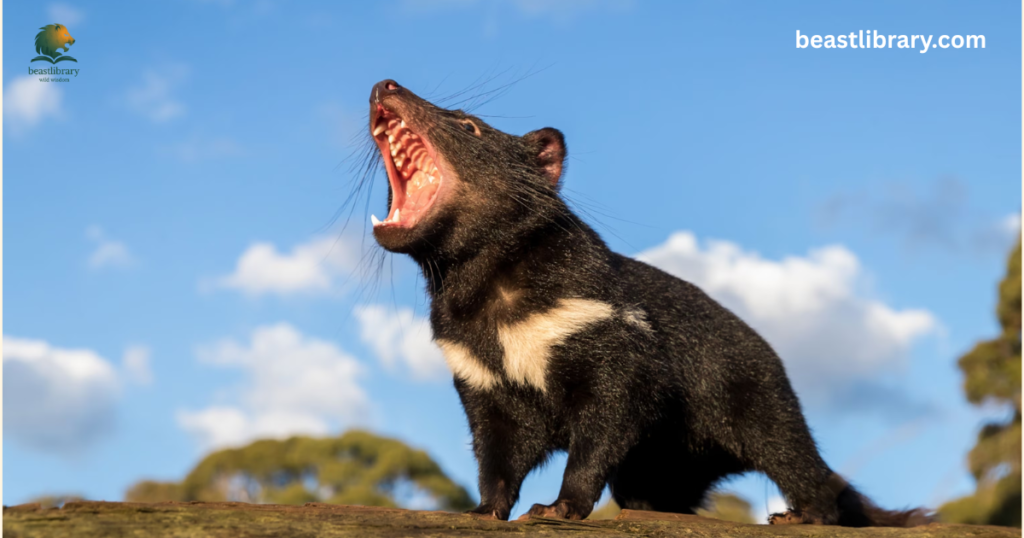
The Tasmanian devil is the world’s largest carnivorous marsupial, found only on the Australian island of Tasmania, where it serves as a critical scavenger and predator in its ecosystem. Classified under class Mammalia and order Dasyuromorphia.
Tasmanian devils possess exceptionally strong jaws and large, robust teeth that give them the highest bite force relative to body size of any living mammal approximately 553 PSI from an animal typically weighing only 8–26 pounds.
Despite their small size, Tasmanian devils are bold, aggressive feeders that will confront animals much larger than themselves when competing over food, emitting blood-curdling screams and releasing pungent odor when threatened.
Fun Facts:
- Tasmanian devils can eat up to 40% of their body weight in a single feeding session, consuming bones, fur, and all.
- Their powerful jaws can generate enough force to bite through heavy steel wire traps used by researchers.
- Baby Tasmanian devils, called imps or joeys, are born the size of a grain of rice and must race to their mother’s pouch immediately after birth.
15- Barracuda
- Scientific Name: Sphyraena barracuda
- Class: Actinopterygii
- Diet: Carnivore
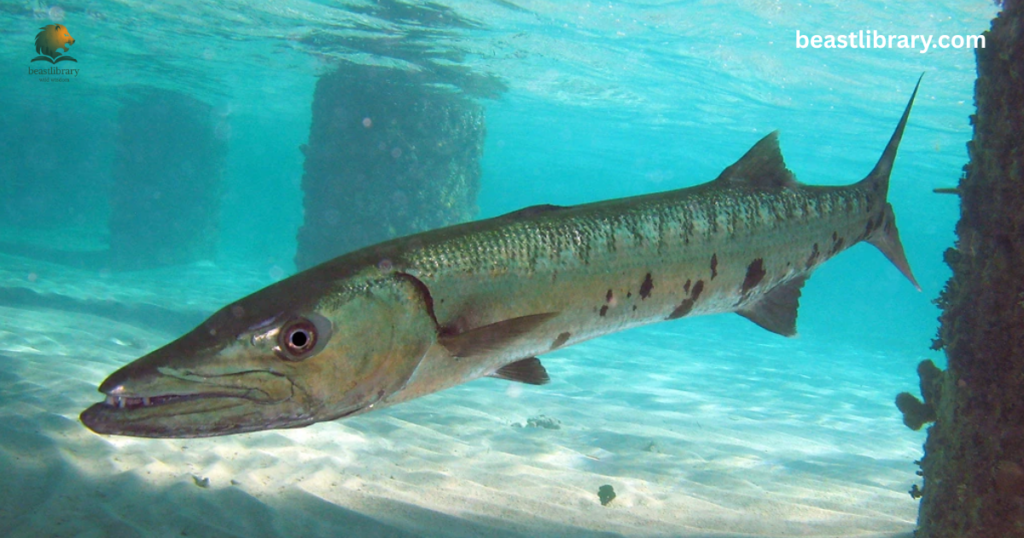
The great barracuda is one of the ocean’s most feared fish predators, a sleek, torpedo-shaped hunter found in tropical and subtropical oceans worldwide, particularly around coral reefs and open coastal waters.
Classified under class Actinopterygii and family Sphyraenidae, barracudas possess two types of teeth: large, fang-like teeth for gripping slippery fish whole, and smaller, razor-sharp teeth for slicing through flesh with surgical precision in a single explosive strike.
Barracudas are capable of launching attacks at speeds exceeding 35 mph to strike prey before it can react. Barracudas are known to be attracted to shiny objects, which they mistake for the glint of fish scales, causing injuries to divers wearing metallic jewelry in their territory.
Fun Facts:
- Barracudas can exceed 6 feet in length and weigh over 100 pounds, making them formidable open-water predators.
- They are known to shadow scuba divers curiously for extended periods, which is unsettling but rarely results in attacks.
- Large barracudas can carry ciguatoxin in their flesh from eating reef fish, making them potentially poisonous to humans who eat them.
16– Piranha
- Scientific Name: Pygocentrus nattereri
- Class: Actinopterygii
- Diet: Carnivore
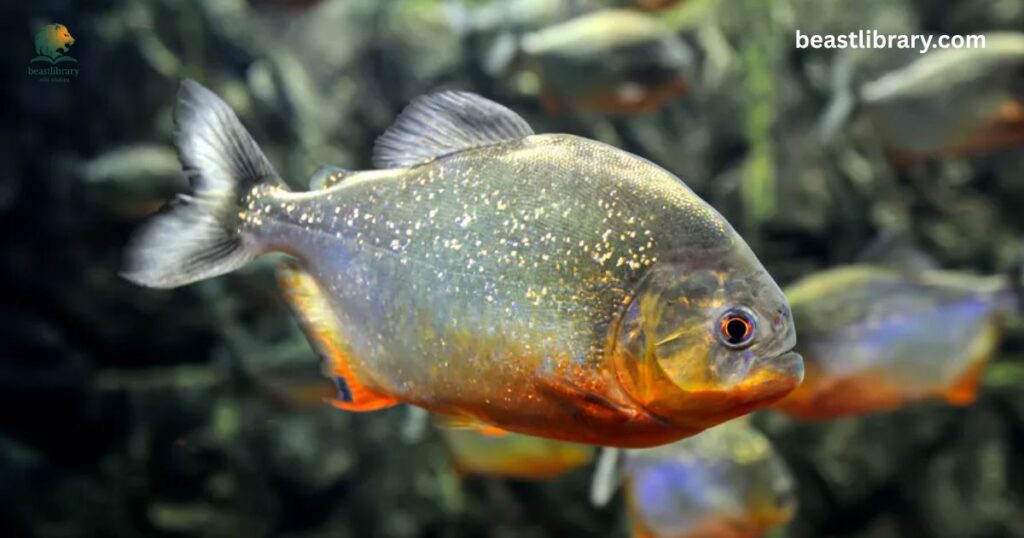
The red-bellied piranha is one of South America’s most notorious aquatic predators, inhabiting the rivers, floodplains, and lakes of the Amazon and Orinoco river basins across Brazil, Bolivia, and neighboring countries.
Classified under class Actinopterygii, order Characiformes, and family Serrasalmidae, piranhas possess interlocking, triangular teeth as sharp as razor blades, arranged in a single row in both the upper and lower jaws to create a seamless cutting surface.
Their jaw muscles are disproportionately large for their body size, delivering a bite force of approximately 30 times their own body weight one of the highest ratios of any vertebrate animal on Earth.
Fun Facts:
- Piranhas use their teeth to trim the fins off living fish, a feeding behavior called fin-nipping that leaves their prey alive but defenseless.
- Contrary to popular belief, piranhas are actually prey for many Amazonian animals including caimans, river dolphins, and giant otters.
- Indigenous peoples of the Amazon have historically used dried piranha jaws as cutting tools and weapons due to their exceptional sharpness.
17- African Wild Dog
- Scientific Name: Lycaon pictus
- Class: Mammalia
- Diet: Carnivore
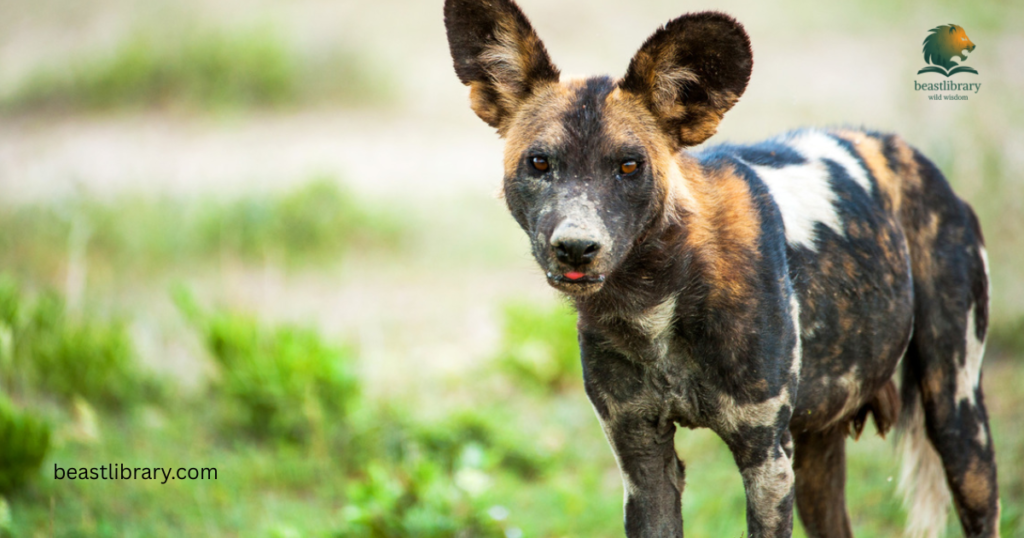
The African wild dog, also known as the painted wolf, is one of the world’s most endangered carnivores and arguably Africa’s most efficient predator by hunting success rate. Classified under class Mammalia, order Carnivora, and family Canidae.
Wild dogs are pursuit hunters that chase prey at speeds of up to 44 mph over distances of several kilometers, working in tightly coordinated packs of 6–20 individuals. Their diet consists mainly of medium-sized ungulates including impala, wildebeest calves, kudu, and gazelles.
Fun Facts:
- African wild dogs have a unique voting system, pack members sneeze to “vote” on whether to initiate a hunt, with a democratic majority required before they move.
- Each African wild dog has a completely unique coat pattern, making individual identification possible without tagging.
- Wild dog packs are extraordinarily cooperative healthy adults will regurgitate food for injured, sick, or elderly pack members who cannot hunt.
18- Wolverine
- Scientific Name: Gulo gulo
- Class: Mammalia
- Diet: Carnivore
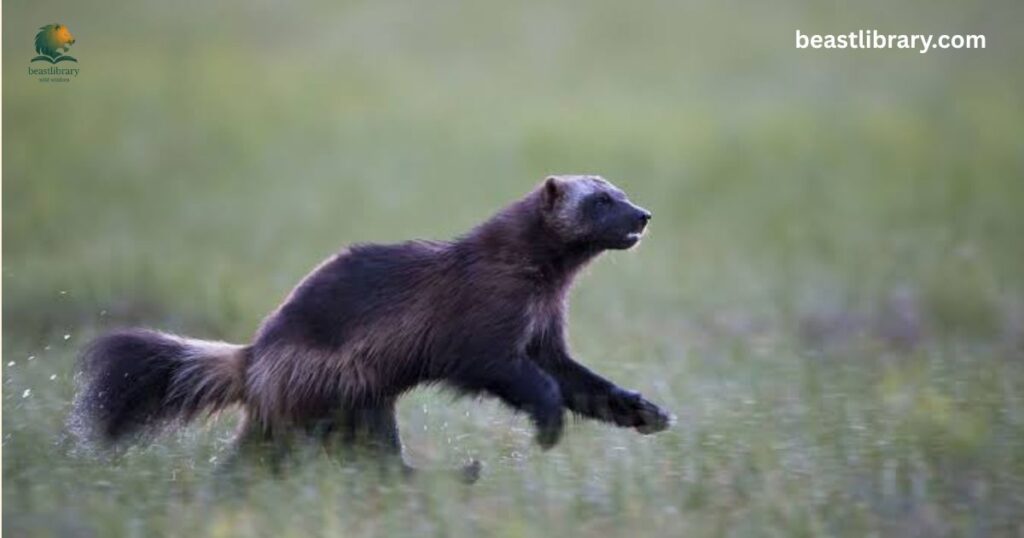
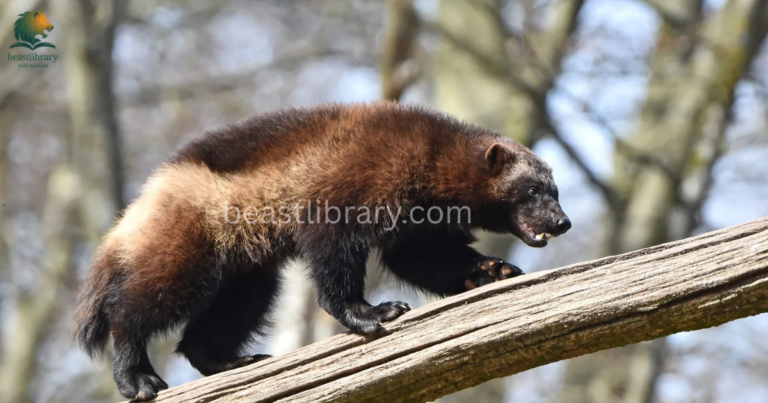
The wolverine is pound-for-pound one of the most ferocious and tenacious predators on Earth, a stocky mustelid found across the boreal forests, tundras, and alpine regions of North America, Europe, and Siberia.
Classified under class Mammalia and family Mustelidae, wolverines possess extremely dense, strong teeth including hardened molars capable of breaking through frozen meat and crushing large bones that would defeat most carnivores of similar size.
Their diet is highly opportunistic, ranging from small rodents, rabbits, and birds to caribou, moose calves, and winter-killed ungulate carcasses that they locate under several feet of snow using their powerful sense of smell.
Wolverines have a special upper molar rotated 90 degrees inward, a unique dental adaptation that functions as a specialized tool for tearing frozen meat from carcasses locked in permafrost during Arctic winter. They are thick fur animals.
Fun Facts:
- Wolverines have been observed traveling over 15 miles in a single day through deep snow in search of food, with annual home ranges up to 600 square miles.
- They have semi-retractable claws and can climb trees and steep rock faces almost as efficiently as they move on the ground.
- Wolverines mark their territory and food caches with a pungent musk so powerful it has earned them the nickname “skunk bear.”
19- Moray Eel
- Scientific Name: Muraenidae
- Class: Actinopterygii
- Diet: Carnivore
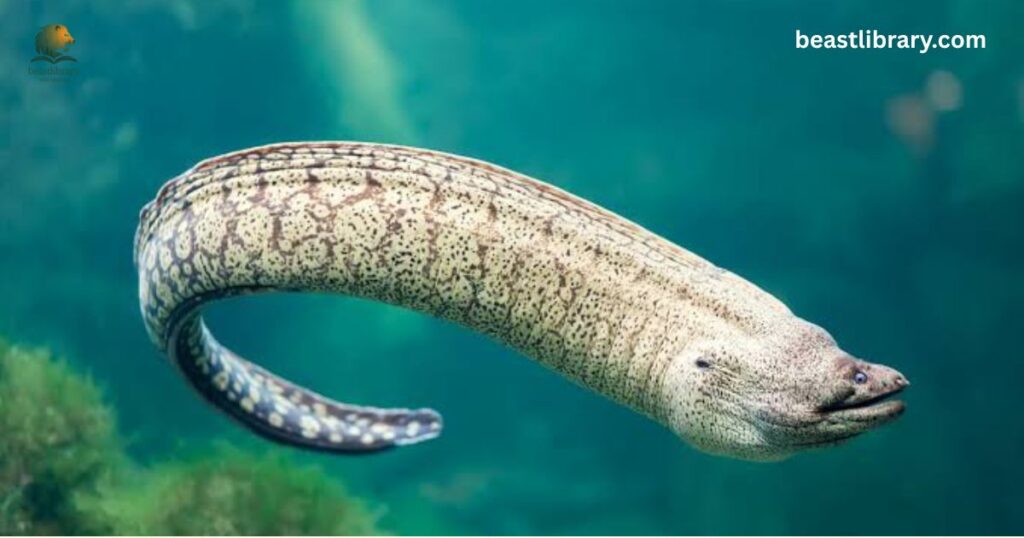
The giant moray eel is the largest of over 200 moray species and ocean’s most uniquely armed predators, lurking in the crevices of coral reefs across the Indo-Pacific region. Their outer teeth are long, sharp, and backward curved to prevent slippery fish and octopuses from escaping.
The inner pharyngeal jaw teeth provide a secondary gripping and transport mechanism. This dual-jaw system, reminiscent of the creature in the “Alien” film franchise, allows morays to consume prey much larger than their throat would otherwise permit.
Fun Facts:
- Moray eels frequently hunt cooperatively with grouper fish — an extremely rare cross-species hunting partnership in the animal kingdom.
- They constantly open and close their mouths not as a threat display but to pump water over their gills to breathe.
- Some moray eel species accumulate ciguatoxins from their reef prey, making their flesh dangerously poisonous to humans who consume them.
20- Saber-Toothed Cat
- Scientific Name: Smilodon fatalis
- Class: Mammalia
- Diet: Carnivore
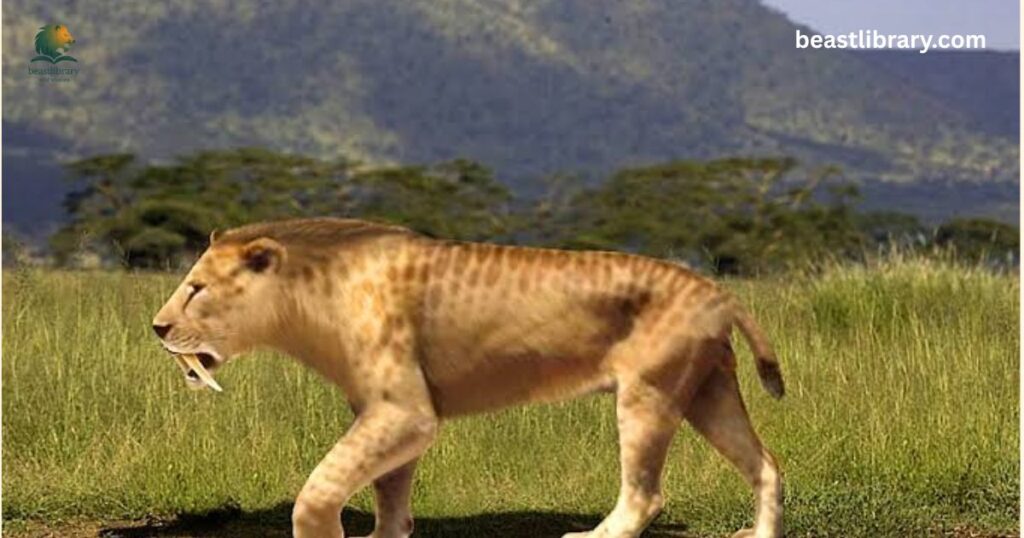
The saber-toothed cat is perhaps the most iconic prehistoric predator in Earth’s history, roaming the Americas from approximately 2.5 million to 10,000 years ago before its extinction at the end of the last Ice Age.
Classified under class Mammalia, order Carnivora, and family Felidae, Smilodon fatalis possessed canine teeth measuring up to 11 inches in length. The longest fangs of any known field which were flattened, serrated like steak knives.
Smilodon fed on the Ice Age megafauna of the Americas including mammoths, ground sloths, ancient bison, camels, and horses prey animals that have since gone extinct themselves. The most complete fossil records of Smilodon come from the La Brea Tar Pits in Los Angeles.
Fun Facts:
- Fossil evidence from La Brea suggests Smilodon may have lived in social groups, caring for injured individuals a surprisingly cooperative behavior for a large felid.
- Despite their fearsome teeth, Smilodon had a relatively weak bite force compared to modern lions, relying on strength and stabbing rather than crushing.
- Smilodon’s extinction approximately 10,000 years ago coincided with both rapid climate change and the arrival of human hunters in the Americas, a combination that likely sealed its fate.
Conclusion
Animals with sharp teeth, like the 20 deadly predators here, shows nature’s engineering for survival and hunting. Studying their scientific classifications deepens our understanding of the food chain and highlights the importance of biodiversity in maintaining ecological balance.
FAQs
What animals have very sharp teeth?
White shark is considered to have some of the sharpest teeth in the animal kingdom. Its teeth are serrated like steak knives, designed to slice through flesh and bone with minimal effort, and they are continuously replaced throughout the shark’s lifetime.
Which animal has the sharpest bite?
The saltwater crocodile (Crocodylus porosus) is often heralded as the animal with the strongest bite on Earth.