Top 25 Arboreal Animals in The World (With Pictures)
Discover the top 25 arboreal animals in the world and their unique habitats. Learn how these tree- dwelling creatures survive and play a vital role in our ecosystems. we will explore their unique adaptations and natural habitats and we will not only deepen your appreciation for these incredible creatures but also highlight the importance of conserving their environments.
List of Arboreal Animals in The World
Below is the list of arboreal animals in the world:
- Sloth
- Koala
- Howler Monkey
- Gibbon
- Slow Loris
- Spider Monkey
- Tree Kangaroo
- Colobus Monkey
- Kinkajou
- Squirrel
- dormouse
- Clouded Leopard
- Margay
- Tree Porcupine
- Green Tree Python
- Orangutan
- Green Iguana
- Binturong
- Flying Squirrel
- Red-Eyed Tree Frog
- Aye-Aye
- Tree Frog
- Emerald Tree Boa
- Chameleon
- Green Tree Monitor
1- Sloth: Arboreal Animals
Scientific Name: Folivora
Class: Mammalia
Diet: Herbivore
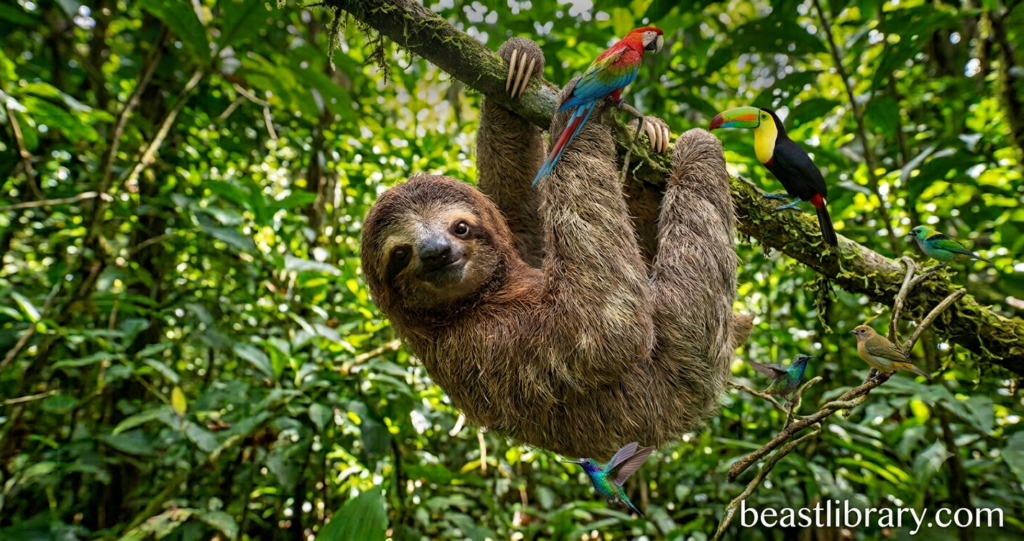
Sloths are mammals that have short legs and long claws. They are found in Central and South American rainforests. The short legs make them hang on the trees as they feed up on the leaves. The claws of theirs embrace trees.
Sloths are slow and they save on energy. The short legs are advantageous because it is easy to move on trees and be attached to them. They consume leaves, shoots and fruit. Hanging, climbing and ground movement are supported by short legs.
Sloths are clumsy and slow on land, and are nimble in the trees. They fall down just to defecate or to pass between trees. Short legs ensure that the body is kept close to the branches and it does not strain.
2- Koala
Scientific Name: Phascolarctos cinereus
Class: Mammalia
Diet: Herbivore
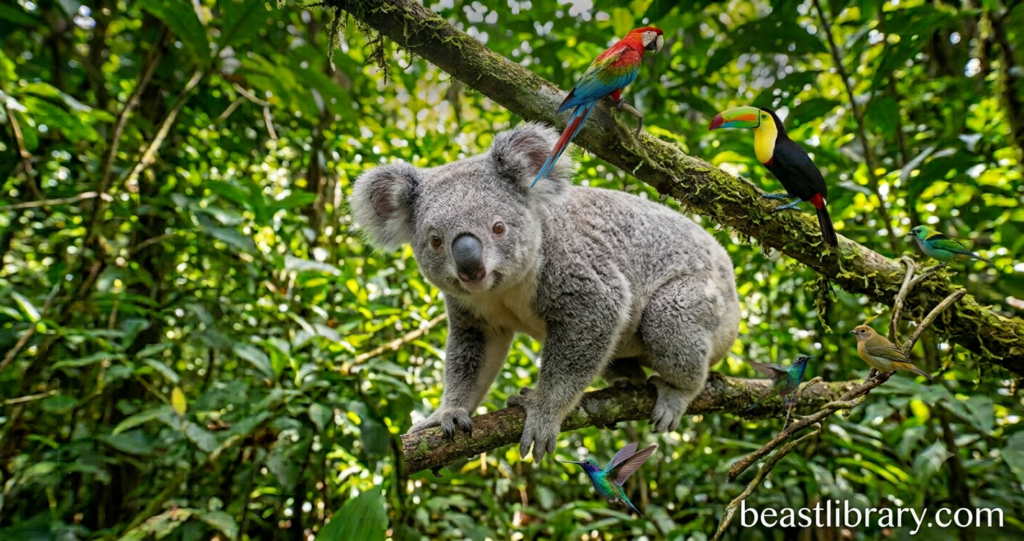
The koala, widely recognized as a classic symbol of Australia, embodies a serene lifestyle that underscores the beauty of stillness in nature.
They use loud call to show dominance or convey urgent massages, koalas are quiet animals, mostly during mating season, choosing to express themselves through soft grunts and occasional bellows.
This reserved conduct fits beautifully with their unhurried lifestyle, as they spend most of their time nestled in eucalyptus trees. They are animals with Pouches, consuming a diet primarily composed of leaves that few creatures dare to touch.
3- Howler Monkey
Scientific Name: Alouatta
Class: Mammalia
Diet: Herbivore
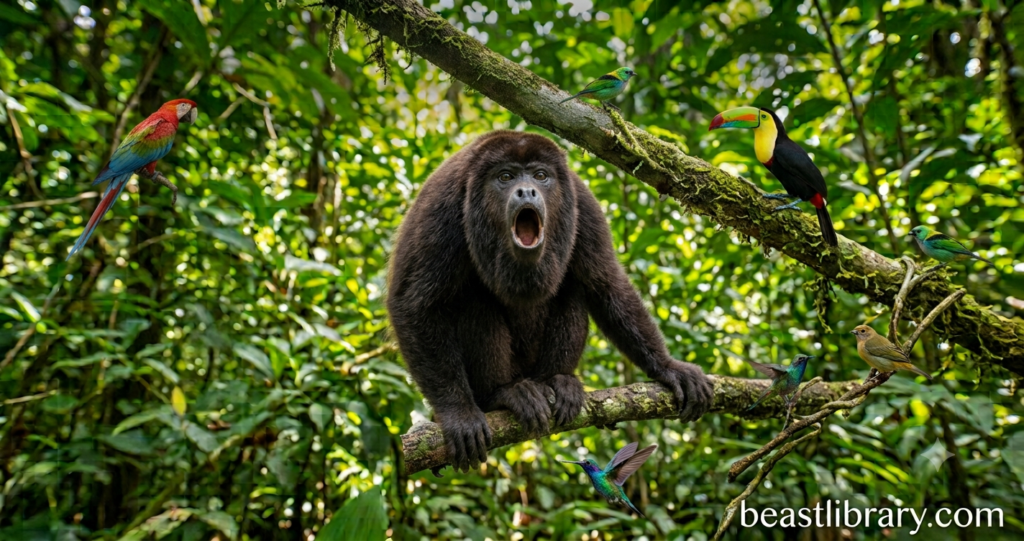
Among the inhabitants of tropical rainforests, the howler monkey stands out not only for its iconic vocalizations but also for its remarkable prehensile tail.
This highly adaptive appendage acts almost like a fifth limb, allowing these monkeys to navigate the complex canopy with acrobatic ease.
As they swing from branch to branch, the tail provides a strong, gripping force that ensures stability, enabling them to forage for fruits and leaves high above the forest floor.
4-Gibbon
Scientific Name: Hylobatidae
Class: Mammalia
Diet: Omnivore
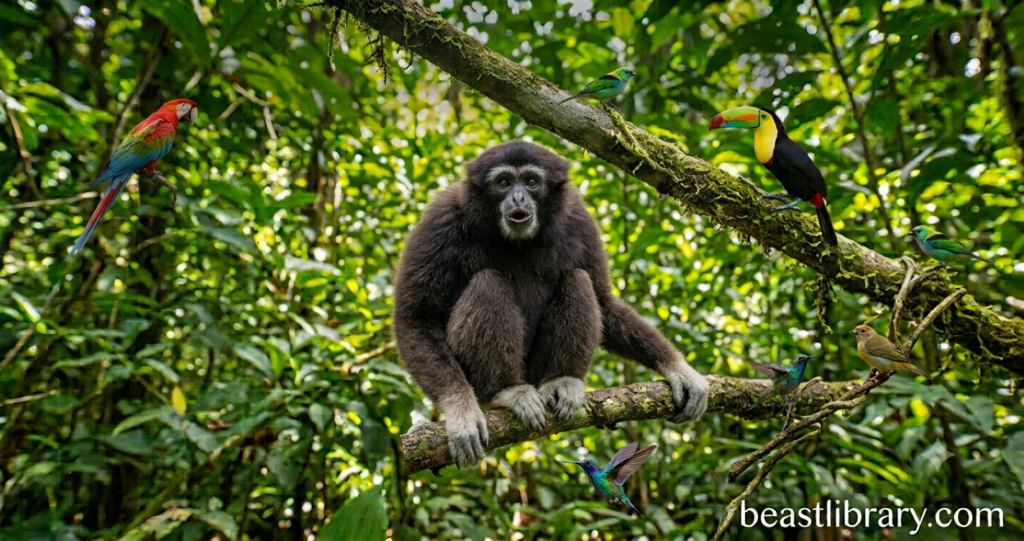
Showcasing astonishing agility that sets them apart in the arboreal realm, Gibbons are often referred to as the “swinging acrobats” of the rainforest.
Gibbons are facing increasing threats from habitat loss and poaching, underscoring the urgency of conservation efforts.
This unique form of locomotion not only facilitates their search for ripe fruits and leaves but also serves as an extraordinary display of skill during inter-group interactions.
Their long arms and lightweight bodies enable them to perform impressive brachiation a method of movement where they swing from branch to branch.
5- Slow Loris
Scientific Name: Nycticebus
Class: Mammalia
Diet: Omnivore
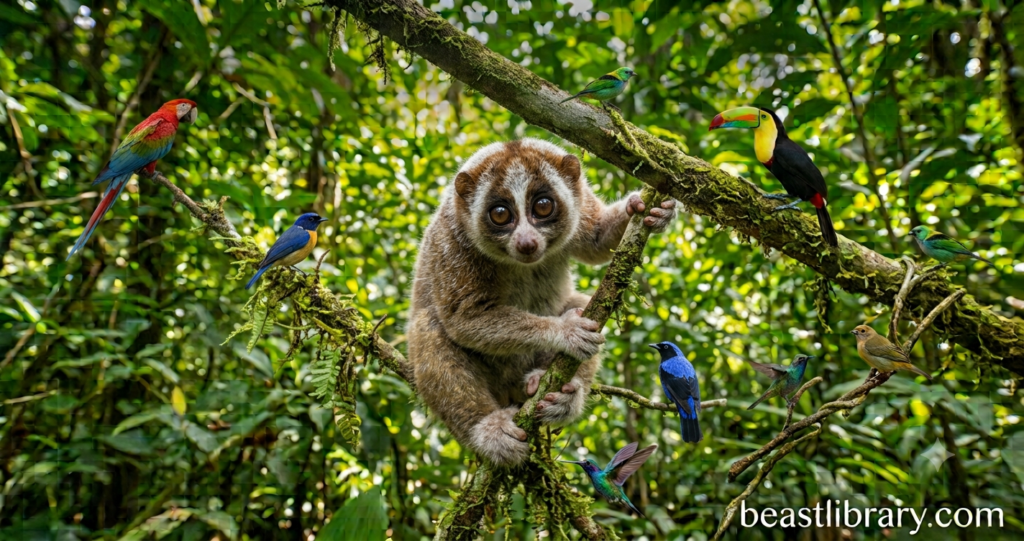
The slow Loris, a small grumpy primate native to Southeast Asia, embodies the essence of shyness with its deliberate movements and elusive nature. It is expressive big eyes animal that seem to reflect its cautious demeanor. Slow Loris is animals with lowest IQ in the wild.
The allure of the Slow Loris lies not only in its physical appearance but also in its amazing survival strategies. Its venomous bite, an unusual trait for a primate, serves as a unique defense mechanism, allowing it to ward off predators while maintaining an air of mystery.
6- Spider Monkey
Scientific Name: Ateles
Class: Mammalia
Diet: Omnivore
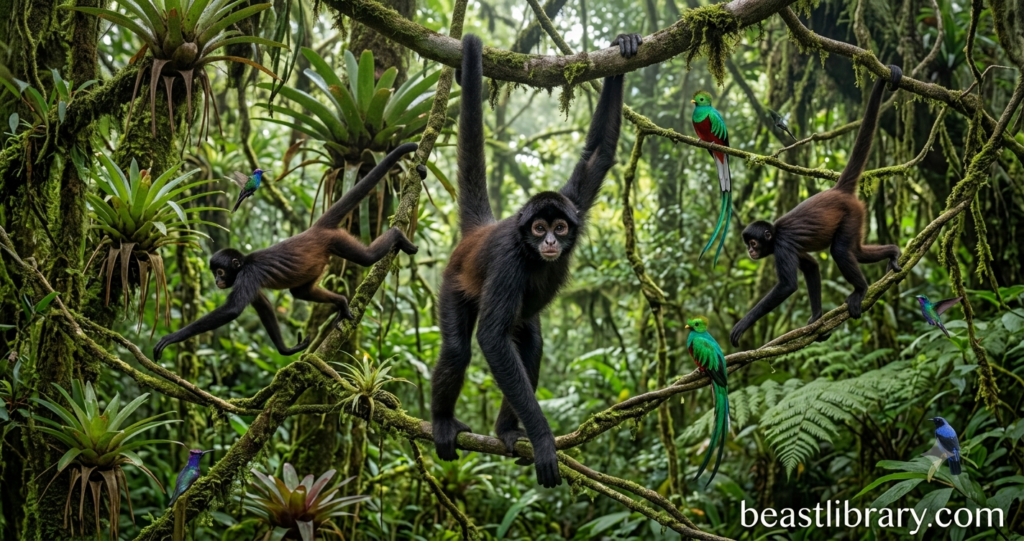
Spider monkeys are the ultimate acrobats of the animal kingdom, showcasing a remarkable blend of flexibility and agility that sets them apart.
Their long, prehensile tails act almost like a fifth limb, allowing them to swing gracefully between branches in the lush canopy of Central and South American forests.
This unique adaptation not only enhances their mobility but also provides stability as they navigate the treetops in search of ripe fruits one of their primary food sources.
Observing a spider monkey in motion is like watching a skilled gymnast perform; their fluid movements and ability to change direction mid-leap are mesmerizing.
7- Tree Kangaroo
Scientific Name: Dendrolagus
Class: Mammalia
Diet: Herbivore
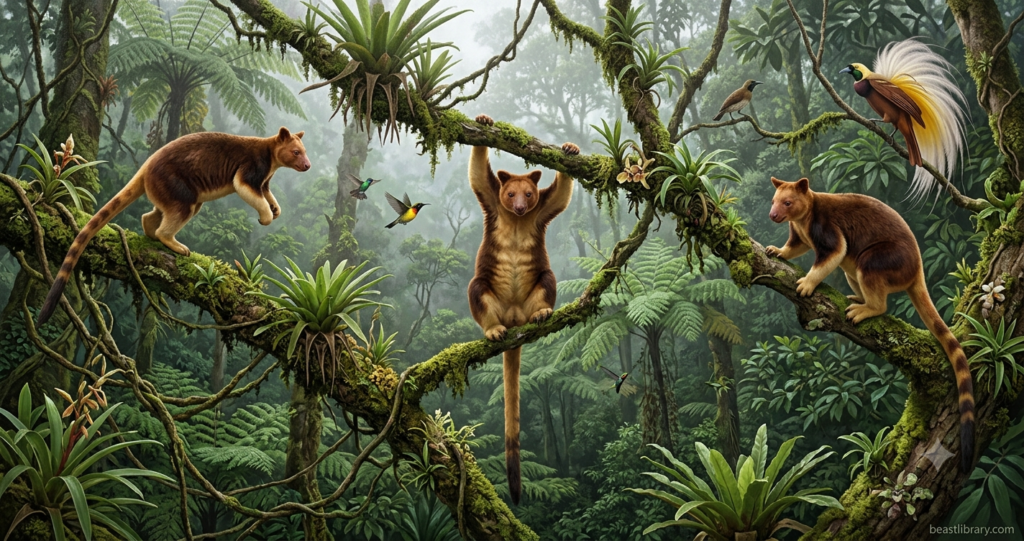
Kangaroos, often seen as the iconic symbol of Australia, showcase a unique blend of agility and adaptability that stands apart from other animals. These grumpy animals naturally lean, possess powerful hind legs designed for bounding great distances up to 30 feet in a single leap.
This impressive physical trait not only aids in travel but serves as a strategic advantage against predators in their arid environments. They utilize a unique mode of locomotion that optimizes efficiency, making long journeys in search of food and water less taxing.
8- Colobus Monkey
Scientific Name: Colobus
Class: Mammalia
Diet: Herbivore
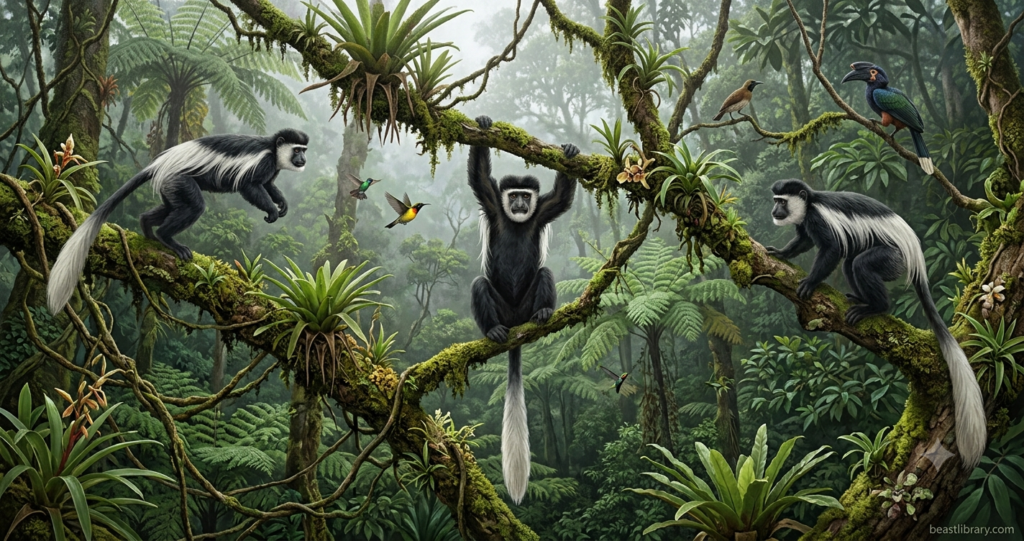
The Colobus monkey, is a true embodiment of elegance among arboreal animals, often recognized by its striking black and white fur.
These primates are known for their remarkable adaptations to life in the trees; their long limbs and specialized stomachs allow them to navigate the treetops with grace while feasting primarily on leaves.
Unlike many monkeys, the Colobus have a unique digestive system that ferments foliage, the Colobus have a unique digestive system that ferments foliage. This reliance on foliage not only shapes their feeding habits but also influences their social structures.
Living in large social groups, Colobus monkeys showcase a often dynamic of cooperation and hierarchy.
9- Kinkajou
Scientific Name: Potos flavus
Class: Mammalia
Diet: Omnivore
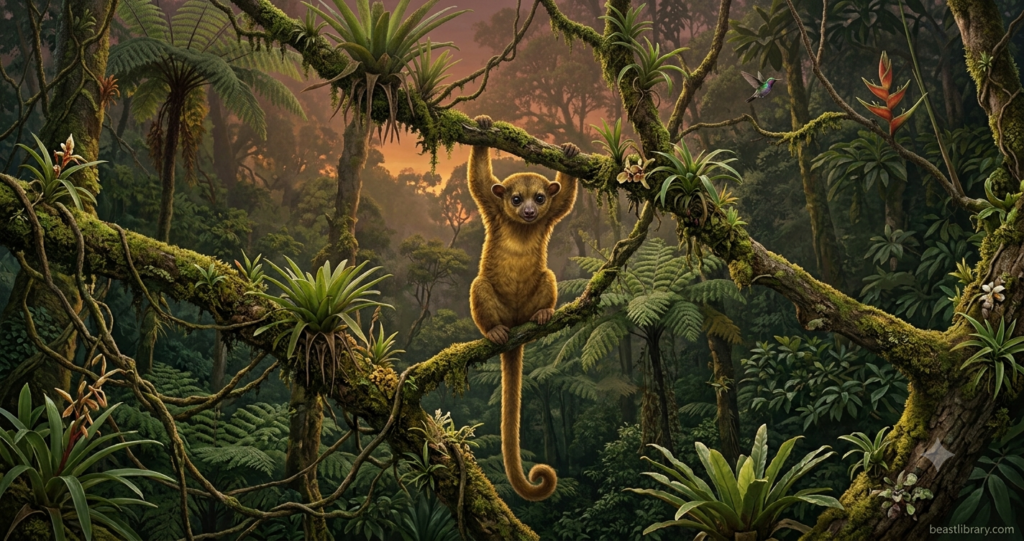
The kinkajou, often dubbed the “honey bear,” is a remarkable creature of the rainforest, celebrated not only for its playful nature but also for its incredible prehensile tail.
This tail serves as a fifth limb, allowing the kinkajou to expertly navigate the dense foliage of its arboreal habitat.
With a remarkable grip, it helps the kinkajou swing from branch to branch in search of fruit and nectar, showcasing an agility that is both mesmerizing and essential for its survival.
10- Squirrel
Scientific Name: Sciuridae
Class: Mammalia
Diet: Omnivore
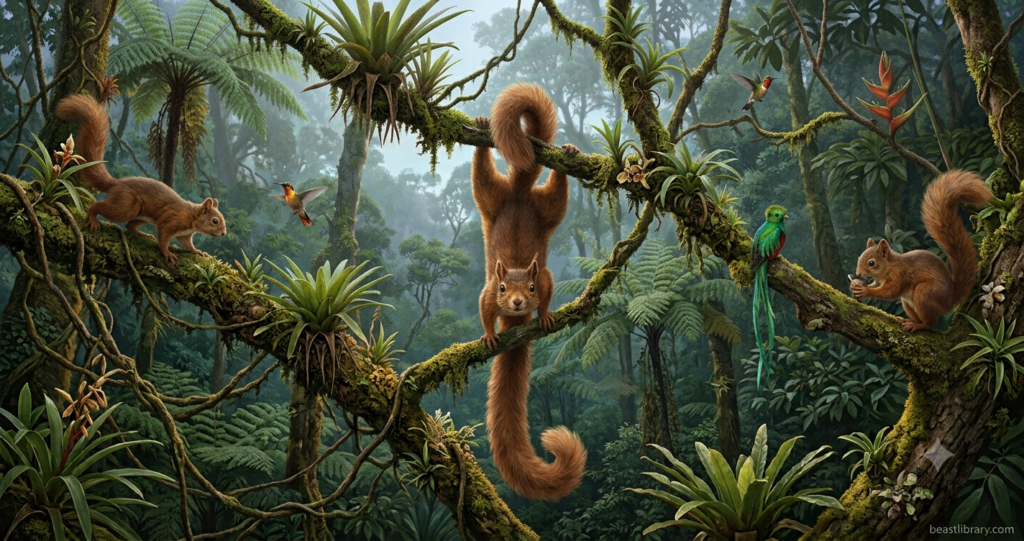
Squirrels, often seen darting across parks and backyards, are nature’s little tricksters. With their fluffy tails and sharp wits, these agile mammals display a level of mischief that goes well beyond simply stealing birdseed.
Researchers have discovered that squirrels engage in a playful form of deception hiding their food while pretending to bury it in different spots to throw off potential thieves. This “deceptive caching” showcases understanding of their rivals’ behavior, revealing a complex layer of animal intelligence.
11- Dormouse
Scientific Name: Gliridae
Class: Mammalia
Diet: Omnivore
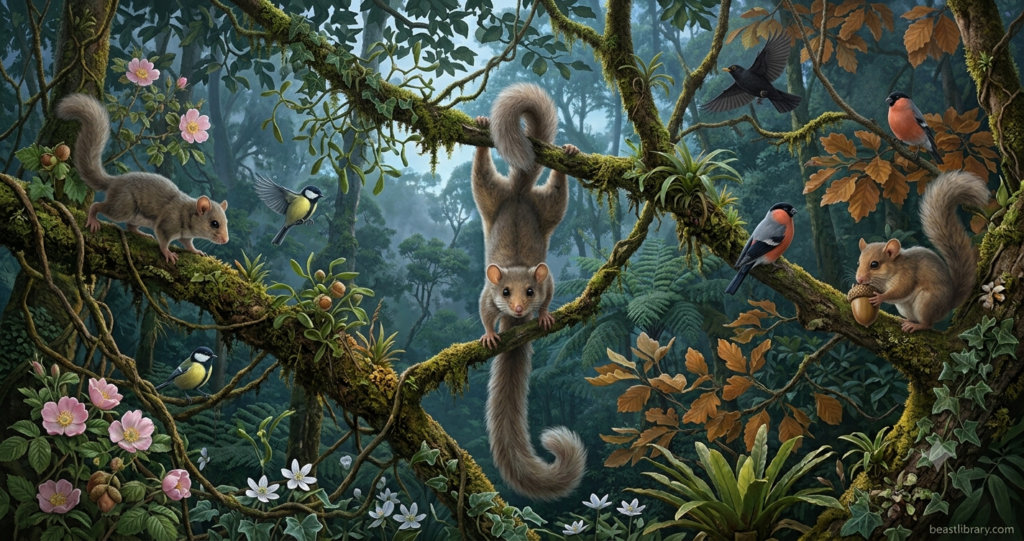
The dormouse, a small, offers a often glimpse into the world of mammalian adaptation, elusive creature often overshadowed by more familiar hibernators. expressive eyes, with its soft golden fur and large, this tiny rodent captures the imagination, but it’s its remarkable hibernation behavior that truly sets it apart.
As temperatures drop, the dormouse enters a deep sleep, allowing it to survive winter months on stored fat, radically slowing its metabolism and heart rate. This process is not merely a survival tactic; it represents an intricate biological ballet that scientists are still working to fully understand.
12- Clouded Leopard
Scientific Name: Neofelis nebulosa
Class: Mammalia
Diet: Carnivore
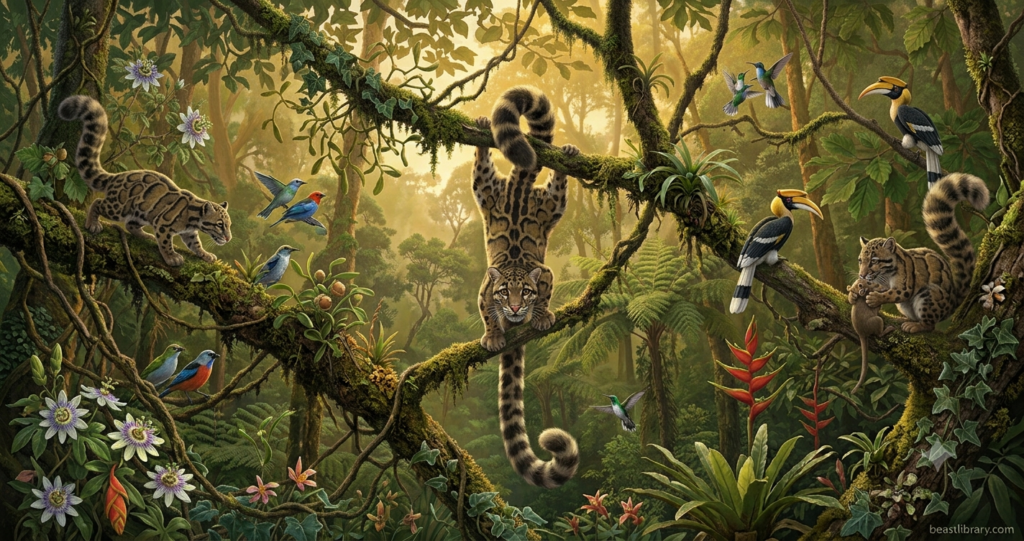
The clouded leopard, an elusive creature of Southeast Asia, showcases a remarkable adaptation in its long, muscular tail. This striking appendage, which can measure up to 30 inches, serves more purposes than mere elegance; it plays an integral role in the animal’s arboreal lifestyle.
As these cats navigate the treetops, their tails function as a counterbalance, allowing for nimble movements and precision as they leap between branches.
Observing a clouded leopard in its natural habitat, it’s fascinating to see how its tail sways gracefully, almost like a tightly coiled spring, ready to propel the animal seamlessly through its environment.
13- Margay
Scientific Name: Leopardus wiedii
Class: Mammalia
Diet: Carnivore
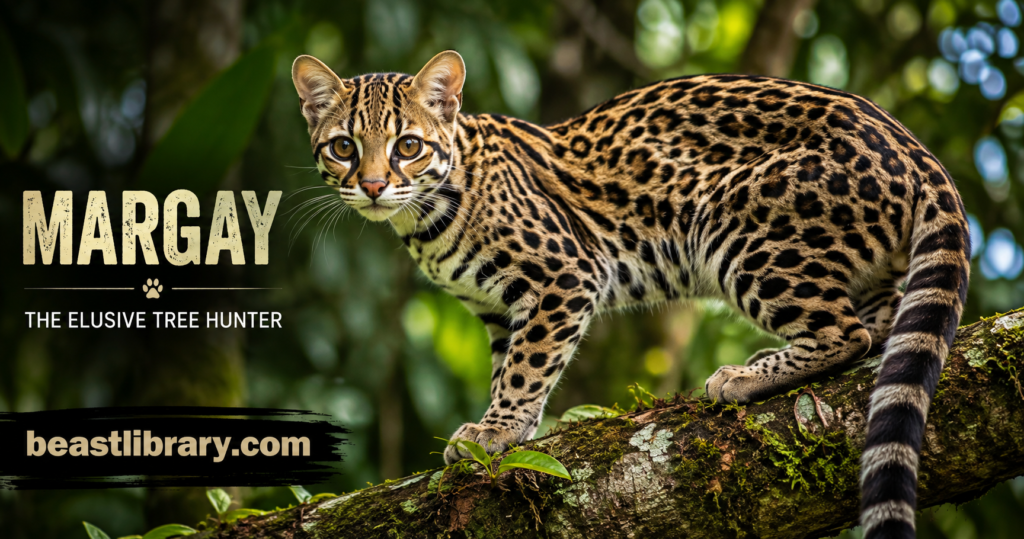
The margay, a small wild cat native to the lush rainforests of Central and South America, it possesses a unique charm that captivates wildlife enthusiasts, but is often overshadowed by its larger feline relatives.
With its striking spotted coat and remarkable agility, spending most of its life in the treetops, the margay is a master of arboreal living.
Unlike many of its terrestrial counterparts, this elusive feline has adapted superbly to a life that demands both stealth and skill its flexible ankles allow it to climb down trees headfirst and leap impressive distances from branch to branch.
Equally often is the margay’s vocal repertoire, which includes a variety of calls that mimic the cries of monkeys and birds.
14- Tree Porcupine
Scientific Name: Coendou
Class: Mammalia
Diet: Herbivore
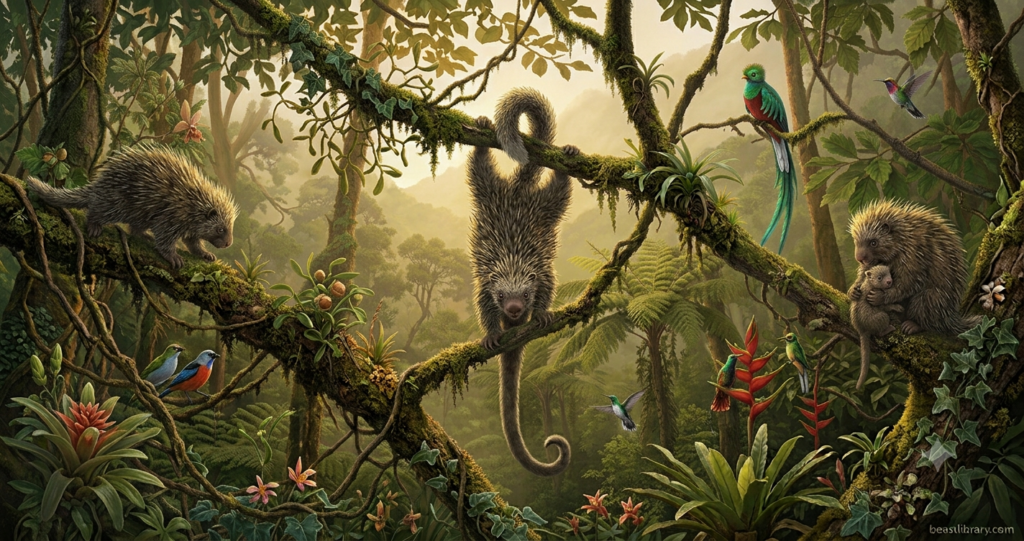
The tree porcupine are animals With heavy, stocky bodies and sturdy limbs, these creatures are built for stability rather than agility.
Their short legs are optimized for foraging on the forest floor, a moist habitat where they can munch on leaves and bark without needing to leap over obstacles.
This design makes porcupines masterful climbers rather than jumpers, allowing them to navigate trees with surprising ease and grace.
15- Green Tree Python
Scientific Name: Morelia viridis
Class: Reptilia
Diet: Carnivore
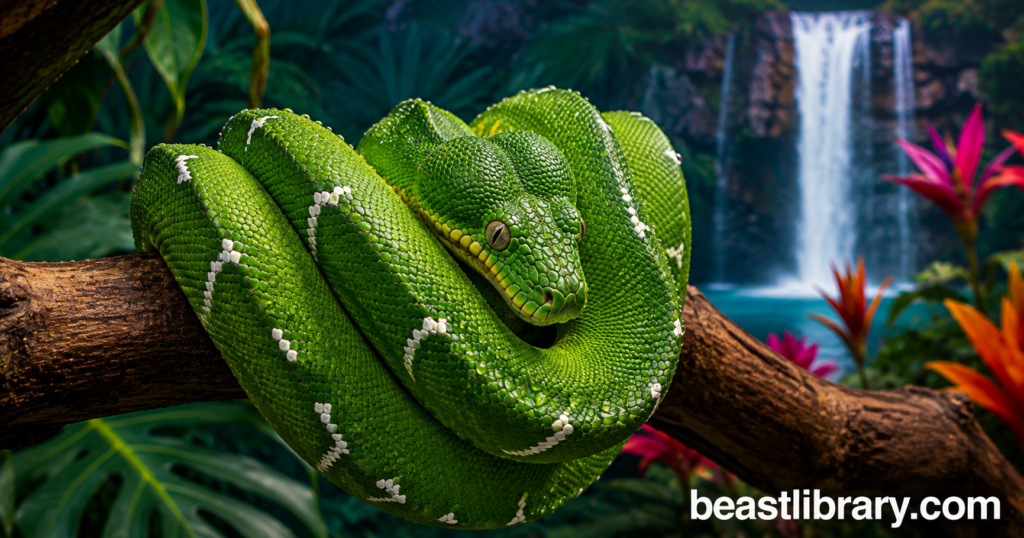
The Green Tree Python, jade-green scales, is a true marvel of the arboreal world. Native to the rainforests of New Guinea, with its vibrant, jade-green scales, nearby islands, and Indonesia nearby islands, this snake perfectly embodies the essence of adaptation.
Its striking coloration isn’t just for beauty; allowing it to ambush unsuspecting prey with astonishing stealth, it serves as a camouflage against the lush foliage.
Clinging effortlessly to branches, showcasing a unique form of behavior often overlooked, the Green Tree Python takes advantage of its surroundings: the ability to constrict like a living vine, enhancing both hunting tactics and survival.
16- Orangutan
Class: Mammalia
Diet: Omnivore
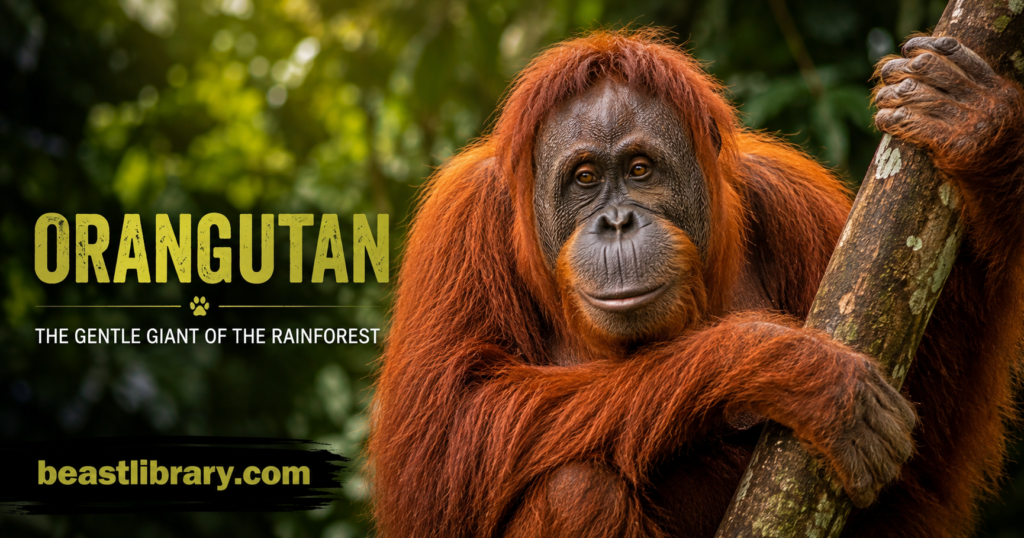
Orangutans are heavy bodied apes that lack tails. Their bodies are constructed to live in the trees. In slow motion, the support is done by arms that are long and the movement is supported with branches. Flexible joints and grip strength give an individual balance.
The availability of food varies with seasons. They feed on tougher plants when food is unavailable. The use of the tools aids in accessing the seeds and the insects. The process of learning occurs by observation. No tail is needed for balance.
17- Green Iguana
Scientific Name: Iguana iguana
Class: Reptilia
Diet: Herbivore
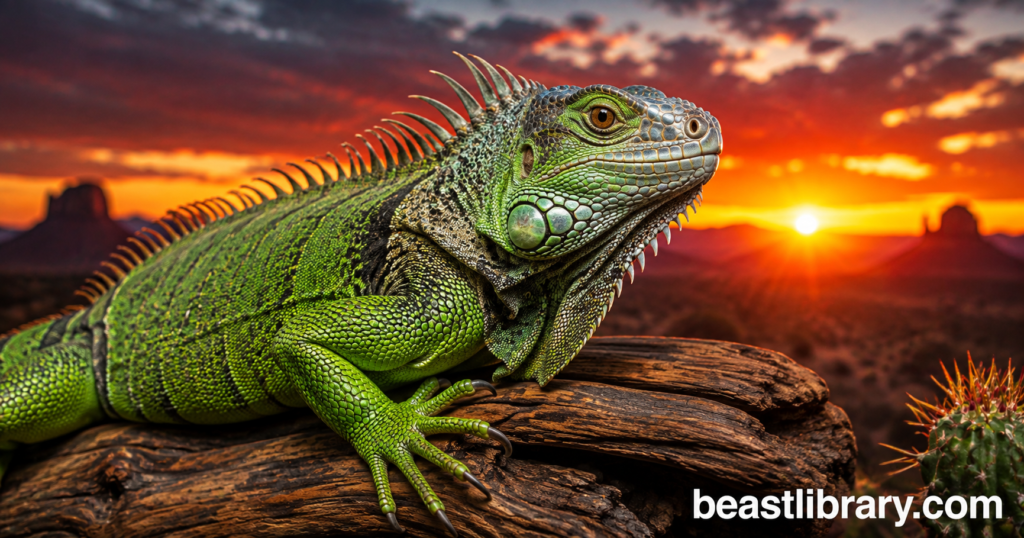
The green iguana, a master of adaptation, employs its prehensile tail as an essential tool for survival in the lush canopies of Central and South America.
This impressive appendage serves multiple purposes: it can grasp branches for stability while navigating the treetops and act as a self-defense mechanism when threatened.
If a predator dares to attack, a green iguana can whip its tail with astonishing speed, stunning or deterring its foe.
Beyond its defensive utility, the prehensile tail reflects the iguana’s remarkable evolution as an arboreal creature.
18- Binturong
Scientific Name: Arctictis binturong
Class: Mammalia
Diet: Omnivore
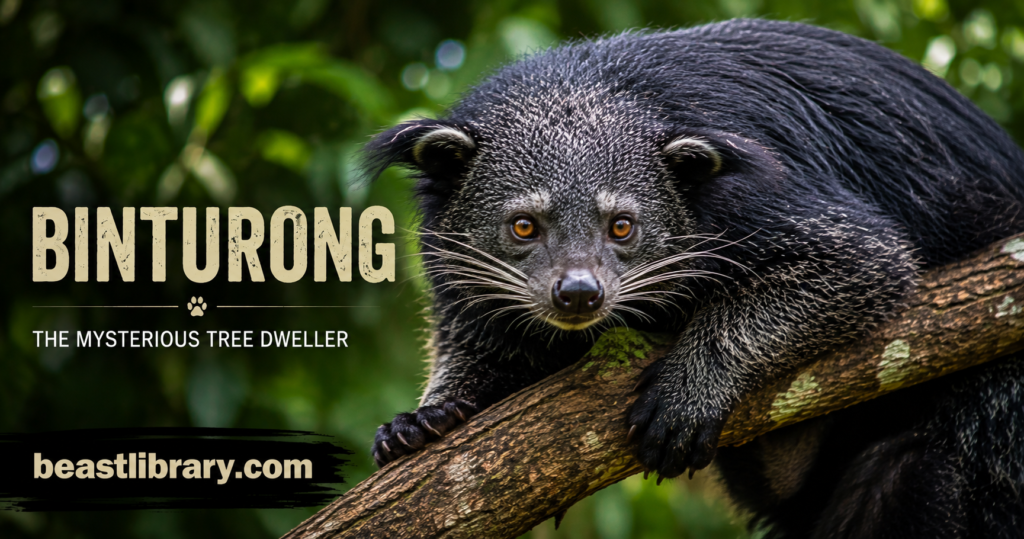
The binturong, also known as the bearcat, is a creature that showcases the extraordinary adaptability of evolution and is often highlighted in lists of arboreal animals pictures with names.
Its prehensile tail, which can reach up to 29 inches in length, functions almost like a fifth limb, allowing it to navigate the dense canopies of Southeast Asian rainforests with remarkable agility.
This tail not only aids in balance while climbing but also assists in grasping branches, making the binturong a master of its arboreal habitat.
19- Flying Squirrel
Class: Mammalia
Diet: Omnivore
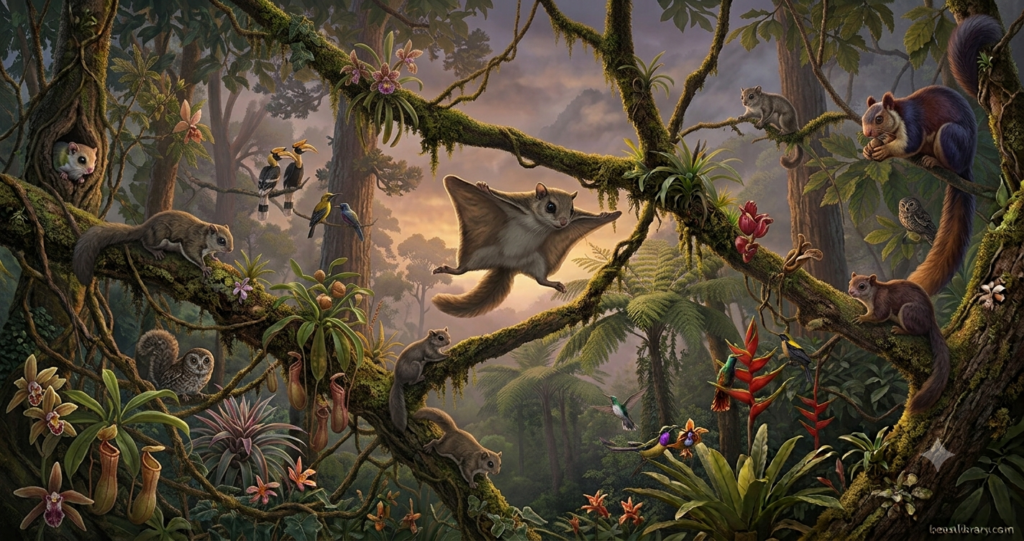
Showcasing an ability to glide gracefully between trees in their forest homes, Flying squirrels are remarkable arboreal mammals of nature’s ingenuity, Unlike true fliers, stretching from their wrists to their ankles, these nocturnal creatures possess a unique membrane called the patagium.
An impressive feat that enables them to evade predators and efficiently forage for food among tree canopies, this adaptation allows them to soar distances of up to 150 feet.
Unlike many solitary rodent species, they thrive in small family groups, often nesting in communal dens. Aiding in protection against predators and facilitating sharing of resources, this cooperative lifestyle fosters a sense of community.
20- Red-Eyed Tree Frog
Scientific Name: Agalychnis callidryas
Class: Amphibia
Diet: Carnivore
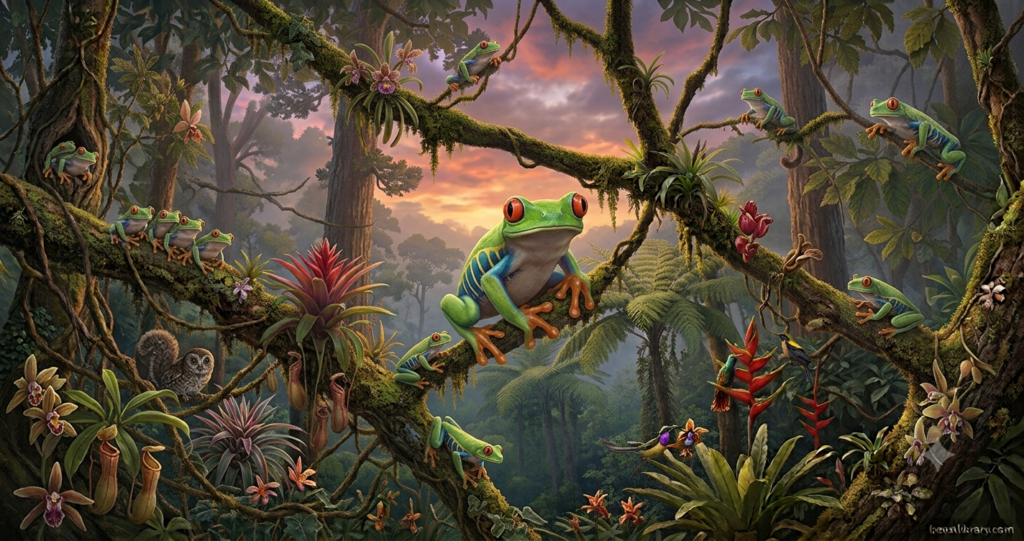
Often featured in popular arboreal animals pictures, The Red-Eyed Tree Frog, is a masterpiece of nature’s artistry, with its vibrant green body and dramatic red eyes.
Residing primarily in the humid rainforests of Central America, playing a pivotal role in its ecosystem, this amphibian serves as both predator and prey.
Its striking colors are not merely for show; they are an evolutionary marvel. When threatened, the frog can quickly curl up and display its vivid hues, allowing it a split second to escape, momentarily startling predators,.
Beyond their eye-catching appearance, these frogs exhibit fascinating behaviors that reveal their adaptability. For instance, using the cover of night not only to hunt insects but also to evade larger predators, they are primarily nocturnal..
21- Aye-Aye
Scientific Name: Daubentonia madagascariensis
Class: Mammalia
Diet: Omnivore
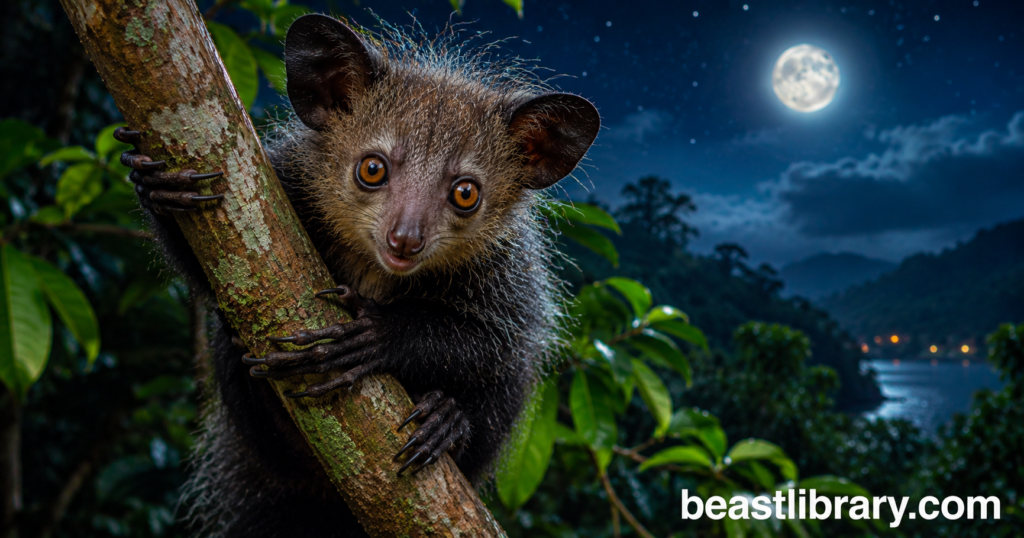
The aye-aye, a nocturnal lemur native to Madagascar, embodies the perfect blend of peculiarity and shyness. It is oversized eyes animal and ever-elusive nature, this unique primate spends most of its life hidden away in the dense forest canopy.
Its long, thin middle finger, an extraordinary tool evolved for tapping into tree bark, illustrates nature’s ingenuity in resourcefulness yet, it often leaves humans spellbound, attempting to catch a glimpse of this enigmatic creature. It is skinny animal with big ears.
22- Tree Frog
Scientific Name: Hylidae
Class: Amphibia
Diet: Carnivore
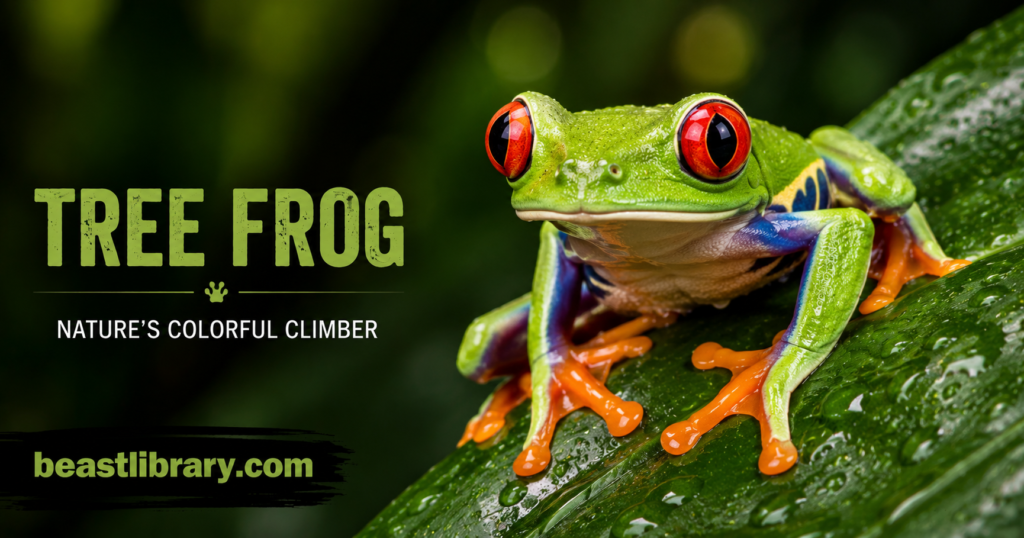
The Tree Frog are small primates with big eyes that are mostly found in trees. These big eyes help them see better, identify enemy, and find partners. Their eyes also help them notice small movements in their surroundings, which keeps them safe from enemies.
Some tree frogs also have bright skin and eye colors that help them blend into leaves, making it harder for predators to see them. This defense strategy is an important part of their survival in their natural habitat.
23- Emerald Tree Boa
Scientific Name: Corallus caninus
Class: Reptilia
Diet: Carnivore
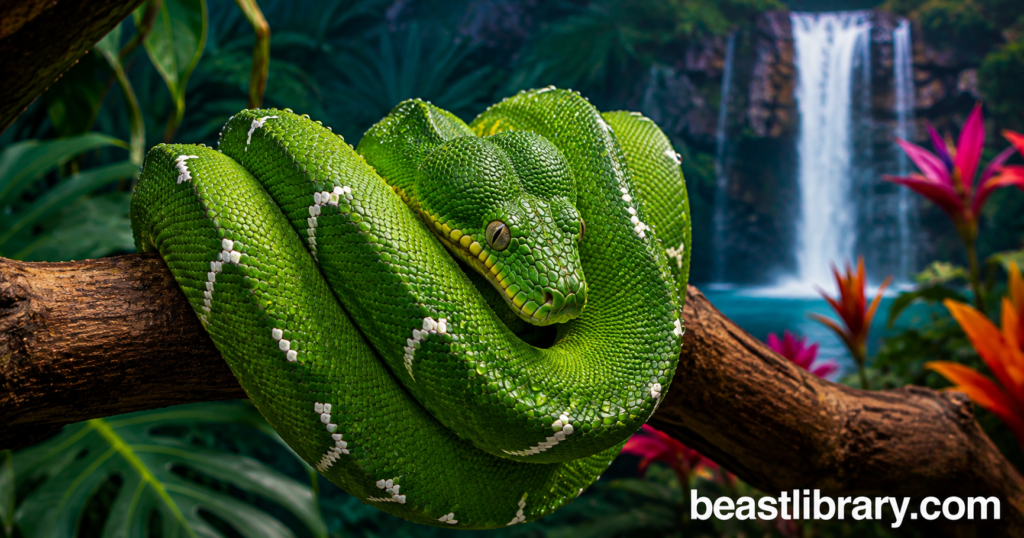
As one of the most stunning arboreal animals examples, the emerald tree boa, epitomizes the allure of arboreal life, with its striking green scales and distinctive yellow or white blotches.
This snake masterfully blends into its surroundings, Found primarily in the lush rainforests of the Amazon, using its vibrant coloration as both a camouflage and a means of ambush.
By coiling around branches and hanging motionless, which includes small mammals and birds, it can easily catch unsuspecting prey, showcasing a remarkable adaptation to its arboreal habitat.
Beyond its captivating appearance, it possesses a unique ability to maintain its body temperature, the emerald tree boa exhibits often behavioral traits, Unlike many reptiles. .
24- Chameleon
Scientific Name: Chamaeleonidae
Class: Reptilia
Chameleons are not just nature’s masters of disguise; they embody a blend of adaptability and communication. Their ability to shift colors isn’t solely for camouflage; it serves as a complex language among themselves.
When a chameleon displays vibrant colors, it can indicate everything from mood shifts and territorial warnings to courtship signals.
This color-changing prowess reflects their emotional state, transforming them into living canvases that convey intricate messages without uttering a sound.
25- Green Tree Monitor
Scientific Name: Varanus prasinus
Class: Reptilia
Diet: Carnivore
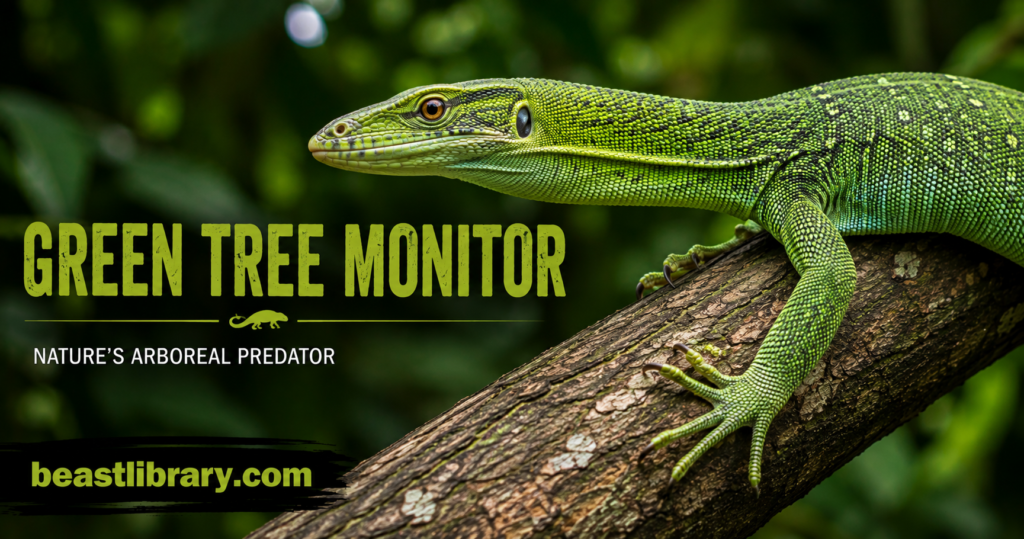
Among the most remarkable arboreal animals, the Green Tree Monitor, is an arboreal marvel that captivates both researchers and reptile enthusiasts alike, a stunning lizard native to the lush canopies of New Guinea and surrounding islands.
This lizard isn’t just a pretty face, Sporting a vivid green hue that serves as both camouflage and a display for potential mates; it possesses a unique combination of agility and intelligence that allows it to navigate its vertical habitat with grace.
Their long, sharp claws enable them to effortlessly climb trees, allowing them to spot insects and fruits from considerable distances, but it’s their keen eyesight that truly sets them apart.
Final Thoughts
Arboreal animals in the world perfectly demonstrate how wildlife adapt to life high in the treetops. Each species exhibits unique traits that enable them to thrive in the canopy’s complexity, from the agile tree kangaroo to the vibrant tree frog. Join us in supporting conservation efforts and ensuring that arboreal animals continue to flourish in the wild.
FAQs:
What are 5 examples of arboreal?
Arboreal animals are species that spend the majority of their lives living, feeding, and sleeping in trees. Five key examples include koalas, sloths, orangutans, spider monkeys, and sugar gliders.
What is the most arboreal animal?
Sloths and orangutans are considered the most arboreal animals because they spend almost their entire lives, including eating and sleeping, high up in the forest canopy and rarely touch the ground.
Are monkey called arboreal animal?
Yes, most monkeys are considered arboreal animals because they spend the majority of their lives living and moving through trees.